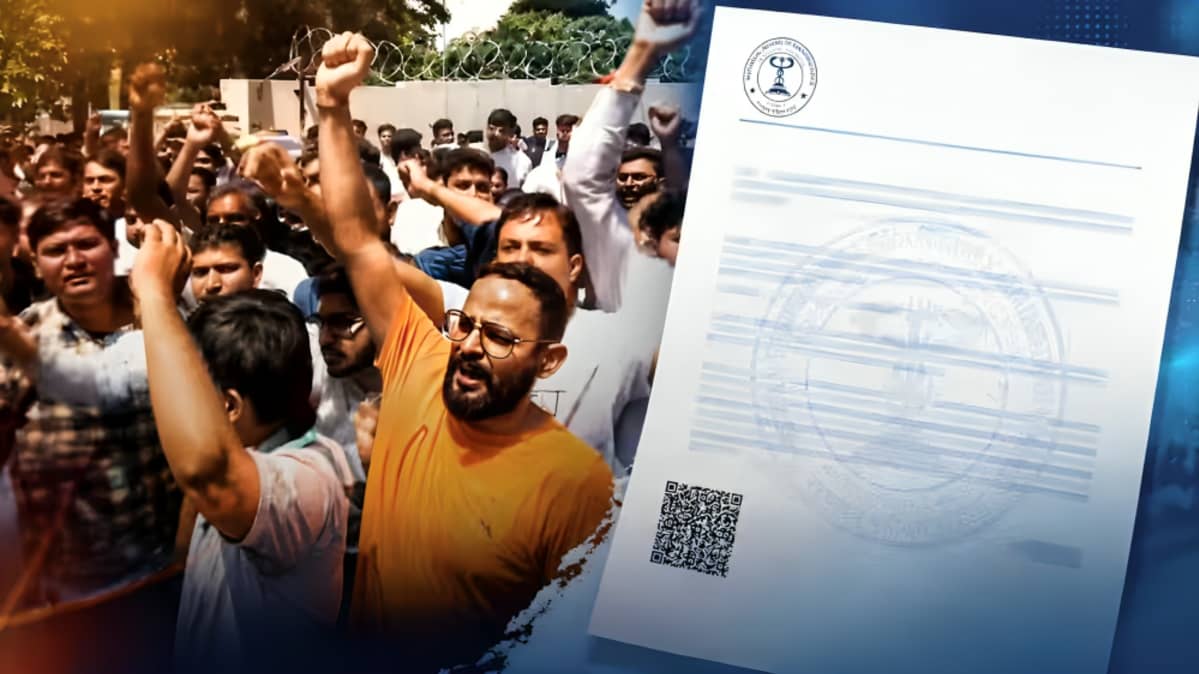
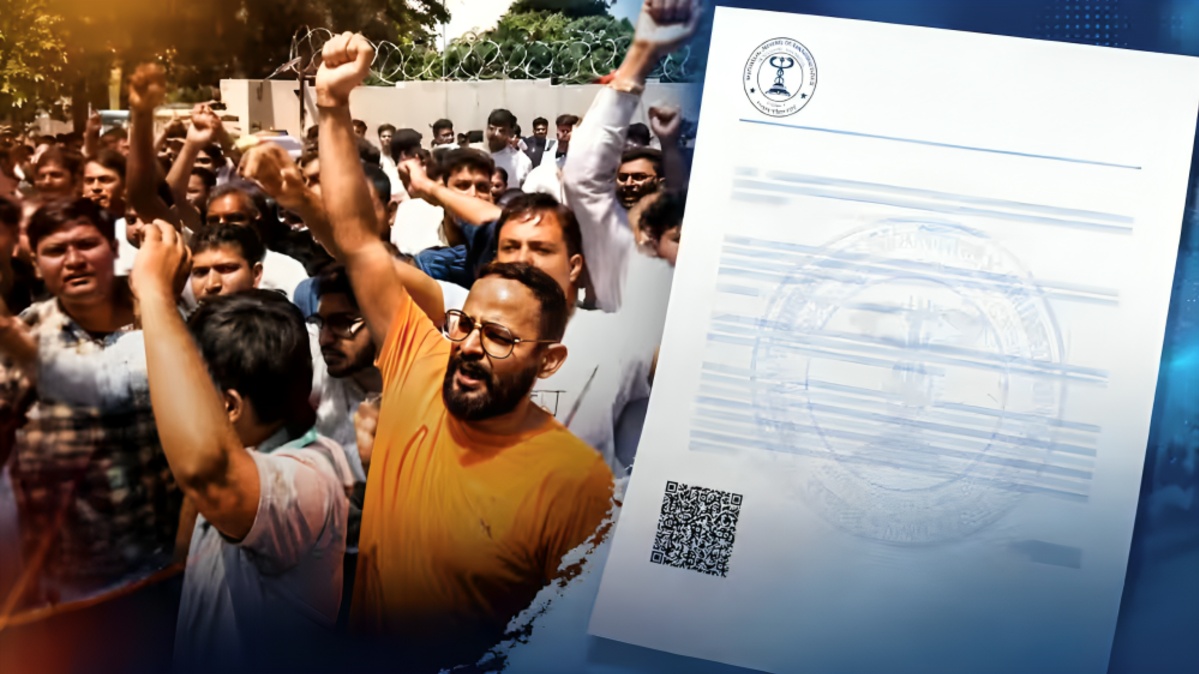
The National Board of Examinations in Medical Sciences has rejected reports suggesting that the NEET PG 2026 question paper was leaked, clarifying that the disruption at two examination centres in Jaipur was caused by an internal power supply problem.
The NEET PG 2026 examination was conducted nationwide on August 30 in a single shift. According to NBEMS, the examination was scheduled for 2,73,096 registered candidates at 1,111 examination centres across 339 cities covering all 36 States and Union Territories. A total of 2,65,980 candidates appeared for the examination, while approximately 2,63,535 candidates successfully completed the test.
The disruption occurred at two centres identified as test centre numbers 41682 and 41683 at the iON Digital Zone in Sitapura, Jaipur. NBEMS said the examination could not be completed at these locations because of an internal power supply issue at the centres. The affected candidates were therefore unable to complete the examination under normal conditions.
Following the incident, questions and rumours about a possible question paper leak began circulating online. Some candidates and social media users reportedly linked the technical disruption with concerns about the security of the examination. NBEMS has now clarified that there was no evidence of a question paper leak or hacking. The board's president, Dr Abhijat Sheth, said there were no complaints of paper leakage and that the examination had been conducted fairly and transparently.
To ensure that the affected candidates receive an equitable opportunity, NBEMS has announced a separate re examination. The re test will be conducted on September 5, 2026, beginning at 3 pm in Jaipur. The board said further information about the exact re examination centre would be communicated separately, and revised admit cards would be issued to the concerned candidates.
The re examination decision is intended to address the specific technical disruption rather than cancel the NEET PG examination nationwide. Candidates who completed the examination successfully elsewhere are not required to appear again. The additional examination is limited to those affected by the interruption at the two Jaipur centres.
Reports from the affected examination centres said computer systems repeatedly shut down because of the power problem. Candidates complained that the examination was interrupted several times, creating uncertainty and affecting their ability to complete the test under normal conditions. Some candidates reportedly sought a fresh examination because of the repeated disruptions.
The decision to conduct a separate examination also reflects the need to maintain fairness in a highly competitive postgraduate medical entrance examination. NEET PG determines admission to postgraduate medical courses, and any candidate who loses examination time because of a technical problem could face a disadvantage compared with candidates who completed the test without interruptions.
NBEMS has said the national examination itself was conducted with real time monitoring and security arrangements. According to the board, 2,527 faculty members were appointed as Independent Appraisers to oversee the examination process. These arrangements were part of the broader monitoring system used during the examination held on August 30.
The paper leak issue has attracted particular attention because examination security has been a sensitive subject in India. Prior cases involving allegations of examination irregularities have increased scrutiny of testing agencies and raised concerns among students and parents about the confidentiality of question papers.
However, the current NEET PG controversy is different in an important respect. NBEMS has attributed the Jaipur disruption to an internal power supply failure rather than to the unauthorised circulation of examination material. The board has also stated that it received no complaints of a paper leak or hacking during the nationwide examination.
The Press Information Bureau has also described social media reports alleging a NEET PG paper leak as misleading. The government clarification came after reports and messages began circulating following the technical disruption at the Jaipur centres.
Earlier, before the examination was held, NBEMS had separately warned candidates about fake claims that the NEET PG question paper had been leaked. The board advised candidates not to trust unverified messages, advertisements or social media accounts claiming to have access to the examination paper. It described such claims as false and fraudulent.
The latest development therefore involves two separate issues that should not be confused. The first is the pre examination circulation of fake paper leak claims, which NBEMS had already dismissed. The second is the genuine technical disruption at two Jaipur centres during the examination, for which a re examination has now been arranged.
For the 2,445 affected candidates, the September 5 re examination will provide another opportunity to complete NEET PG under normal examination conditions. They will receive revised admit cards and additional instructions from NBEMS regarding the venue and reporting requirements.
Candidates should therefore rely only on official NBEMS communications for the re examination schedule. They should avoid social media posts claiming changes to the examination date, venue or eligibility unless those changes are confirmed through the official examination authority.
The wider NEET PG examination proceeded across the country on August 30. Most candidates completed the test as scheduled, and the board has not announced any nationwide cancellation or re examination. The current remedial action is limited to the candidates affected by the Jaipur technical failure.
The incident has nevertheless raised questions about infrastructure and contingency planning at high stakes computer based examination centres. Repeated power interruptions can affect computer systems, examination timing and candidate concentration, making reliable backup power and technical support essential for large national examinations.
The Jaipur incident also highlights why testing agencies need contingency arrangements for unexpected technical problems. When thousands of candidates are taking an examination simultaneously, even a local technical failure can have significant consequences for the affected group.
NBEMS has expressed regret to the candidates who were inconvenienced by the disruption. The board's decision to conduct a fresh examination is intended to restore a level playing field for those candidates rather than leave them disadvantaged because of circumstances beyond their control.
The September 5 examination will also be important for maintaining confidence in the admission process. Candidates preparing for postgraduate medical education have invested significant time and resources in NEET PG preparation, making examination fairness a central concern.
For other candidates, the original August 30 examination remains valid. The re examination is not a replacement for the entire NEET PG 2026 examination but a corrective measure for the specific candidates who were unable to complete their test because of the technical disruption.
The results and subsequent counselling process will depend on the final examination procedures and official announcements from NBEMS. Candidates should continue to monitor the board's website for information on result dates, scorecards and admission related updates.
The question paper leak rumours have nevertheless demonstrated how quickly unverified information can spread after a disruption at a major examination. Students are advised to distinguish between official notifications and claims circulated through messaging applications or social media.
The current evidence and official statements indicate that the Jaipur incident was linked to an internal power supply failure and not a confirmed question paper leak. NBEMS has explicitly rejected leak and hacking claims and arranged a separate examination for the affected candidates.
The re examination will take place on September 5 at 3 pm in Jaipur, with the venue to be communicated to the concerned candidates. Revised admit cards will also be issued.
The incident is likely to encourage further focus on backup power systems, technical preparedness and monitoring at large scale examination centres. Reliable infrastructure is particularly important for computer based examinations where a technical interruption can immediately affect a candidate's performance.
For now, the central message from the examination authorities is that there was no confirmed NEET PG 2026 paper leak. The problem reported in Jaipur was a technical disruption caused by an internal power supply issue, and 2,445 affected candidates have been given a fresh examination opportunity.
Candidates should therefore follow the official NBEMS instructions and prepare for the September 5 re examination if they are among those affected. The final outcome of the NEET PG 2026 admission process will depend on the examination results and the counselling schedule to be announced by the competent authorities.