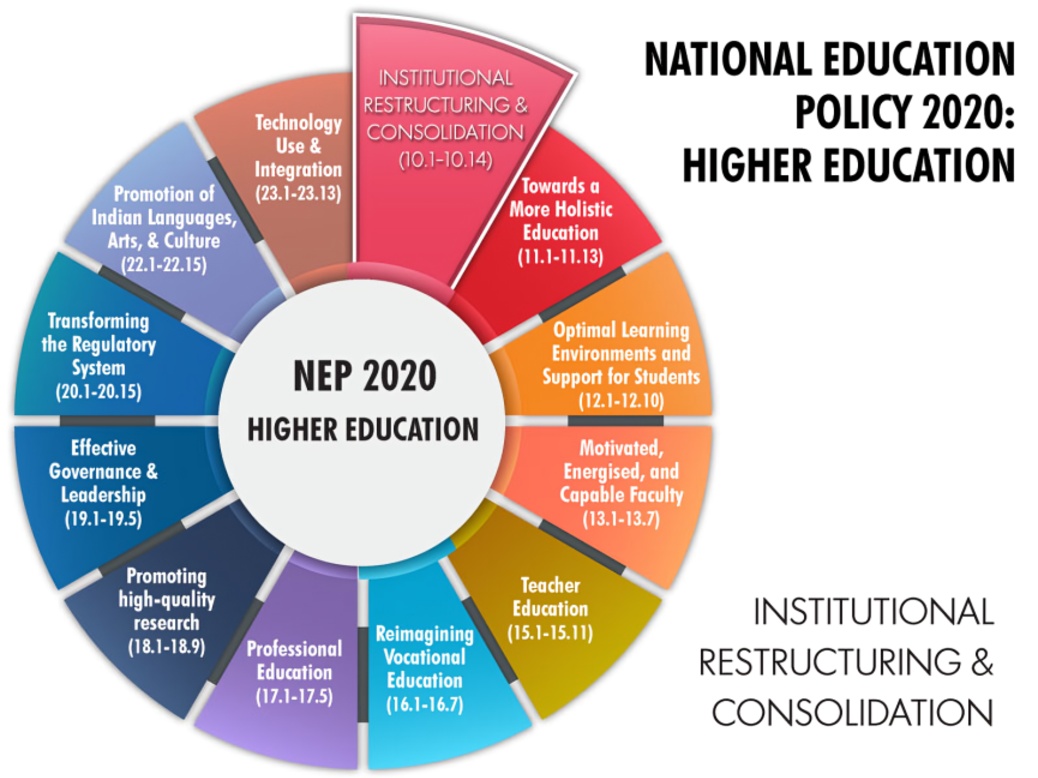
The National Education Policy (NEP) 2020 continues to redefine the landscape of higher education in India by introducing reforms designed to make learning more flexible, multidisciplinary and career-oriented. Since its introduction, universities and colleges across the country have gradually implemented various provisions of the policy, although the pace of adoption differs among institutions.
One of the most significant changes introduced under NEP 2020 is the flexibility offered in course selection. Traditionally, students were required to remain within a single academic stream throughout their degree programme. Under the new policy, institutions are encouraged to allow students to combine subjects from science, humanities, commerce, arts and vocational disciplines. This multidisciplinary approach is intended to provide broader knowledge and encourage innovation and critical thinking.
Another major reform is the introduction of multiple exit options in undergraduate degree programmes. Students who are unable to complete a full degree due to personal, financial or professional reasons can now leave the programme at different stages while still receiving an academic qualification. Depending on the duration of study completed, students may receive a certificate, diploma or bachelor's degree, making higher education more flexible and reducing the risk of losing academic progress.
The Academic Bank of Credits (ABC) is another important feature of NEP 2020. The digital platform stores academic credits earned by students from recognized institutions. These credits can be transferred, accumulated and used later if students decide to continue their education after a break or move to another institution. The system aims to improve academic mobility and lifelong learning opportunities.
NEP 2020 also places significant emphasis on skill-based and vocational education. Colleges are encouraged to integrate internships, industry exposure, practical training and hands-on learning into academic programmes. The objective is to bridge the gap between classroom education and workplace requirements by improving students' employability and practical skills.
The policy promotes the adoption of four-year undergraduate degree programmes, with the final year offering opportunities for research and advanced academic work. Students interested in research careers or postgraduate studies may benefit from this additional year of specialized learning. Many central universities have already introduced four-year programmes, while other institutions continue implementing the revised curriculum.
Another key objective of the policy is the development of multidisciplinary educational institutions. Instead of operating as isolated departments, colleges are encouraged to offer diverse academic disciplines within a single campus. This approach enables students to explore different areas of knowledge and supports collaborative learning across subjects.
For students, these reforms represent a shift toward a more flexible and learner-focused education system. Greater academic choice, improved mobility between institutions, practical learning opportunities and multiple qualification pathways are intended to better prepare graduates for higher education and employment in an evolving global economy.
However, education experts note that implementation varies across institutions depending on infrastructure, faculty availability and administrative readiness. While many universities have made significant progress, others are still in the process of adopting various components of the policy.
Overall, NEP 2020 represents one of the most comprehensive reforms in India's higher education system. As implementation continues, students can expect increasing flexibility in learning, broader academic opportunities and stronger connections between education, research and professional careers.