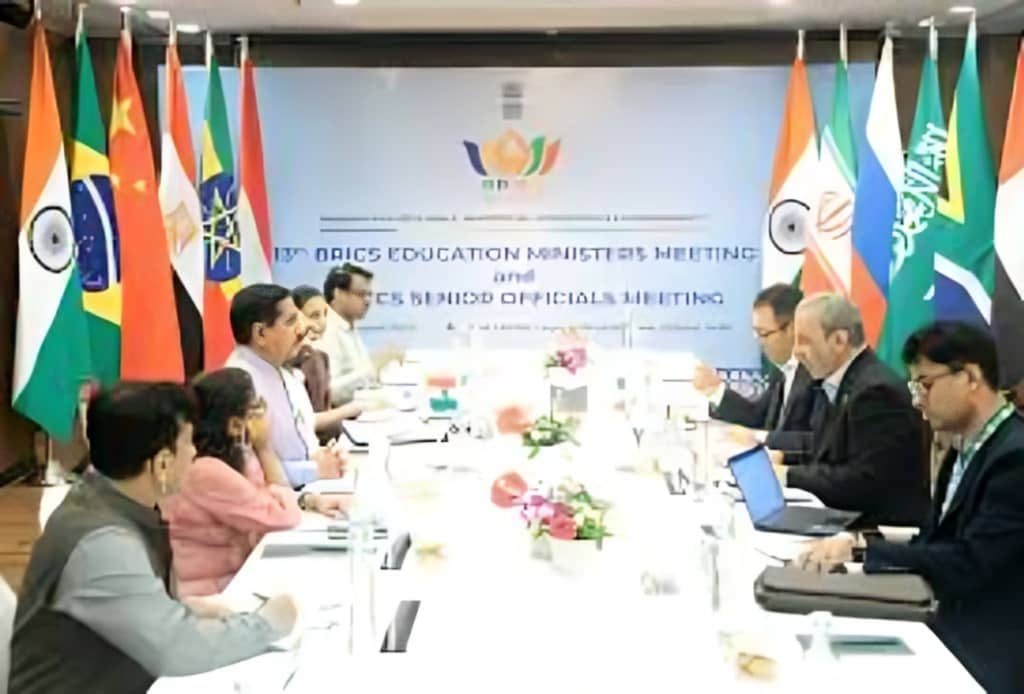

Union Education Minister Pralhad Joshi chaired the 13th BRICS Education Ministers' Meeting, bringing together representatives from BRICS member countries to discuss strategies for strengthening educational cooperation and addressing common challenges facing the global education sector. The meeting focused on promoting innovation, resilience, sustainability and collaboration among participating nations.
The BRICS grouping, comprising Brazil, Russia, India, China, South Africa and its expanded member countries, has increasingly prioritised education as an important area of international cooperation. The annual meeting of education ministers provides a platform for member nations to exchange ideas, share best practices and identify opportunities for collaborative initiatives.
During the meeting, Pralhad Joshi highlighted the importance of building resilient education systems capable of adapting to changing global circumstances. He emphasised that education plays a vital role in preparing future generations with the knowledge, skills and values required to address emerging social, technological and economic challenges.
The discussions centred on improving the quality of education through innovation and the effective use of technology. Member countries explored ways to enhance digital learning, strengthen research collaboration and promote greater academic exchanges among universities and educational institutions.
The minister also underlined the significance of international partnerships in advancing educational development. Greater cooperation among BRICS countries can support knowledge sharing, faculty exchanges, student mobility and joint research projects that contribute to academic excellence and innovation.
Sustainability emerged as another important theme during the meeting. Representatives discussed the role of education in promoting environmental awareness, sustainable development and responsible citizenship. Integrating sustainability into educational policies and curricula was identified as an important step toward preparing students for future global challenges.
Innovation in teaching methods and educational technology also featured prominently in the discussions. Participants recognised the growing importance of digital infrastructure, online learning platforms and emerging technologies in expanding access to quality education while improving learning outcomes.
Pralhad Joshi reiterated India's commitment to strengthening educational cooperation within the BRICS framework. He emphasised that collaborative efforts can accelerate progress in higher education, vocational training, research and skill development while supporting the broader objective of inclusive and equitable education.
The meeting also provided an opportunity for member countries to exchange experiences regarding educational reforms, curriculum development, teacher training and institutional capacity building. Such dialogue helps nations learn from one another's successful initiatives and adapt effective practices to their own educational systems.
Experts believe that stronger international cooperation in education contributes to improved academic standards, greater research opportunities and enhanced innovation. Collaborative programmes also help students and educators gain broader global perspectives while promoting cultural understanding among participating countries.
India has consistently supported international educational partnerships through various initiatives aimed at expanding research collaboration, promoting student exchanges and strengthening higher education institutions. Participation in multilateral forums such as BRICS aligns with the country's objective of enhancing global engagement in education.
The meeting reaffirmed the shared commitment of BRICS member countries to creating education systems that are inclusive, accessible and responsive to future needs. Participants recognised that cooperation among emerging economies can play an important role in addressing common educational challenges while supporting sustainable development.
As education continues to evolve in response to technological advancement and changing workforce requirements, international collaboration remains an essential component of policy development. Joint efforts in research, innovation and capacity building can help strengthen educational systems and improve learning opportunities across member countries.
The 13th BRICS Education Ministers' Meeting concluded with a renewed emphasis on partnership, innovation and sustainable development. The discussions highlighted the importance of continued cooperation among BRICS nations to promote quality education, strengthen academic institutions and prepare future generations for an increasingly interconnected global environment.