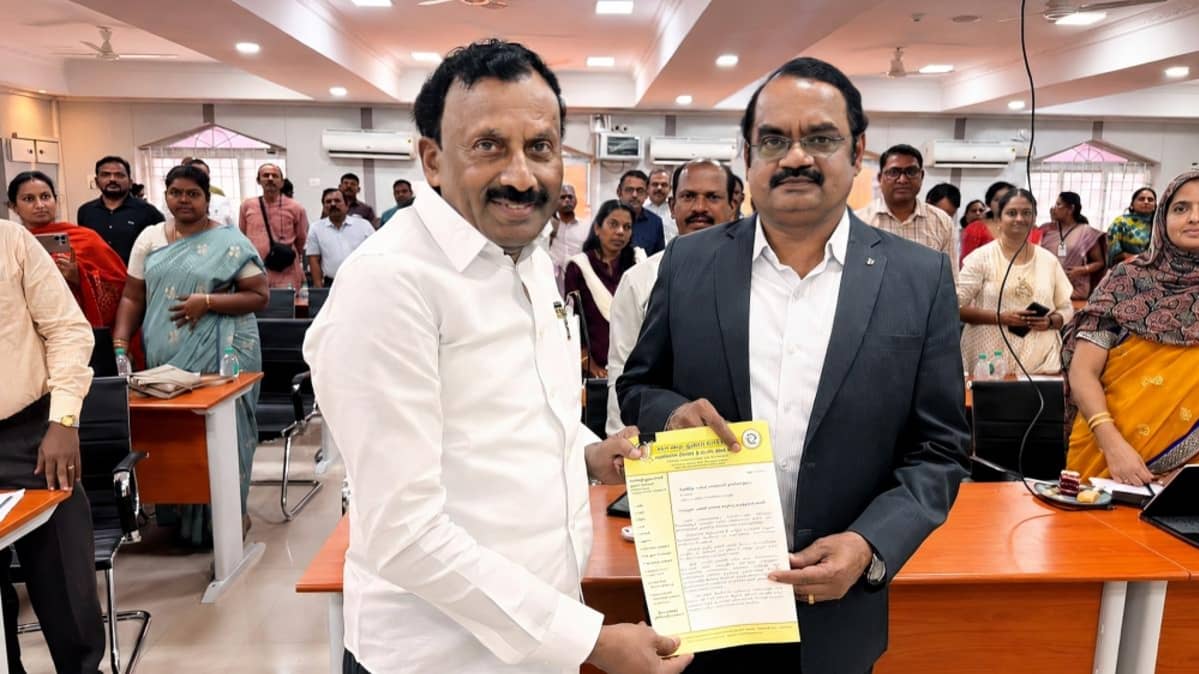
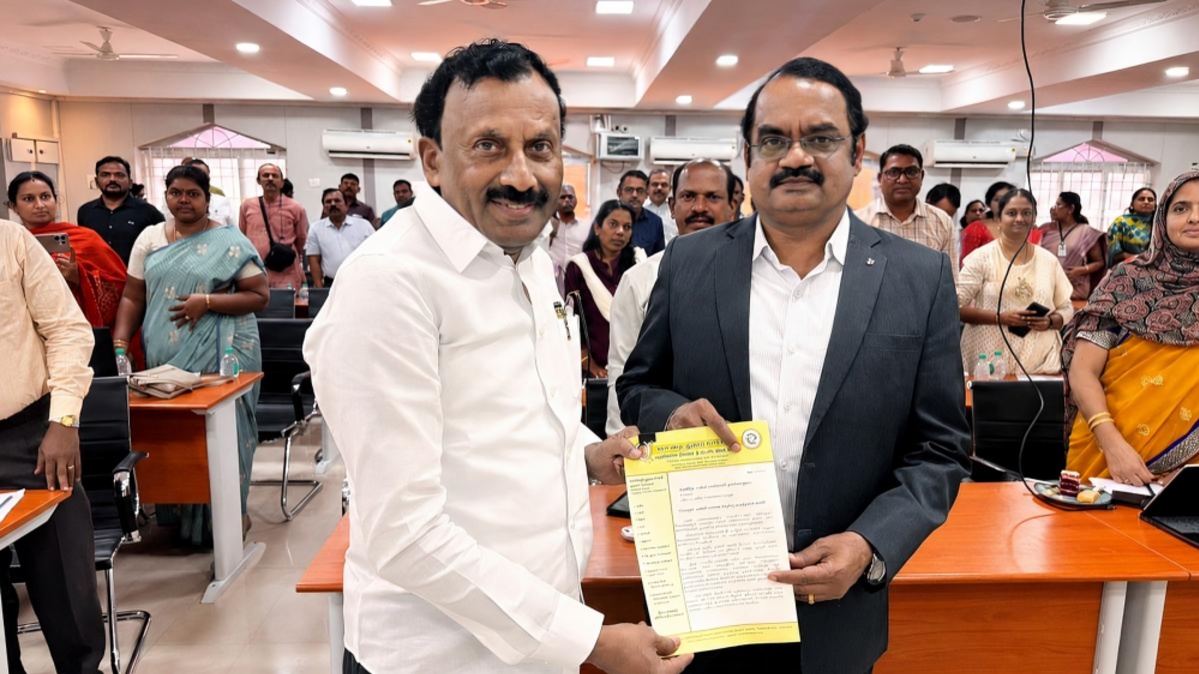
Former Chennai Mayor and Manithaneyam Trust Chairman Saidai Duraisamy met former ISRO director and Chairman of the Tamil Nadu School Education Curriculum Design Committee Mylswamy Annadurai on August 13. During the meeting, Duraisamy submitted a memorandum requesting that health and wellness education receive greater importance in the proposed new school curriculum.
According to the memorandum, students should be introduced to basic concepts related to maintaining good health from an early stage. Duraisamy emphasised that education should not focus only on academic subjects but should also help young people develop healthy habits and awareness about preventive healthcare.
One of the key suggestions in the memorandum was to include yoga in the school curriculum. Yoga and related physical practices can introduce students to regular exercise, flexibility, breathing practices and relaxation techniques. Introducing age appropriate wellness activities in schools could encourage students to develop an active lifestyle.
Duraisamy also requested that healthy nutritional habits be included as part of the proposed syllabus. Nutrition education can help students understand the importance of a balanced diet, adequate hydration and responsible food choices. Such awareness can be particularly useful during childhood and adolescence, when eating habits and lifestyle patterns are developing.
The memorandum also sought consideration of topics related to AYUSH systems of medicine and their benefits. The request was to provide students with appropriate educational awareness about traditional and complementary systems of healthcare. Any such curriculum content would need to be designed in accordance with educational and medical standards and presented to students in an age appropriate and evidence informed manner.
Duraisamy explained that healthcare related education could play an important role in helping younger generations understand the value of maintaining good health. He stressed that awareness created during school years could influence students' lifestyle choices in the future.
The meeting took place as the Tamil Nadu School Education Curriculum Design Committee is involved in discussions related to curriculum development. The committee is responsible for examining educational requirements and considering various aspects that could be incorporated into school education.
The memorandum submitted by Duraisamy therefore focused on expanding the scope of school education to include greater awareness of health and wellness. His suggestions covered areas such as yoga, nutrition, healthy lifestyle practices and awareness about AYUSH systems.
Health education in schools can cover several areas, including personal hygiene, physical activity, nutrition, mental wellbeing, disease prevention and responsible lifestyle choices. Providing students with accurate and age appropriate information can help them make informed decisions as they grow.
The proposal also reflects the increasing importance of preventive health awareness. Rather than focusing only on treatment after illness occurs, health education can encourage people to adopt habits that support long term wellbeing.
Nutrition education is another area that can be integrated into school learning. Students can be taught the basic principles of balanced nutrition and the importance of consuming a variety of nutritious foods. Such lessons can also help students understand the difference between healthy food choices and excessive consumption of foods high in sugar, salt and unhealthy fats.
Yoga could also be introduced as part of physical education or wellness activities, depending on the curriculum framework. Properly supervised yoga sessions can provide students with opportunities for physical activity, flexibility exercises and relaxation.
With regard to AYUSH, curriculum designers would need to ensure that information is presented responsibly and that students understand the appropriate role of different healthcare systems. Educational material should distinguish between general health awareness and medical treatment, while encouraging students to seek qualified healthcare advice when required.
Duraisamy's memorandum has therefore called for a broader approach to health education in schools. The proposal places emphasis on prevention, healthy habits and awareness rather than limiting health-related learning to basic textbook information.
The discussion comes at a time when lifestyle-related concerns among younger people have increased public interest in health and wellness education. Schools can provide an effective environment for teaching children about physical activity, nutrition and responsible health practices.
A structured health and wellness curriculum could also involve practical activities. Students could learn about healthy food choices, physical fitness, personal hygiene and the importance of maintaining regular routines. Such activities could complement conventional academic education.
However, the final decision on whether these subjects are included in the new curriculum rests with the competent authorities and curriculum experts. Any proposed content would need to undergo appropriate academic review before being incorporated into textbooks or classroom instruction.