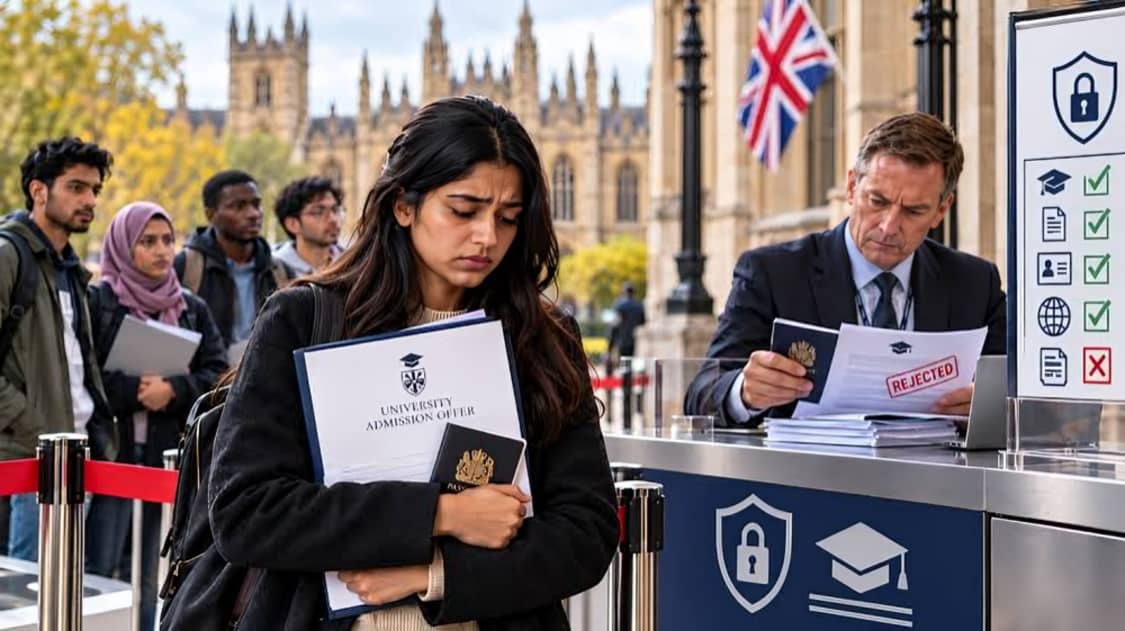
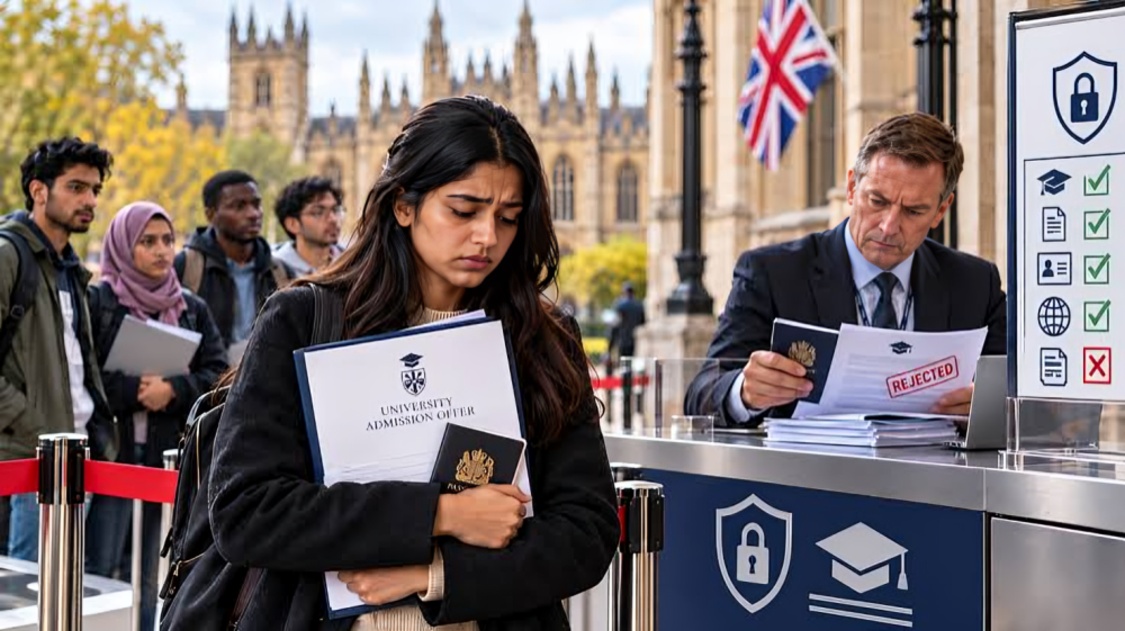
UK Universities Withdraw Admission Offers as Student Visa Rules Become Stricter
Universities in the United Kingdom are reportedly withdrawing admission offers to some international students amid stricter government regulations governing student visa compliance. The developments have raised concerns among students planning to pursue undergraduate, postgraduate and other higher education courses in the UK, including applicants from India.
The revised rules, introduced in June 2026, require universities to maintain a student visa refusal rate below 5 percent. The previous threshold was 10 percent. Institutions that repeatedly fail to meet the prescribed standards could face enforcement measures and ultimately risk losing their licences to sponsor international students.
According to reports published in October 2026, some universities have responded by reviewing applications more closely and withdrawing offers from applicants they believe may face difficulties obtaining student visas. These decisions are being taken amid concerns that institutions could exceed the permitted refusal threshold and face restrictions on international student recruitment.
The government has said the revised framework is intended to strengthen oversight of student recruitment and prevent misuse of the immigration system. However, the developments have prompted concerns among university leaders and prospective students about the consequences for legitimate international applicants.
Why Are UK Universities Withdrawing Admission Offers?
Under the UK's revised Basic Compliance Assessment framework, educational institutions must satisfy specific requirements relating to student visa refusals, course enrolment and course completion.
The visa refusal rate must remain below 5 percent, compared with the earlier 10 percent threshold. Universities must also achieve a course enrolment rate of at least 95 percent and a course completion rate of at least 90 percent.
These requirements are intended to encourage institutions to recruit students responsibly and ensure that international students who receive sponsorship genuinely enrol in and complete their courses.
Universities that repeatedly fail to meet the requirements could face restrictions on recruitment and, in serious cases, lose their permission to sponsor international students. The possibility of these consequences has encouraged some institutions to take precautionary measures when assessing applicants.
However, the rules do not automatically require universities to withdraw admission offers from international students. Reports indicate that some institutions are making individual recruitment decisions in response to concerns about visa refusals and their own compliance obligations.
International Students From India and Other Countries Affected
The reported changes have attracted particular attention among applicants from India, Pakistan, Nigeria and Bangladesh. These countries account for substantial numbers of students seeking higher education opportunities in the UK.
A report by the Financial Times, cited by other news organisations, found that 10.5 percent of UK study visa applications were withdrawn during the first half of 2026. This compared with 2.3 percent during the same period in 2025 and 0.4 percent in 2023.
The report identified particularly high withdrawal rates among applicants from Pakistan, Bangladesh and Nigeria. For Indian applicants, the proportion of withdrawn study visa applications reportedly increased from 1.2 percent in the first half of 2025 to 5.2 percent during the first half of 2026.
These figures refer to withdrawn applications rather than visa refusals. The distinction is important because an application may be withdrawn for several reasons, including the withdrawal of a university offer before a final visa decision.
The reported figures should not be interpreted as evidence that every applicant from these countries faces the same level of risk. Individual decisions depend on the applicant's circumstances, the university's recruitment policies and the relevant immigration requirements.
What Does the New Compliance Framework Mean for Universities?
The revised rules place greater responsibility on universities to monitor their international student recruitment and sponsorship practices.
Institutions must ensure that applicants meet admission requirements, provide appropriate documentation and understand the conditions attached to studying in the UK. Universities are also expected to monitor whether sponsored students enrol in their courses and make progress towards completion.
The UK government has announced a traffic light rating system that is expected to begin in summer 2027. Under the proposed approach, institutions rated red could face restrictions on international recruitment and be required to implement an improvement plan. Universities that fail to improve could risk losing their recruitment rights.
The government says these measures are designed to maintain the integrity of the student visa system while continuing to welcome genuine international students.
University representatives, however, have raised concerns about the effect of stricter rules on international recruitment. They have also highlighted the importance of transparent visa decisions, reliable information from the authorities and stable policies that allow universities to plan their admissions.
International students contribute to university finances, research activities and the wider UK economy. Any reduction in overseas enrolment could therefore affect both prospective students and institutions that rely on international recruitment.
What Should Indian Students Planning to Study in the UK Do?
Indian students who have received admission offers from UK universities should remain in contact with their institutions and monitor official communications.
Applicants should confirm whether their offers remain valid and check whether their universities have issued any additional requirements. Students who are preparing visa applications should ensure that their documentation is accurate and complete, including financial evidence, academic records and other information required under the applicable visa rules.
Students should also understand that an admission offer and a student visa are separate matters. An offer from a university does not automatically guarantee visa approval, and a visa application must satisfy the relevant immigration requirements.
Applicants who receive notice that an offer has been withdrawn should contact the university directly to understand the reason and ask whether any review or alternative option is available. They should avoid relying on unofficial agents or social media claims when making decisions about admissions or immigration.
What Happens Next?
The impact of the stricter rules will depend on how universities apply the compliance framework and how consistently visa applications are assessed.
Students considering the UK should review their university's latest guidance and consult official UK government information before making financial or travel arrangements. They should also check the validity of their admission documents and any deadlines related to enrolment and visa applications.
The reported withdrawals highlight the challenges facing international education as governments tighten immigration oversight. While the UK continues to state that genuine international students are welcome, applicants may need to pay closer attention to university communications and visa requirements throughout the admissions process.
Students should verify the latest developments with their chosen institutions, as individual university decisions and immigration requirements may change.