What Are CBSE's Proposed Open Book Exams and How Could They Change the Way Students Prepare?
The Central Board of Secondary Education is introducing a significant change in school assessment by moving towards open-book assessments for Class 9 students from the 2026–27 academic session. The initiative aims to shift the focus from memorising textbook information to understanding concepts, analysing information and applying knowledge to different situations.
The proposal follows the broader educational reforms outlined in the National Education Policy 2020 and the National Curriculum Framework for School Education 2023. These frameworks encourage competency-based learning and assessments that measure students' understanding rather than their ability to reproduce memorised answers.
The move could change how students study, how teachers prepare examination questions and how schools evaluate academic progress.
What Are Open Book Exams?
An open-book examination is a type of assessment in which students are permitted to refer to approved learning materials while answering questions. Depending on the examination rules, these materials may include textbooks, class notes and other specified reference resources.
However, open-book examinations are not designed to allow students to copy answers directly from their books. Instead, the questions are expected to test whether students understand the subject and can use the available information to develop appropriate answers.
For example, a traditional science examination might ask students to define photosynthesis. An open-book assessment could instead present a situation involving plant growth and ask students to explain how sunlight, water and other factors affect the process.
Such questions require students to understand the underlying concept and apply it to a specific situation.
Which CBSE Students Will Be Affected?
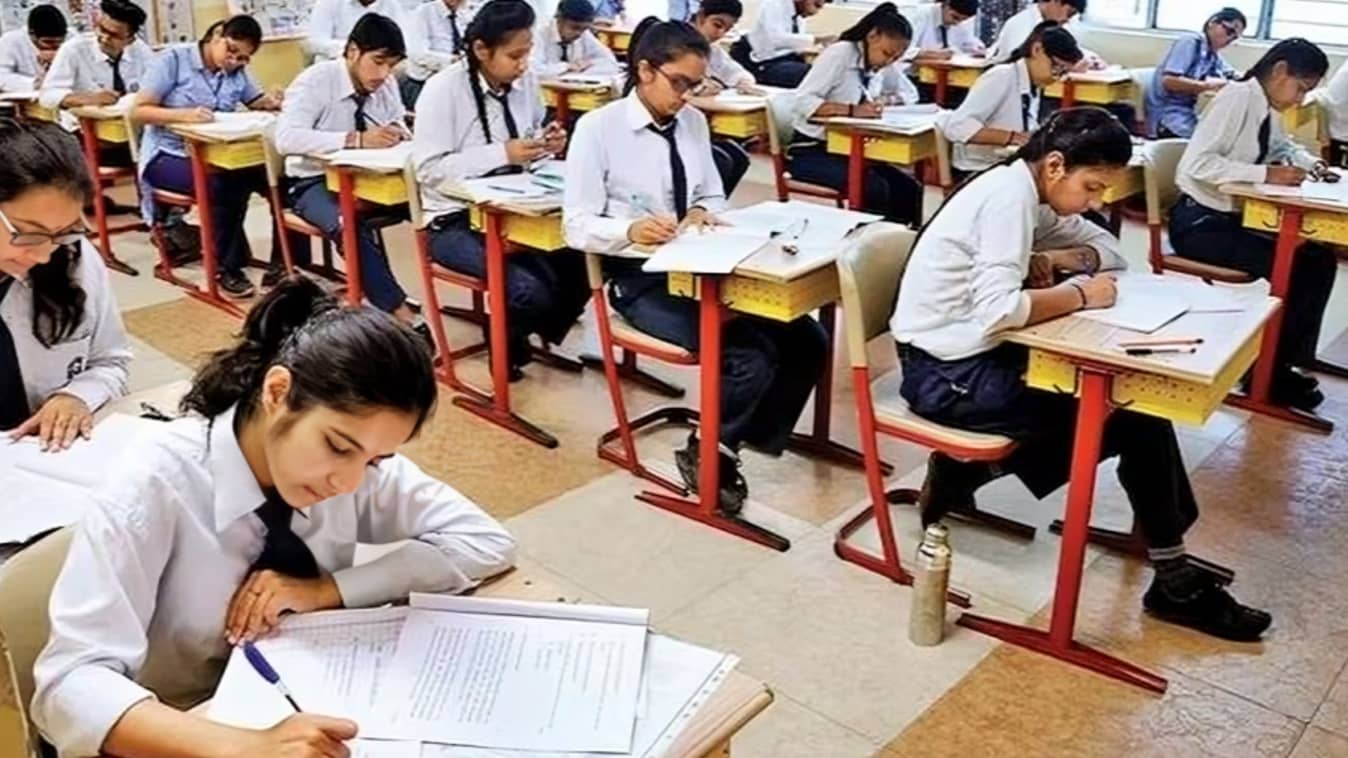
CBSE has approved the introduction of open-book assessments for Class 9 from the 2026–27 academic session.
According to reports on the approved proposal, these assessments are intended to form part of the three written assessments conducted each term. The subjects covered are languages, mathematics, science and social science.
The board has also planned to develop standardised sample papers to help maintain the quality and consistency of questions.
Students and parents should note that this initiative concerns school-level assessments for Class 9. It should not be interpreted as an announcement that all CBSE Class 10 and Class 12 board examinations will become open-book examinations.
Students should continue following their schools' examination schedules and the latest official CBSE instructions for their respective classes.
Why Is CBSE Introducing Open Book Assessments?
One of the main objectives is to reduce dependence on rote learning. Under traditional preparation methods, students may memorise definitions, formulas and lengthy answers without fully understanding the concepts behind them.
Although memorisation remains useful for learning certain facts and basic information, it cannot independently develop all the skills needed to solve unfamiliar problems.
Open-book assessments aim to encourage students to connect ideas, interpret information, evaluate evidence and explain their reasoning.
The approach also aligns with the wider objective of making school education more relevant to real-life situations. Students may be asked to apply classroom knowledge to practical examples rather than simply reproduce information from a textbook.
The board's pilot assessment reportedly revealed challenges in students' ability to use resources effectively and understand interdisciplinary concepts. This highlights the need for proper guidance, sample questions and practice before students become familiar with the format.
How Could Open Book Exams Change Student Preparation?
The new approach could encourage students to adopt a more structured and analytical method of studying.
Greater focus on conceptual understanding
Students will need to understand the meaning of each topic rather than memorise complete answers. They should be able to explain concepts in their own words and connect related ideas.
More application-based practice
Solving textbook exercises alone may not be sufficient. Students should also practise case-based questions, real-life examples, analytical problems and questions that require them to apply knowledge in unfamiliar situations.
Better use of textbooks and notes
Students may be allowed to consult specified materials during an assessment. However, they will need to know where relevant information is located and understand how to use it efficiently. Spending too much time searching through textbooks could affect their ability to complete the paper.
Improved critical thinking
Questions may require students to compare information, identify patterns, explain causes and consequences, and support conclusions with evidence. These skills can help students develop a deeper understanding of their subjects.
Greater importance of time management
Access to reference materials does not remove time pressure. Students must read questions carefully, identify relevant information and organise their answers within the allotted time.
Are Open Book Exams Easier Than Traditional Exams?
Open-book examinations are not necessarily easier than conventional tests. In fact, they can be challenging because students must demonstrate understanding rather than rely entirely on memory.
A student who has memorised an entire chapter but does not understand its concepts may struggle with an application-based question. Similarly, a student who depends too heavily on textbooks may lose valuable time searching for information.
Success will depend on conceptual clarity, reading comprehension, analytical ability and effective time management.
Students should therefore avoid assuming that access to books means they can prepare less thoroughly.
How Should Students Prepare for the New Format?
Students can begin by building a strong understanding of their regular syllabus. After completing each chapter, they should summarise the main concepts, practise explaining them in their own words and solve questions that require reasoning.
They should also practise locating information quickly in their textbooks and notes. Preparing organised chapter summaries and understanding the structure of learning materials can make reference-based assessments more manageable.
Teachers can support students by introducing case studies, practical examples, discussion-based activities and sample open-book questions during classroom lessons.
Schools will also need to guide students on which materials are permitted, how questions are structured and how answers will be evaluated.
What Does This Mean for Parents and Teachers?
Parents should encourage children to understand lessons rather than focus exclusively on memorising answers. Regular discussions about classroom topics, practical examples and independent problem-solving can help students develop confidence.
Teachers will also play an important role in the transition. Preparing effective open-book questions requires careful planning because questions must assess reasoning and application rather than simple recall.
Schools may need to provide structured practice opportunities so that students become comfortable with the assessment format before formal examinations.