Umar Khalid's PhD Based Book Removed From IISER Pune Library After Online Backlash
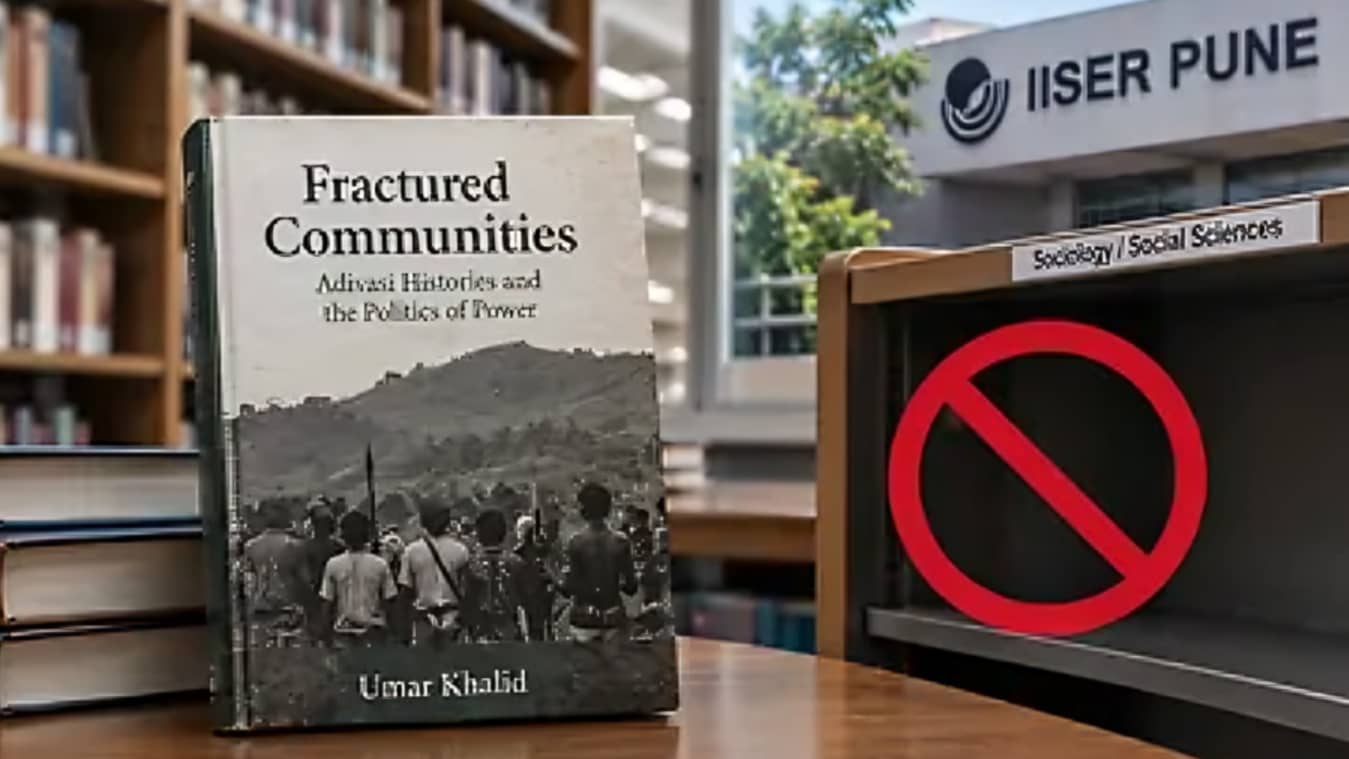
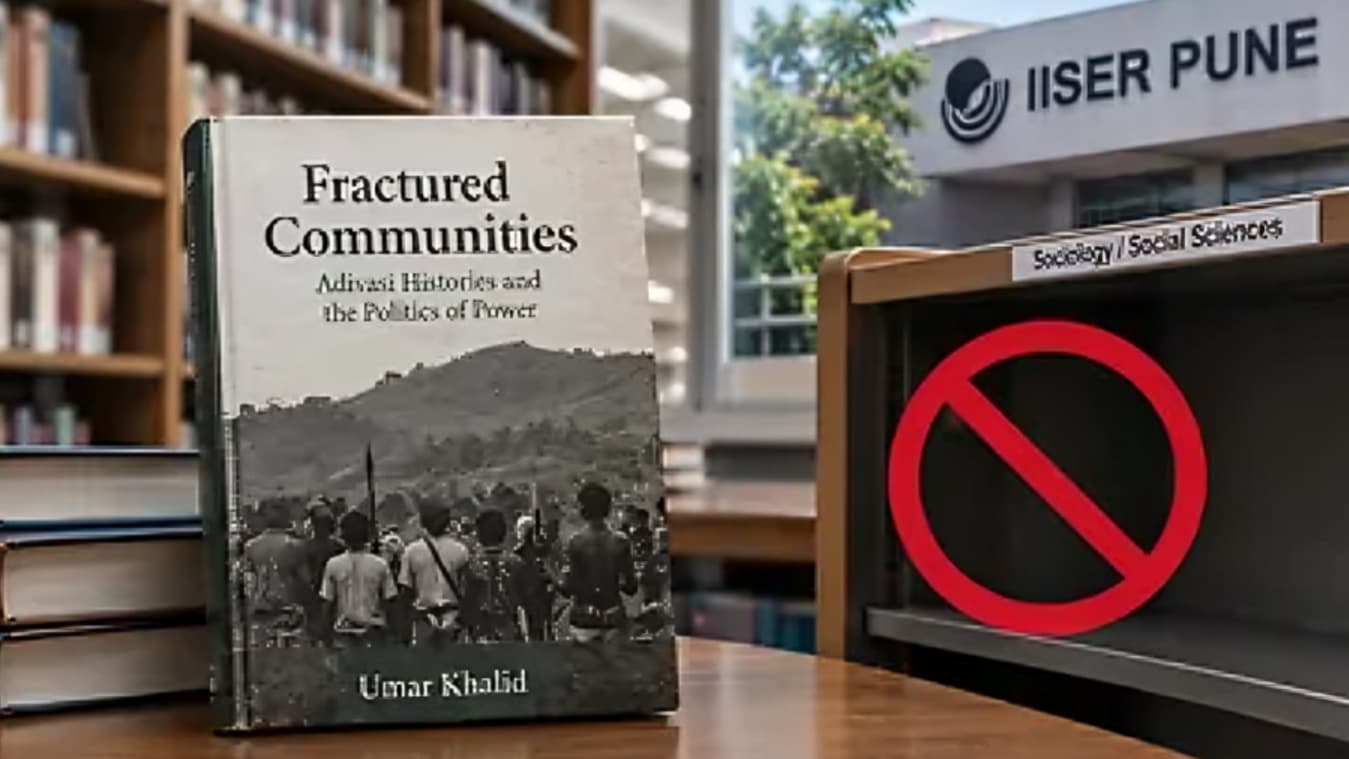
The Indian Institute of Science Education and Research Pune has withdrawn a book based on activist Umar Khalid's doctoral research from its library after the publication's inclusion triggered criticism on social media. The development has brought attention to library collection policies, academic freedom and the availability of politically contested works in educational institutions.
The book, titled Fractured Communities: Adivasi Histories and the Politics of Power, was published by Juggernaut in 2026. It is based on Khalid's doctoral research submitted to Jawaharlal Nehru University in 2018. The work examines the history of Adivasi communities in the Singhbhum region of present day Jharkhand, including colonial administration, community structures and relationships between indigenous communities and the state.
Reports published on October 26, 2026, said the book had been withdrawn following objections raised online. The institute's Board of Governors in charge chairman, Madabhushi Madan Gopal, acknowledged the episode on social media and described it as mischief. He also indicated that action had been initiated and that the institute's director had taken immediate steps.
Why Was the Book Removed From the Library?
The controversy began after a social media post drew attention to the book's inclusion in the library of IISER Pune, a publicly funded institution specialising in science education and research.
Some social media users questioned the decision to stock a publication authored by Khalid, who has been in judicial custody since September 2020 in connection with the larger conspiracy case related to the February 2020 Northeast Delhi riots.
Following the online criticism, the book was withdrawn from the institute's library. The chairman's public comments indicated that the institution intended to take corrective action, although the precise circumstances surrounding the acquisition and withdrawal were not fully explained in the reports available.
At the time of publication of those reports, IISER Pune had not issued a detailed public explanation outlining the library's selection process, the reason for the withdrawal or the nature of the action initiated.
The absence of a detailed explanation has left questions about the decision making process unanswered.
What Is Fractured Communities About?
Fractured Communities: Adivasi Histories and the Politics of Power is based on Umar Khalid's doctoral thesis submitted to the Centre for Historical Studies at Jawaharlal Nehru University in 2018. Khalid received his PhD in 2019.
The book focuses on Adivasi communities in the Singhbhum region of present day Jharkhand. It explores historical developments involving colonial administration, local governance, community relationships and the exercise of power.
Its subject is historical research rather than a direct account of the contemporary controversy surrounding its author. The work uses historical material to examine how indigenous communities interacted with administrative structures and political authority.
The book's removal has therefore raised a broader question about whether library acquisition decisions should be based primarily on the academic relevance of a publication, institutional policies or other considerations.
IISER Pune's Library and Its Academic Role
IISER Pune's Srinivasa Ramanujan Library provides educational and research resources to the institute's academic community. Its collection includes print books, research journals, electronic resources and digital materials supporting teaching and scholarship.
Academic libraries generally acquire publications to support learning, research and access to information across relevant subjects. Their collection policies may involve recommendations, budgetary considerations, academic requirements and institutional procedures.
The withdrawal of Khalid's book has renewed discussion about how such policies are applied when a publication becomes the subject of public controversy.
However, the available reports do not establish whether the book was removed following a formal library committee review, an administrative directive or another process. Further clarification from the institute would help explain how the decision was reached.
Academic Freedom and Access to Research
The incident has prompted discussion about academic freedom and the role of libraries in making scholarly material available to readers.
One issue concerns the distinction between evaluating a book for its academic content and making decisions based on public reactions to its author. Libraries and educational institutions must also follow their established acquisition policies and administrative procedures.
The episode highlights the importance of transparent decision making. A clear explanation of the selection criteria and the reasons for withdrawing a publication would help readers understand the institution's approach.
At the same time, the online criticism reflects disagreement over which publications publicly funded institutions should stock. The full circumstances of the decision remain unclear without a detailed statement from the institute.
The controversy also demonstrates how social media discussions can quickly influence attention around decisions taken by educational institutions.
Umar Khalid's Legal Case
Umar Khalid is a former Jawaharlal Nehru University student and activist who has been in judicial custody since September 2020 in connection with the larger conspiracy case related to the 2020 Northeast Delhi riots. He faces charges under the Unlawful Activities (Prevention) Act and other legal provisions.
His legal case has attracted considerable public and political attention. However, his legal status and the academic content of his book are separate matters and should be reported distinctly.
Khalid has not been convicted in the case described in the reports. Any discussion of his legal proceedings should reflect the latest verified court developments and distinguish allegations from established findings.
What Happens Next?
The key outstanding questions concern the book's withdrawal, the procedures followed by the library and any further administrative action by IISER Pune.
The institute's public explanation, if issued, could clarify whether the decision followed a formal review and whether changes to its acquisition procedures are being considered.
For now, the incident has placed the library's collection decisions under public scrutiny and renewed discussion about access to scholarly publications in academic institutions.
The book's withdrawal does not, by itself, establish that the publication has been banned. Reports have indicated that the work remains commercially available.
Further developments will depend on any official clarification from IISER Pune and additional information about the circumstances surrounding the decision.