
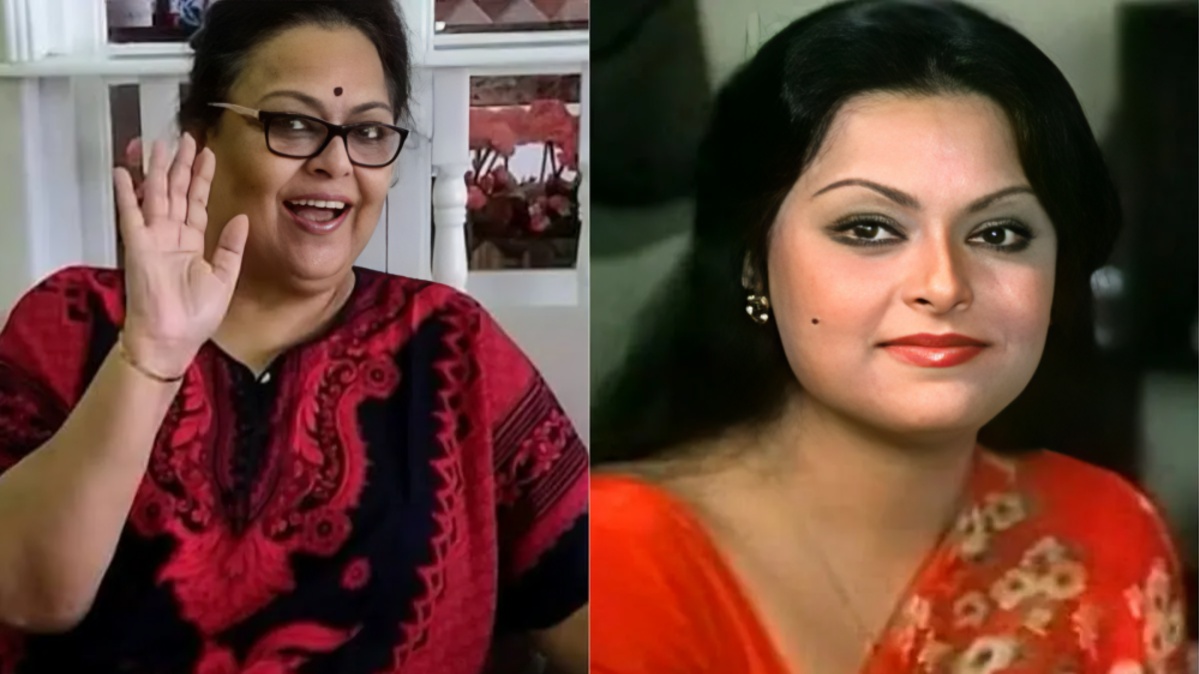
Veteran Bengali actress Mithu Mukherjee, a familiar face in Indian cinema during the 1970s and 1980s, has died at the age of 71. She passed away at a private hospital in Mumbai after a prolonged battle with cancer. Her death was reported on September 21, 2026, prompting tributes from members of the film fraternity and renewed attention to a career that had largely faded from public view in the decades after she left acting.
Mukherjee was born in Kolkata in 1955 and entered the Bengali film industry at a young age. She made her screen debut with Chitta Bose’s Shesh Parba in 1972. Her career gained wider recognition with Dinen Gupta’s Marjina Abdulla, in which she played the title character. The film helped establish her as a leading actress of the period and was followed by a series of prominent Bengali productions.
Among her notable Bengali films were Nishikanya, Mouchak, Kabi, Swayamsiddha, Hotel Snow Fox, Pratima, Bhagyachakra and Sandhi. Her filmography brought her opportunities to work alongside several major actors of Bengali cinema, including Uttam Kumar, Soumitra Chattopadhyay and Ranjit Mullick. Her performances during this period made her a recognisable figure in Bengali popular cinema.
Mouchak was among the films that strengthened her popularity. The film featured Ranjit Mullick and Uttam Kumar and became an important part of her career. She also appeared in Swayamsiddha, where she worked with Ranjit Mullick and shared the screen with established performers including Utpal Dutt and Chhaya Devi. Retrospective accounts of her career have highlighted her screen presence as well as her ability to hold her own in films featuring prominent actors of the period.
Mukherjee also attempted to establish herself in Hindi cinema. Her Bollywood debut came with Dulal Guha’s Khaan Dost in 1976, where she appeared opposite Shatrughan Sinha. She later acted in Basu Chatterjee’s Safed Jhoot, followed by films such as Dillagi and Do Ladke Dono Kadke. Although her Hindi film career did not develop to the same extent as her work in Bengali cinema, these appearances expanded her filmography beyond the regional industry.
By the 1980s, Mukherjee had gradually reduced her screen appearances. She acted in Bengali films including Bhagyachakra, Bandhan, Sandhi and Father. After Dujane in 1984, she took an extended break from acting. She eventually returned to the screen with Chandra Barot’s Ashrita, which was released in 1990. The film became her final acting appearance.
Her decision to leave the film industry meant that she became less visible to later generations of movie audiences. Unlike many stars whose careers continued through television, public appearances or social media, Mukherjee largely maintained a private life after her departure from cinema. Her absence from the public sphere was one reason her death received less widespread attention outside Bengali film circles compared with the passing of more continuously visible film personalities.
The circumstances surrounding her later years also contributed to the limited public information about her life. According to reports, she had been receiving treatment for cancer for nearly a year before her death. Reports also stated that she had spent several years based in Mumbai. Her family and people from the Bengali film community remembered her following news of her passing.
Actor Prosenjit Chatterjee paid tribute to Mukherjee following her death. He described the news as heartbreaking and said that her memory and work would continue to remain. The All Indian Cine Workers Association also issued a tribute, recalling her contribution to Bengali and Indian cinema.
Mukherjee’s career also reflects the experience of a generation of Indian film actors whose work was closely tied to the film industries and audiences of their time. During the 1970s, regional cinema had several actors who became major stars within their respective industries but did not always achieve the same level of long-term national visibility as performers who remained active in mainstream Hindi cinema.
Her career illustrates how a performer can have a significant period of popularity while maintaining a relatively short screen career. Mukherjee worked extensively during the 1970s and early 1980s, but her final film appearance came in 1990. She then chose to stay away from the entertainment industry, leaving behind a filmography that audiences and film historians can revisit through her Bengali and Hindi productions.
Her work with major Bengali stars and filmmakers remains an important part of her professional record. From her breakthrough in Marjina Abdulla to films such as Mouchak and Swayamsiddha, her career was closely connected with an important period in Bengali cinema. Her Hindi films, meanwhile, show an attempt to cross into another major Indian film industry during a period when movement between regional cinema and Bollywood was a significant career step.
Mithu Mukherjee’s death has therefore brought renewed attention to more than an individual actress. It has also encouraged a look back at performers from an earlier era whose contributions can become less visible when they leave cinema before the age of continuous media coverage. Her films remain a record of her work, while her career provides another example of the many regional stars who played important roles in Indian cinema without remaining constantly in the public spotlight.