
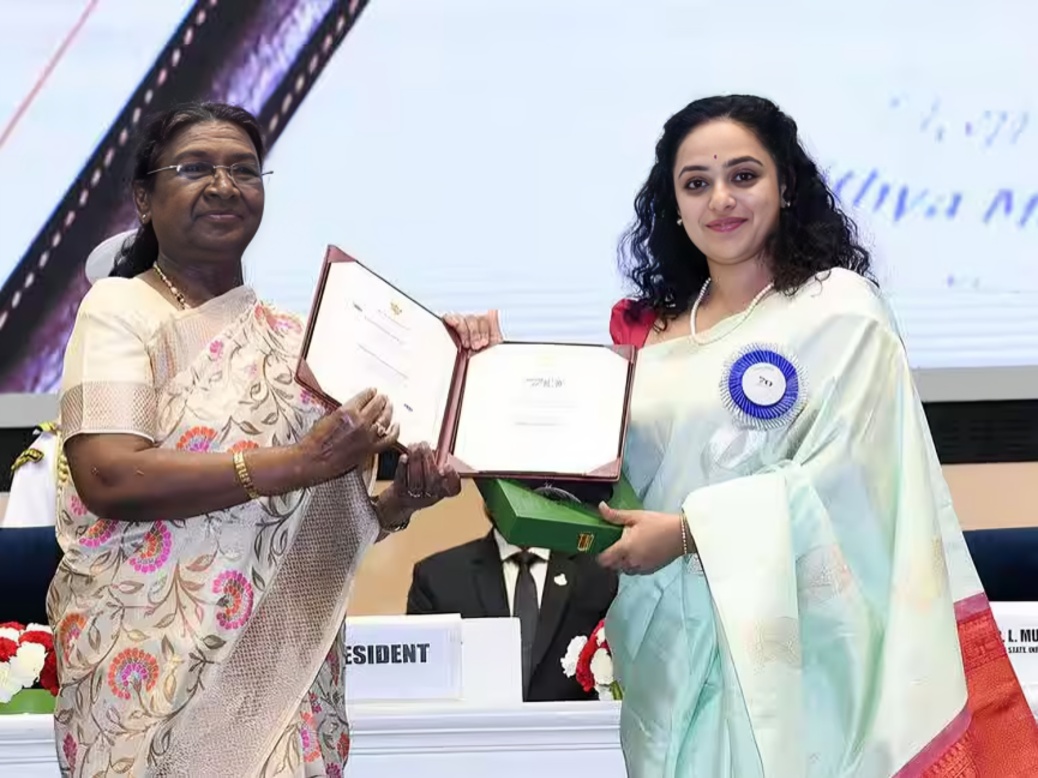
The National Film Awards have played an important role in recognising excellence in Indian cinema for more than seven decades. Although the awards were established in 1954, the original system was different from the one audiences are familiar with today. In the early years, the awards primarily recognised films, documentaries and regional cinema rather than individual acting performances.
The first National Film Awards were presented for films released in 1953. At the time, the awards were known as the State Awards for Films. The first edition included honours for feature films, documentary films and children's films. Shyamchi Aai won the President's Gold Medal for the Best All India Feature Film, while Mahabalipuram received the President's Gold Medal for the Best Documentary Film.
A significant change came more than a decade later when separate awards for artists and technicians were introduced. The change was made in 1968 for films released in 1967. This was the point at which individual acting performances received dedicated recognition at the national level.
The first Best Actress award went to Nargis Dutt. The award was then known as the Urvashi Award. Nargis Dutt was recognised for her performance in Raat Aur Din, making her the first actress to receive the national acting honour. The award was later renamed the Best Actress award.
The first Best Actor award was won by Uttam Kumar. The honour was initially called the Bharat Award. Uttam Kumar received the award for his performances in Antony Firingee and Chiriyakhana. His recognition marked the beginning of the National Film Awards' tradition of honouring individual male acting performances.
The introduction of these acting categories was an important development in the history of the National Film Awards. It expanded the awards beyond recognition for complete films and allowed individual performers to be honoured for their contribution to Indian cinema.
The names of the original acting categories also show how the award system evolved over time. The Best Actress category was initially called the Urvashi Award, while the Best Actor category was called the Bharat Award. These names were subsequently discontinued and the categories became known as Best Actress and Best Actor.
The National Film Awards continued to expand in the following decades. Additional categories were introduced to recognise different aspects of filmmaking, including cinematography, editing, music, sound, choreography and screenplay. The awards eventually developed into a broad national platform covering feature films, non-feature films and writing on cinema.
Another major milestone came in 1969 with the introduction of the Dadasaheb Phalke Award. It was created to honour a film personality for outstanding contribution to the growth and development of Indian cinema. Devika Rani became the first recipient of the award.
The history of the National Film Awards therefore reflects the changing nature of Indian cinema itself. What began in 1954 primarily as a system for recognising films gradually developed into a comprehensive national awards programme covering performances, technical crafts and other areas of filmmaking.
As the 72nd National Film Awards take place in September 2026, the history of the awards offers an opportunity to look back at the artists who established the tradition of individual national acting honours. Nargis Dutt and Uttam Kumar hold a special place in that history as the first recipients of the Best Actress and Best Actor awards respectively.
The 72nd National Film Awards recognise achievements in Indian cinema for the year 2024. The winners were announced on July 18, 2026, while the award ceremony is scheduled for September 22, 2026, at Ekta Nagar in Gujarat.