
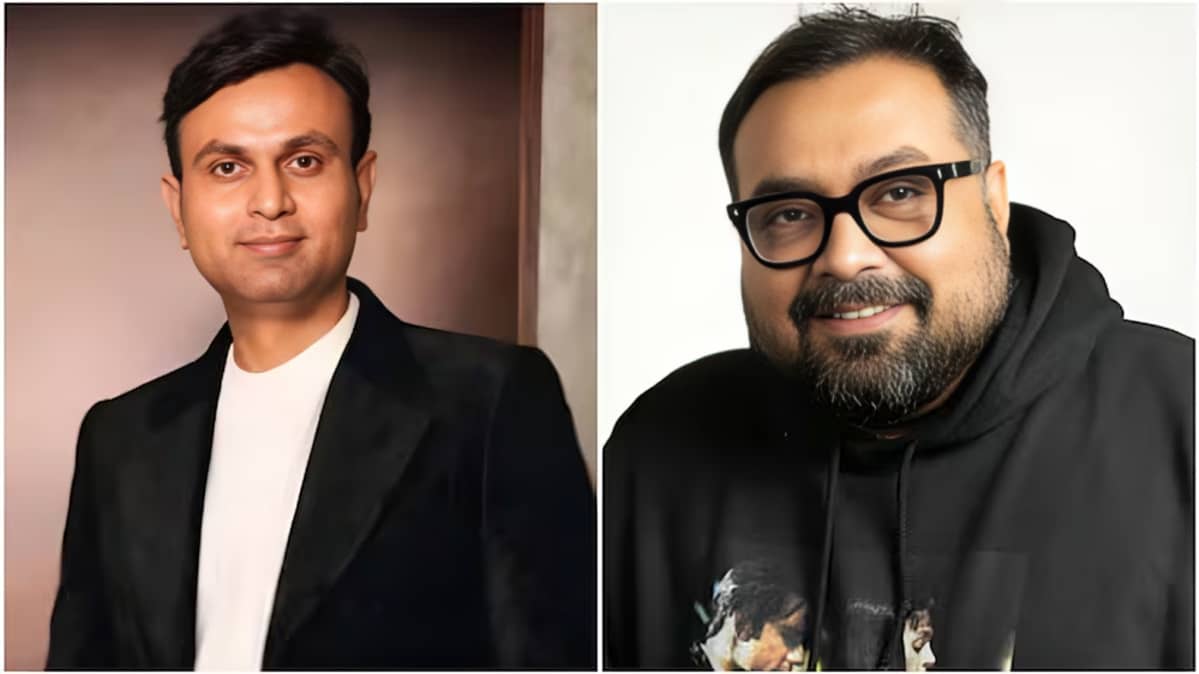
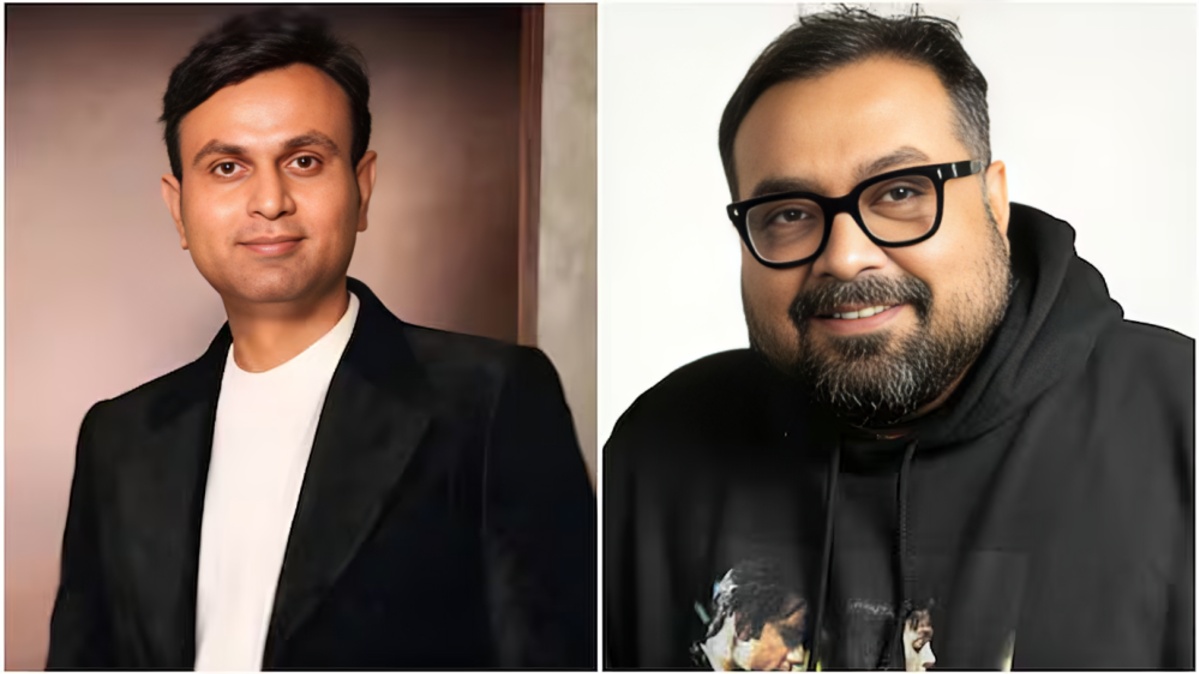
Marathi psychological thriller Gondhal has become the centre of a discussion over India’s selection process for the Academy Awards after filmmaker Anurag Kashyap questioned the country’s choices for the Oscars. The film, written and directed by Santosh Davakhar, has been selected as India’s official entry for the Best International Feature Film category at the 99th Academy Awards.
Kashyap’s comments have now received a response from Davakhar, who urged audiences to watch Gondhal before forming an opinion about the film or its selection. The director also recalled an earlier meeting with Kashyap and said that he had introduced the film to him during a flight from Bengaluru to Mumbai.
The discussion began after Kashyap spoke about India’s performance and selection process for the Oscars in an interview with Variety India. While discussing films that he believed could have represented India more effectively, he referred to The Lunchbox and All We Imagine As Light. He argued that India had missed opportunities by not selecting films he considered stronger choices for the Academy Awards.
Kashyap also discussed the importance of international exposure for films seeking recognition at the Oscars. He suggested that international festival screenings and American distribution could be considered important factors when evaluating a film’s potential for an awards campaign. Regarding Gondhal specifically, he said that he had not watched the film and therefore was not in a position to give a detailed assessment of it.
Gondhal director Santosh Davakhar subsequently responded to the discussion. In a statement shared on social media, Davakhar said he respected Kashyap and his filmmaking. He recalled meeting the filmmaker on a Bengaluru to Mumbai flight on April 26 and said he had introduced Gondhal to him during that journey.
According to Davakhar, Kashyap told him at the time that he had neither heard of nor watched Gondhal but would do so. Davakhar said the film had not subsequently been publicly available or screened in Mumbai, and used this point to explain why he was asking viewers to see the film before making a judgment about its Oscar selection.
Davakhar’s response was not framed simply as a defence of his film. He also asked audiences to evaluate Gondhal after watching it themselves. He described the project as a psychological thriller that combines elements of Marathi culture with a wider cinematic approach. He further said that the film was made with theatrical viewing in mind rather than as an OTT production.
The director also acknowledged the responsibility involved in representing India at the Academy Awards. He said the team understood the significance of the selection and expressed his intention to represent the country through the film.
Gondhal was selected by the Film Federation of India from 33 submitted films to represent India in the Best International Feature Film category. The film is set in rural Maharashtra and draws from the traditional Gondhal ritual and regional folk performance traditions. It is a Marathi language psychological thriller written and directed by Davakhar.
The film stars Ishita Deshmukh, Yogesh Sohoni, Kishor Kadam, Suresh Vishwakarma, Nishad Bhoir, Anuj Prabhu and Vitthal Kale in key roles. Gondhal was originally released in November 2025 and has now returned to public attention because of its selection as India’s Oscar entry.
The debate also brings attention to the distinction between choosing a film as a country’s official submission and the later stages of the Academy Awards process. Being selected as India’s official entry does not automatically mean that the film will receive an Oscar nomination. The submitted films from different countries go through the Academy’s eligibility and voting procedures before the final nominations are announced.
Kashyap’s comments therefore concern the broader question of which Indian film should be selected to represent the country, while Davakhar’s response focuses on the need for audiences and commentators to assess Gondhal after seeing the film.
Kashyap referred to The Lunchbox and All We Imagine As Light when discussing films that he believed could have been selected in previous years. All We Imagine As Light, directed by Payal Kapadia, was India’s selection for the 2025 Academy Awards but was not nominated in the Best International Feature Film category. The Lunchbox, directed by Ritesh Batra, was not selected as India’s official entry for the Oscars in its release year.
Kashyap also referred to Homebound, which was selected as India’s official entry in the previous awards cycle and reached the Academy’s shortlist. His comments were therefore part of a wider discussion about how Indian films are chosen and promoted for international awards.
Davakhar’s response has added another perspective to that debate. Rather than responding only to the criticism of the selection process, he pointed out that Kashyap had reportedly not seen Gondhal at the time of his comments. Davakhar consequently asked audiences to watch the film before reaching conclusions about whether it was an appropriate choice for India.
The exchange between the two filmmakers has generated attention because Gondhal is now carrying the designation of India’s official entry for the 99th Academy Awards. At the same time, Kashyap’s remarks reflect his stated views about the selection process and international visibility of Indian films.
For audiences, the discussion provides an opportunity to understand the different aspects of the Oscar selection debate. One side concerns the criteria used to select an Indian submission, while the other concerns the assessment of the selected film itself. Davakhar has asked viewers to make that assessment after watching Gondhal.
The director has also indicated that Gondhal is expected to have an upcoming theatrical re-release, giving audiences an opportunity to watch the film before forming their own views.
At present, the discussion remains a difference of opinion about India’s Oscar selection process and the merits and international prospects of the selected film. Kashyap’s comments were critical of the broader selection approach, while Davakhar has defended Gondhal’s selection and asked audiences to watch the film.
The film’s journey will now continue through the Academy Awards process. Its selection makes Gondhal India’s official submission, but the subsequent stages will determine whether it advances further in the international awards competition.