
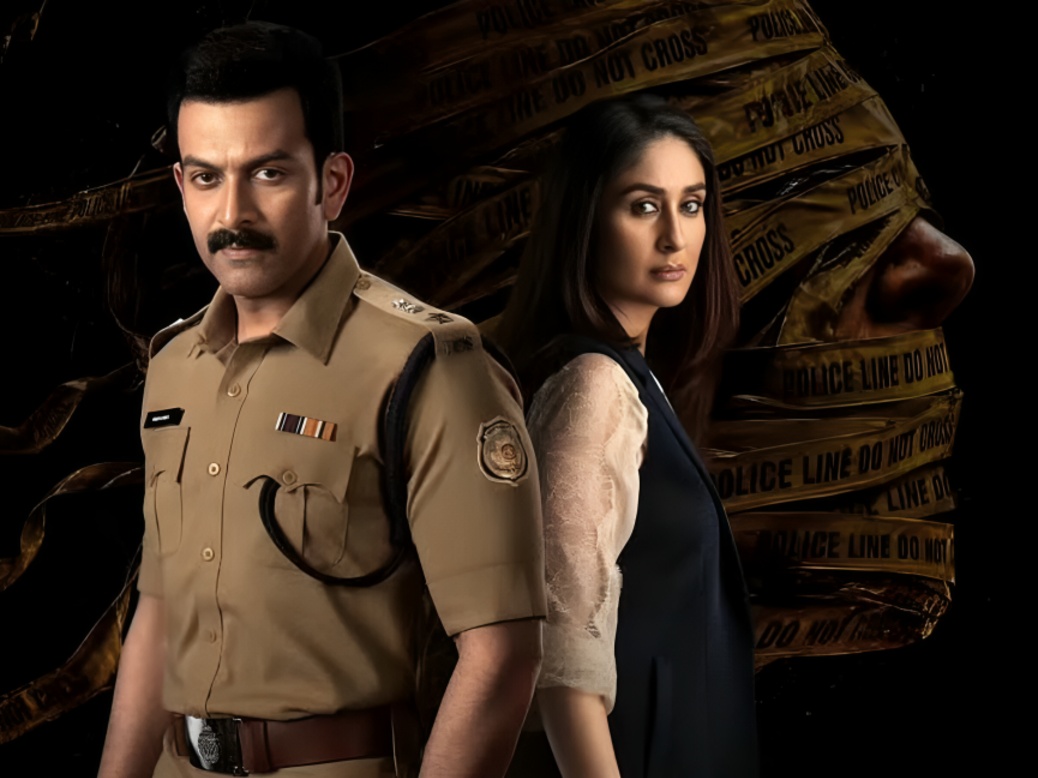
Meghna Gulzar’s upcoming film Daayra is bringing the controversial subject of police encounters back into the spotlight. Starring Kareena Kapoor Khan and Prithviraj Sukumaran, the Hindi film is centred on encounter killings and is scheduled to release in theatres on September 18, 2026. The trailer has already generated interest because of its focus on the complicated relationship between law enforcement, crime, justice and power.
However, Daayra is not the first Hindi film to examine the subject. Bollywood has explored police encounters in different forms for decades. Some films have focused on encounter specialists and their methods, while others have looked at organised crime, police investigations and the moral questions surrounding the use of lethal force.
Here are five films that have explored different aspects of police encounters and the world surrounding them.
Ab Tak Chhappan
Released in 2004, Ab Tak Chhappan is one of the best known Hindi films associated with Mumbai’s encounter squad. Directed by Shimit Amin and starring Nana Patekar, the film follows Inspector Sadhu Agashe, a police officer known for his involvement in numerous encounters.
The film was inspired by the career of Mumbai Police officer Daya Nayak and presented a fictionalised account of the life of an encounter specialist. Instead of treating the subject only as an action story, the film examined the professional pressures and personal consequences surrounding a police officer who operates in a violent environment.
Nana Patekar’s performance became one of the major strengths of the film. The restrained presentation and procedural approach also distinguished Ab Tak Chhappan from more conventional commercial crime dramas. The film remains an important reference point when discussing Bollywood’s portrayal of Mumbai’s encounter police.
Shootout at Lokhandwala
A later film to explore the subject was Shootout at Lokhandwala, directed by Apoorva Lakhia. Released in 2007, the film was based on the 1991 Lokhandwala Complex shootout involving Mumbai Police and members of the Maya Dolas gang.
The film brought together police action, organised crime and a dramatised reconstruction of the encounter. Amitabh Bachchan, Sanjay Dutt and Vivek Oberoi were among the leading actors.
The story examines the operations of an Anti Terrorism Squad as it attempts to confront an organised criminal group. The film also includes an inquiry into the police operation, giving the narrative an additional perspective on the circumstances surrounding the encounter.
Rather than focusing only on the final confrontation, the movie presents the events leading to it and the different individuals involved. This approach allowed the film to combine action with questions about policing and accountability.
Shootout at Wadala
Shootout at Wadala, released in 2013, was another major Bollywood production built around a real life Mumbai police encounter. Directed by Sanjay Gupta, the film was inspired by the killing of gangster Manya Surve during a police operation in 1982.
John Abraham played Manya Surve, while the film featured a large ensemble cast. The story combined the rise of a criminal figure with the police operation that ultimately led to his death.
Like other films in the Shootout series, the movie placed considerable emphasis on the Mumbai underworld and the relationship between organised crime and law enforcement. Its action driven treatment made the encounter a central cinematic event while also portraying the wider criminal environment surrounding it.
The film illustrates how Bollywood has frequently used real encounters and underworld history as material for commercial crime dramas.
Encounter The Killing
Encounter The Killing took a more direct approach to the subject through its focus on the police encounter system. The film featured Naseeruddin Shah and explored the relationship between police officers, criminals and the controversial practice of encounter killings.
The film is part of a broader group of Indian movies that have questioned the boundaries between legitimate policing and extrajudicial violence. Its approach is particularly relevant when looking at the larger cinematic history of encounter stories in Indian cinema.
Police encounters have often been portrayed differently depending on the genre. Some films present encounter officers as tough crime fighters, while others focus on the risks of excessive force and the absence of due process. Encounter The Killing belongs to the group of films that use the subject to raise questions about the system itself.
Maximum
Released in 2012, Maximum featured Sonu Sood, Naseeruddin Shah, Vinay Pathak and other prominent actors. The film was set against the backdrop of Mumbai’s police and underworld environment and explored conflicts within the police system.
Maximum used the encounter specialist concept as part of a larger crime narrative. Its story dealt with rivalries, police power and the complicated relationships between law enforcement officers and criminals.
The film reflected a period when Mumbai’s encounter specialists had become prominent figures in popular culture. Real life officers associated with the city’s encounter squad had gained considerable media attention, and Bollywood frequently drew inspiration from that world.
Why Daayra Is Generating Interest
The upcoming Daayra arrives at a time when audiences are increasingly familiar with films and series that examine controversial police operations. The film is directed by Meghna Gulzar, who has previously worked on projects dealing with serious social and political subjects.
The film stars Kareena Kapoor Khan and Prithviraj Sukumaran in leading roles, with Kshitee Jog and Jitendra Joshi also part of the cast. Its story is expected to examine encounter killings from a more contemporary perspective.
The trailer has positioned the film around the encounter issue rather than presenting it simply as an action spectacle. This gives Daayra an opportunity to explore the legal, ethical and human questions that can arise when police officers use lethal force during operations.
The subject remains sensitive because an encounter can involve competing claims about what happened during a police operation. Cinema can dramatise these situations, but real cases require evidence, investigation and judicial scrutiny. Films therefore offer a fictional or dramatised perspective rather than replacing the legal process.
Bollywood’s history with encounter stories shows how the subject has evolved. Earlier films often focused on the image of the fearless encounter specialist battling organised crime. Later productions increasingly introduced questions about institutional power, accountability and the consequences of violence.
Daayra appears to continue that broader conversation. Its release could lead audiences to revisit some of the earlier films that dealt with similar themes while also comparing different cinematic approaches to the subject.
The renewed interest also demonstrates the continued popularity of crime and police dramas in Indian cinema. Stories involving law enforcement, organised crime and investigations allow filmmakers to combine suspense with social and political questions.
At the same time, audiences today have access to a much wider range of crime stories through streaming platforms. This has created greater familiarity with procedural narratives and stories that examine multiple sides of a criminal investigation.
Daayra therefore enters a cinematic landscape in which viewers may expect more than action sequences. The film has the potential to explore the personal and institutional consequences of encounter operations while presenting its own interpretation of a controversial subject.
Ultimately, Bollywood’s portrayal of police encounters has never followed a single viewpoint. Some films have celebrated the determination of police officers, others have questioned the methods used by law enforcement, and several have attempted to balance both perspectives.
As Daayra approaches its September 18 release, the film will add another chapter to this long-running cinematic conversation. Its reception will depend not only on its performances and storytelling but also on how effectively it handles the sensitive questions surrounding policing, justice and accountability.