
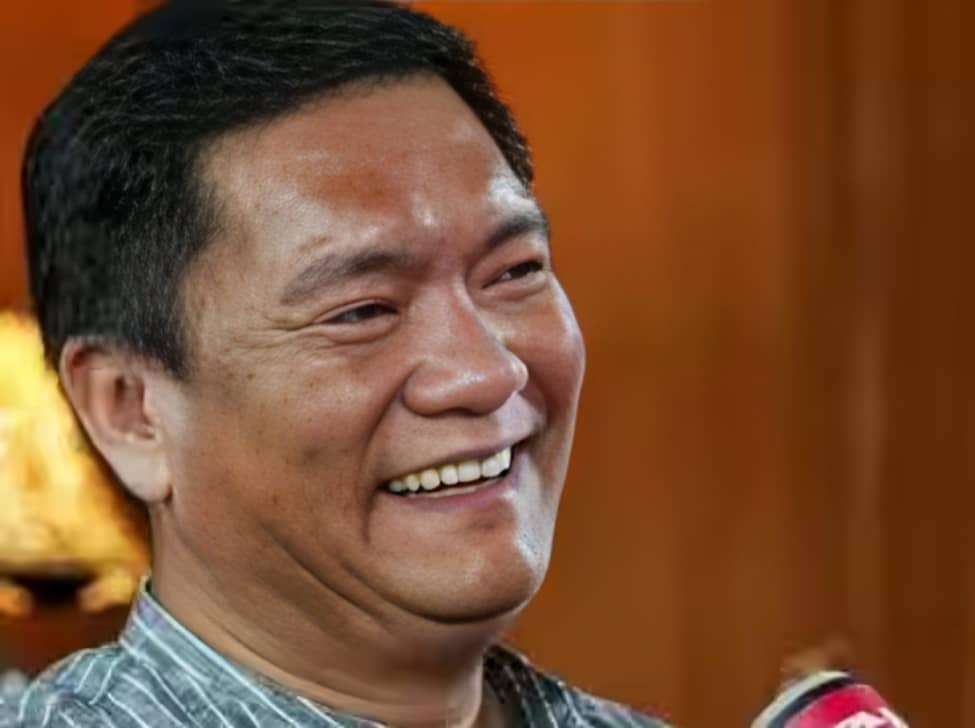
Itanagar: Arunachal Pradesh Chief Minister Pema Khandu has highlighted the significant market potential available for agricultural and allied sector products produced within the state. He said the state’s strategic location and the presence of the Indian Army, Indo Tibetan Border Police and other Central Armed Police Forces provide an existing market for locally produced agricultural and allied products.
Khandu made the remarks while inaugurating the State Agriculture Information Hub cum Farmers’ Hostel at Naharlagun. During the same programme, he flagged off the Matsya e Vaahini and e Rickshaw initiatives aimed at improving transportation and market access for fish farmers.
The Agriculture Information Hub cum Farmers’ Hostel has been described as the first facility of its kind in Arunachal Pradesh dedicated exclusively to farmers. According to the Chief Minister, the facility should serve as a centre for capacity building, knowledge sharing, technical training and professional exposure.
The facility is expected to provide farmers from different parts of the state with opportunities to participate in specialised training programmes. Farmers can stay at the hostel while attending training programmes focusing on particular crops and allied agricultural activities.
Khandu urged the Departments of Agriculture, Horticulture, Fisheries and Animal Husbandry to make effective use of the facility. He called for specialised training programmes based on the specific requirements, challenges and opportunities available in Arunachal Pradesh.
The Chief Minister stressed that farmers require greater access to technical knowledge, professional guidance, modern technologies and better market connections. He also highlighted the importance of value addition so that agricultural products can move beyond primary production and reach wider markets.
Arunachal Pradesh has diverse agro climatic conditions, ranging from tropical and subtropical regions in the foothills to temperate and alpine areas. Khandu said these conditions provide considerable opportunities for agriculture and horticulture and urged farmers and government departments to make better use of the state’s natural advantages.
The Chief Minister also emphasised the importance of strengthening the agriculture and allied sectors through coordinated government action. He said the state government has given special priority to agriculture, horticulture, fisheries and animal husbandry since 2019.
According to Khandu, better coordination among these departments can help farmers access modern technologies, government schemes, training and emerging business opportunities. He also called for continuous training of departmental officials so that they can provide effective technical guidance to farmers.
Another major focus of the government is the development of farmer organisations and collective enterprises. Khandu highlighted Self Help Groups, Farmer Producer Organisations, Farmer Producer Companies and cooperative institutions as important mechanisms for improving farmers’ access to finance, markets and professional support.
He said institutional financing is essential for farmers and rural entrepreneurs to expand their activities. Farmers and entrepreneurs were encouraged to make effective use of banking facilities, government subsidies and other institutional financial support.
The Chief Minister also highlighted the importance of value addition in agriculture and horticulture. He referred to the upcoming Mega Food Park at Banderdewa and the Mini Food Park at Namsai as potential facilities for processing and adding value to locally produced agricultural and horticultural commodities.
He said a product specific approach would be necessary to connect agricultural production with processing and markets. Such an approach could help farmers and producer organisations improve the commercial value of their products.
Khandu also spoke about the potential of fisheries, poultry, dairy, pork and other livestock sectors. He said there was considerable scope for local farmers and entrepreneurs to meet demand within Arunachal Pradesh instead of depending heavily on products transported from outside the state.
The fisheries sector received particular attention during the programme with the launch of the Matsya e Vaahini and e Rickshaw initiatives. The electric vehicles are intended to help fish farmers transport their produce more efficiently and connect with markets.
The initiative is expected to reduce transportation difficulties and improve direct access to consumers. It is also aimed at reducing the dependence of fish farmers on intermediaries and helping them secure better returns from their produce.
The use of electric vehicles also provides an environment friendly transportation option for the fisheries sector. The government expects the initiative to strengthen the marketing and distribution network for fish farmers across the state.
Khandu has also highlighted the potential of other agricultural activities, including coffee cultivation and oil palm production. The state government has been promoting organic coffee through initiatives under the Mission Organic Value Chain Development for North Eastern Region programme.
Oil palm cultivation has also been identified as an area with potential in suitable parts of Arunachal Pradesh. The government has set a target of bringing 36,000 hectares under oil palm cultivation over the next five years, according to the Chief Minister.
The Chief Minister also referred to efforts to connect local producers with institutional markets. The state government has been promoting the supply of locally produced commodities to the armed forces through cooperative arrangements in several districts.
Under this approach, departments can assess the requirements of institutional buyers and help farmers produce commodities according to market demand. Such initiatives are intended to provide farmers with more predictable markets while strengthening local production.
Khandu further highlighted the government’s plans to strengthen the cooperative movement. He said cooperation among the Cooperative Department, Rural Development Department and Panchayati Raj institutions could create additional opportunities for farmers and rural entrepreneurs.
The government’s broader strategy is focused on improving production, processing, transportation, market access and financing. The Agriculture Information Hub and Farmers’ Hostel are intended to strengthen the knowledge and training component, while initiatives such as Matsya e Vaahini are aimed at addressing transportation and marketing challenges.
The Chief Minister said the combined focus on agriculture, horticulture, fisheries, animal husbandry, entrepreneurship, value addition and institutional finance could create additional livelihood opportunities in rural areas.
The initiatives announced and launched in Naharlagun are therefore part of a broader effort to strengthen Arunachal Pradesh’s agriculture and allied sectors. The government aims to encourage farmers to adopt modern practices, improve product quality, explore value addition and connect more effectively with markets.
The launch of the Agriculture Information Hub, Farmers’ Hostel and Matsya e Vaahini marks another step in the state’s efforts to improve support systems for farmers. The success of these initiatives will depend on effective implementation, regular training, access to finance and the ability of farmers to establish reliable market connections.
With its varied climatic conditions and agricultural potential, Arunachal Pradesh has opportunities across several farming and allied sectors. The state government is seeking to use these advantages to create more sustainable livelihood opportunities for farmers, rural entrepreneurs and young people engaged in agriculture and allied activities.