
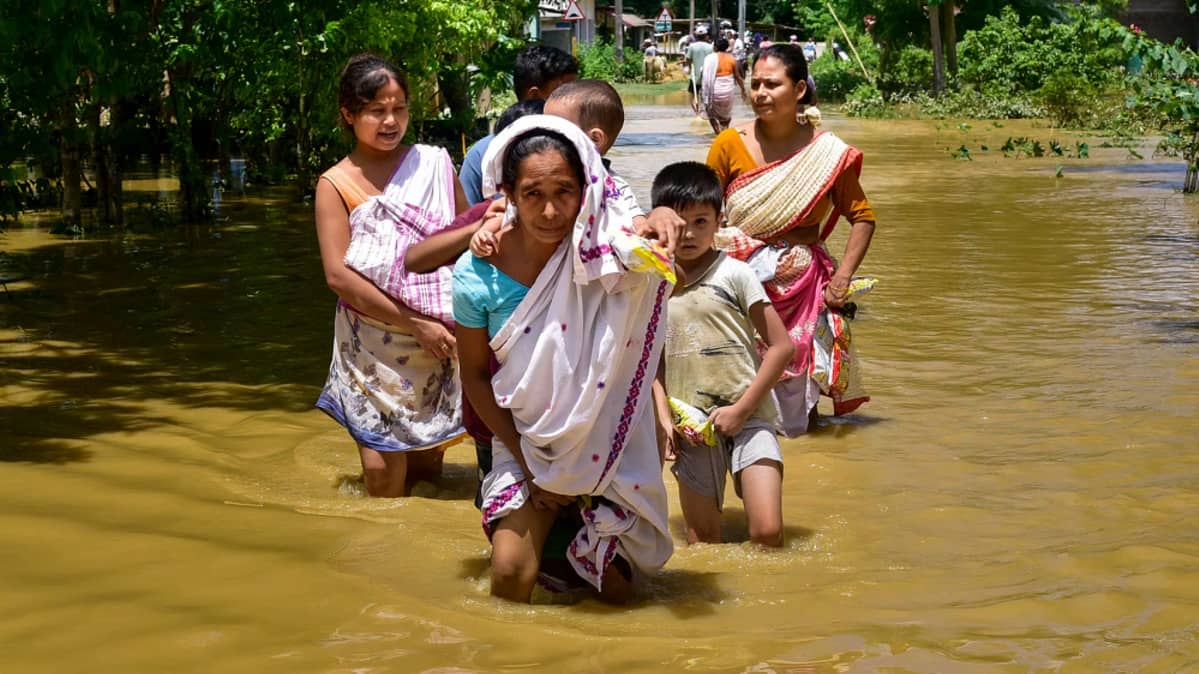
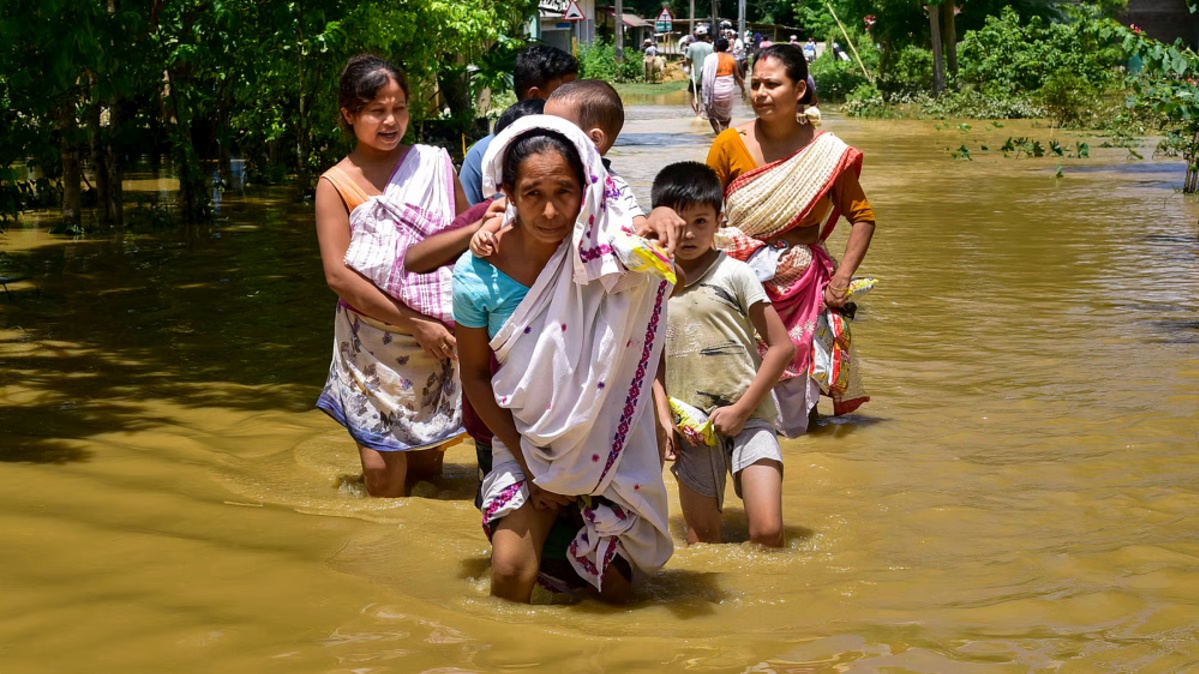
The flood situation in Assam continues to remain serious after persistent heavy rainfall triggered widespread flooding across several parts of the state. According to the latest official information, the death toll has risen to 41, while more than 6.53 lakh people have been affected in 11 districts.
Heavy rainfall over the past several days has caused rivers to overflow, inundating villages, agricultural land, and urban areas. Thousands of families have been forced to leave their homes as floodwaters entered residential localities, disrupting normal life and damaging infrastructure.
Authorities reported that at least 10 additional deaths were recorded on Wednesday, taking the overall number of flood related fatalities to 41. Officials continue to monitor the situation closely as weather conditions and river water levels remain a matter of concern.
Several districts have witnessed extensive flooding, with roads, bridges, schools, and public facilities affected by rising water levels. Transportation has been disrupted in many areas, making relief operations more challenging. In some places, connectivity has been temporarily cut off due to submerged roads and damaged infrastructure.
The Assam State Disaster Management Authority, along with the National Disaster Response Force, State Disaster Response Force, district administrations, and other emergency agencies, has intensified rescue and relief operations. Teams are evacuating stranded residents, distributing food and drinking water, and providing emergency medical assistance in the worst affected areas.
Relief camps and temporary shelters have been established to accommodate displaced families. These camps are providing essential services, including food, clean drinking water, healthcare, sanitation facilities, and basic necessities for people forced to leave their homes because of the floods.
Floodwaters have also caused significant damage to agricultural fields, raising concerns about crop losses and the livelihoods of farmers. Large areas of cultivated land remain submerged, and authorities are assessing the extent of damage to agriculture, livestock, and public infrastructure.
Educational institutions in several flood affected areas have either suspended classes or experienced disruptions due to waterlogging and accessibility issues. Local authorities are continuing to assess conditions before normal activities can resume safely.
Wildlife habitats have also been impacted by the floods. Rising water levels have affected several forest areas, forcing wild animals to move toward higher ground. Forest officials are closely monitoring the situation to ensure the safety of wildlife while coordinating with disaster management agencies where necessary.
The India Meteorological Department has continued to monitor weather conditions and has issued forecasts for rainfall in parts of the northeastern region. Authorities have advised residents living near rivers and other low lying areas to remain alert, follow official advisories, and move to safer locations whenever necessary.
Government agencies have assured that relief and rehabilitation efforts will continue until normal conditions are restored. Officials are conducting regular assessments to identify the immediate needs of affected communities and ensure that assistance reaches vulnerable populations as quickly as possible.
With floodwaters continuing to affect large parts of Assam, emergency teams remain on high alert. Authorities have appealed to the public to cooperate with rescue personnel, avoid entering flooded areas, and rely only on official information regarding weather updates, evacuation measures, and relief operations. The focus remains on protecting lives, providing humanitarian assistance, and supporting communities as the state works through one of its most challenging flood situations in recent months.