
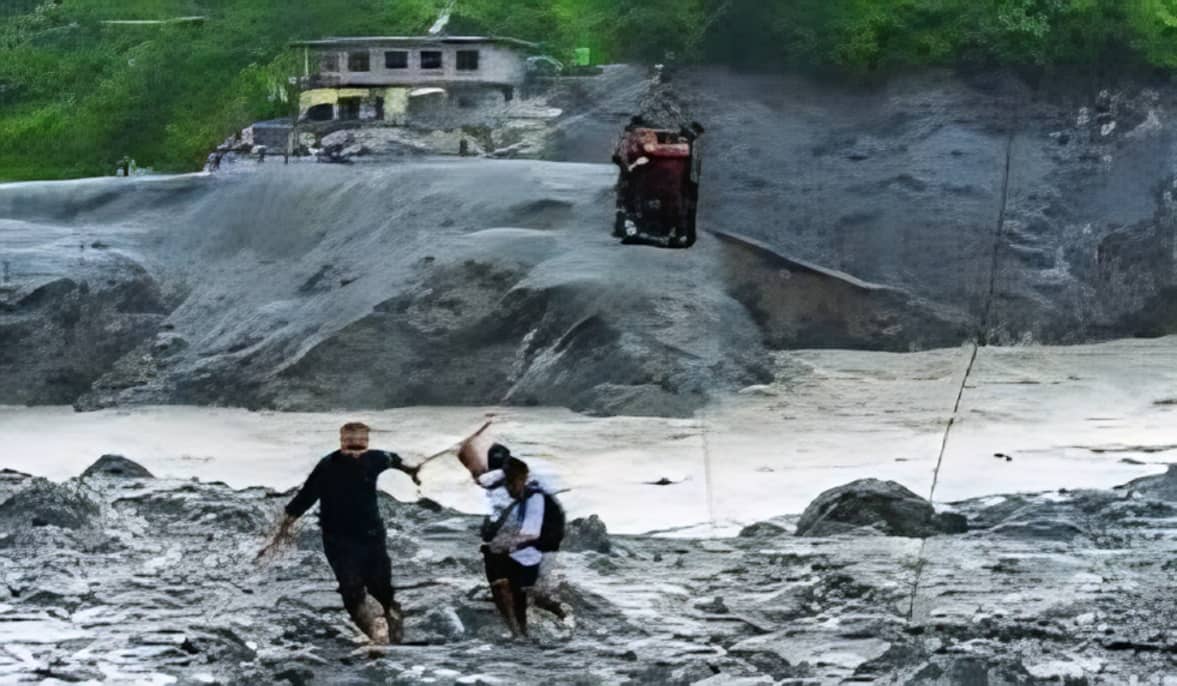

The Union government has reviewed the preparedness of Himalayan states and Union Territories to respond to the risks posed by Glacial Lake Outburst Floods and snow avalanches. The review comes amid renewed concerns about disaster risks in the Himalayan region following the devastating glacier linked floods in neighbouring Nepal.
Union Home Secretary Govind Mohan chaired the meeting in which representatives of Himalayan states and Union Territories presented their existing preparedness measures and mitigation strategies. The discussions focused on strengthening disaster management systems and improving the ability of local authorities to respond quickly to sudden natural disasters.
The recent disaster in Nepal has highlighted the potentially devastating consequences of sudden glacier and ice related events in the Himalayan region. The disaster has raised wider concerns about vulnerable mountain communities, infrastructure and river systems across the Himalayan belt.
A Glacial Lake Outburst Flood, commonly known as a GLOF, occurs when water stored in a glacial lake is suddenly released. Such an event can send a large volume of water, ice, rocks and debris downstream within a short period. Communities and infrastructure located along downstream valleys can face serious risks because the flood may develop rapidly and leave limited time for evacuation.
During the review, the Centre emphasised the importance of identifying and continuously monitoring vulnerable glacial lakes. Early detection is considered an important part of disaster preparedness because timely information can provide downstream communities with additional time to move to safer locations.
The meeting also examined early warning systems. The Centre stressed the need to strengthen systems that can detect changes in vulnerable areas and communicate warnings quickly to district administrations and communities. Effective communication between scientific agencies, disaster management authorities, local administrations and residents is considered essential for reducing casualties.
Evacuation preparedness was another important aspect of the discussions. Authorities need to identify vulnerable settlements, prepare evacuation routes and ensure that local officials and communities understand what action should be taken when an emergency warning is issued. Regular awareness programmes and preparedness exercises can also help communities respond more effectively during a sudden disaster.
The review also covered the preparedness of Himalayan states and Union Territories for snow avalanches. Avalanches can affect mountainous roads, villages, tourism areas and critical infrastructure, particularly during periods of heavy snowfall and unstable snow conditions.
The Centre has called for greater coordination between different agencies involved in disaster monitoring and response. Technology can play an important role in this process by helping authorities monitor remote and difficult terrain. Satellite based observation, remote sensing, ground based monitoring systems and communication networks can support the identification of potential hazards.
India has already taken steps to strengthen GLOF risk management. The Ministry of Home Affairs has stated that the government approved a National Glacial Lake Outburst Flood Risk Mitigation Programme with a financial outlay of Rs 150 crore for Arunachal Pradesh, Himachal Pradesh, Sikkim and Uttarakhand. The programme includes structural and non structural measures intended to reduce GLOF risks in vulnerable areas.
The National Disaster Management Authority has also undertaken assessments of potentially dangerous glacial lakes in the Himalayan region. Priority lakes are monitored by relevant agencies, while states receive technical guidance on structural mitigation, watershed management, slope stabilisation, evacuation planning and disaster response.
The government has also highlighted the importance of community level preparedness. People living downstream from vulnerable glacial lakes may be among those most exposed to sudden flooding. Awareness programmes can help residents understand warning signals, evacuation procedures and safe locations.
The Himalayan region presents particular challenges for disaster management because of its difficult terrain, remote settlements and rapidly changing weather conditions. Roads and communication networks can also be disrupted during landslides, avalanches and floods, making emergency response more difficult.
Climate change has added another dimension to the risk. Rising temperatures can accelerate glacier retreat and influence the stability of glacial lakes. Experts and international organisations have repeatedly warned that changing climatic conditions could increase risks from glacier related hazards in vulnerable Himalayan regions.
The recent disaster in Nepal has therefore increased attention on the need for stronger disaster preparedness across the wider Himalayan region. The scale of the destruction reported in Nepal has demonstrated how quickly a glacier related event can affect communities, transport networks, hydropower facilities and other infrastructure.
However, the Centre's preparedness review is part of a broader disaster risk reduction effort and not simply a response to one incident. India has been developing GLOF monitoring and mitigation measures for several years, including assessments of high risk glacial lakes and early warning systems.
The Ministry of Home Affairs has previously stated that disaster authorities are working with scientific and technical institutions to support states in developing appropriate mitigation measures. The government has also encouraged the use of technology and stronger local capacity to improve disaster response.
For Himalayan states, preparedness involves several stages. These include identifying hazards, assessing vulnerable populations and infrastructure, monitoring high risk areas, issuing timely warnings and ensuring that evacuation plans can be implemented quickly.
The latest review is expected to encourage states and Union Territories to examine their existing systems and identify areas where additional measures may be required. Particular attention is likely to remain on vulnerable glacial lakes, avalanche prone areas and settlements located close to mountain rivers.
The Centre has also stressed the need for faster implementation of approved mitigation projects. Effective disaster preparedness depends not only on planning but also on the timely completion and maintenance of monitoring systems, communication infrastructure and other protective measures.
The review highlights the importance of preparedness before a disaster occurs. Early warnings can save lives only when communities receive them quickly and have clear evacuation procedures. Coordination between national agencies, state governments, district administrations and local communities will therefore remain a critical part of India's Himalayan disaster management strategy.
The latest developments also underline the need to balance infrastructure development with disaster risk assessments in fragile mountain environments. Roads, bridges, hydropower projects, tourism facilities and settlements in vulnerable valleys can face significant risks if natural hazards are not adequately considered during planning.
As the Himalayan region continues to experience environmental and climatic changes, authorities are expected to strengthen monitoring and preparedness measures. The Centre's latest review is aimed at ensuring that Himalayan states and Union Territories are better equipped to identify potential hazards, issue timely warnings and respond effectively to GLOFs and avalanches.
The focus now will be on translating the preparedness plans presented during the review into effective measures on the ground. Continued monitoring, community awareness, early warning systems and coordinated emergency response will be essential to reduce the potential impact of future disasters in the Himalayan region.