
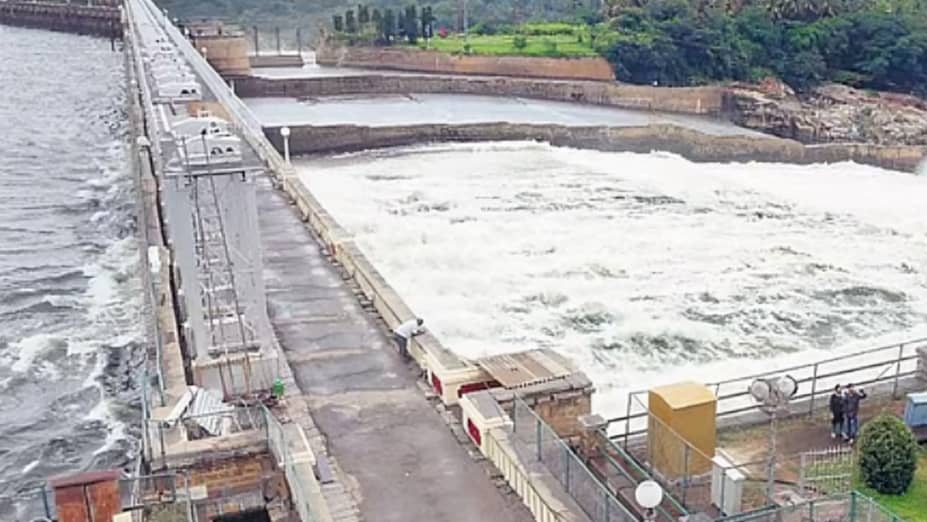
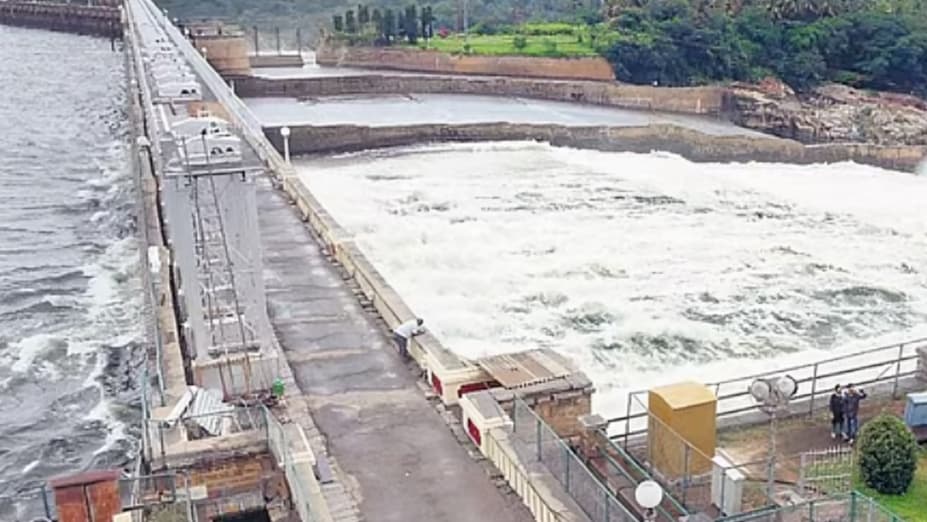
The Krishna Raja Sagara (KRS) Dam, one of Karnataka’s most important water reservoirs, has once again reached its full reservoir level (FRL), marking the third instance of hitting maximum capacity this year. Located in Mandya district and built across the Cauvery River, the dam continues to play a crucial role in irrigation, drinking water supply, and hydropower generation for the region. The recent rise in water level is attributed to continuous inflow from the upstream catchment areas, particularly due to persistent rainfall across Kodagu and surrounding districts.
According to officials from the Cauvery Neeravari Nigam Limited (CNNL), the dam touched its full reservoir level of 124.80 feet after several days of consistent water inflow. With the reservoir achieving maximum storage, authorities have begun controlled water discharge to manage pressure and maintain safe operational conditions. The outflow has been adjusted to meet irrigation requirements and ensure adequate water supply to downstream regions, including Mysuru and parts of Bengaluru.
The repeated filling of KRS this year highlights the unusual rainfall patterns observed during the monsoon and post-monsoon seasons. Meteorologists note that the region has witnessed above-average rainfall, significantly contributing to higher river flow levels. While the rise in storage is beneficial for water-dependent sectors, authorities are mindful of maintaining structural safety and managing inflow fluctuations that may occur with sudden weather changes.
Local farmers have expressed relief at the increased storage, as the water availability is expected to support irrigation for standing crops and upcoming agricultural cycles. The Mandya sugarcane belt, which relies heavily on KRS for canal water, stands to benefit from consistent water release. Similarly, urban residents dependent on the reservoir for drinking water are likely to experience stable supply in the coming months.
However, officials caution that water management strategies will continue to be planned carefully, given the ongoing requirements of the Cauvery water sharing agreement between Karnataka and Tamil Nadu. The increased inflow may necessitate additional releases downstream, depending on directives from water management authorities and court-mandated protocols.
Meanwhile, engineers at KRS are conducting routine checks to ensure the safety of the dam structure. Surveillance teams are monitoring seepage, pressure points, and gate operations, especially after multiple overflows this year. Emergency response teams remain on standby, although no safety threats have been reported so far.
Tourist activity around the dam has risen following news of the reservoir reaching full capacity. Brindavan Gardens, adjacent to the dam, has seen an increase in visitors coming to witness the scenic water spread and illuminated fountains. Local businesses have also reported improved footfall, providing an economic boost to the area.
With weather forecasts predicting intermittent showers in the catchment region, officials continue to keep a close watch on inflow patterns. The KRS Dam’s third filling of the year underscores both the benefits and challenges of managing a major reservoir in the face of unpredictable climatic trends.


