343 Voter ID Cards Found Along Narmada River in Madhya Pradesh, Congress Seeks Probe
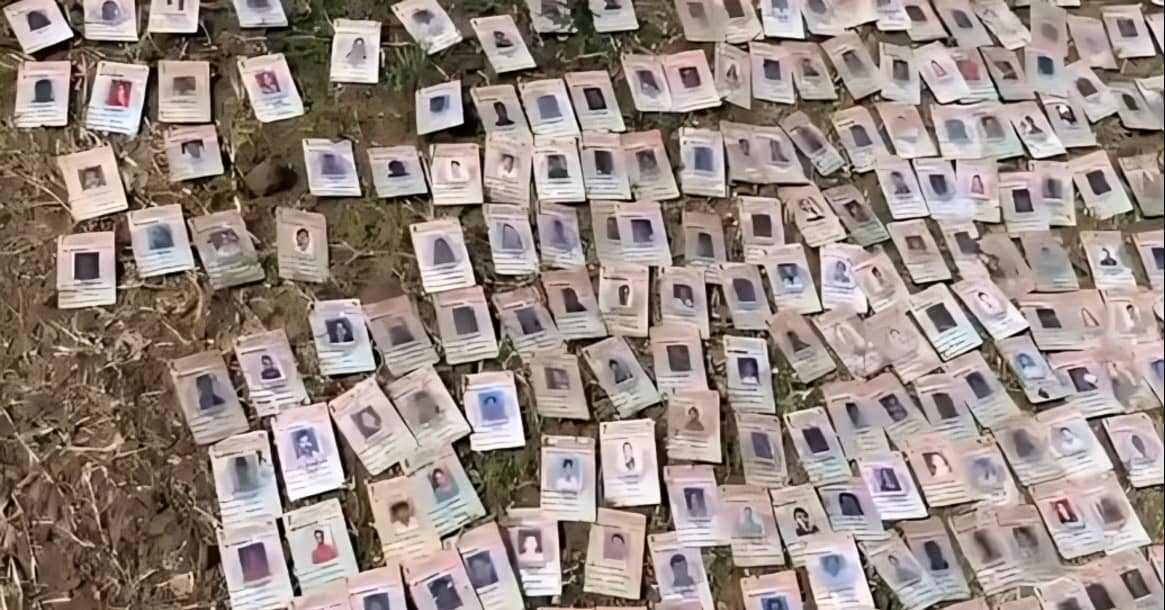
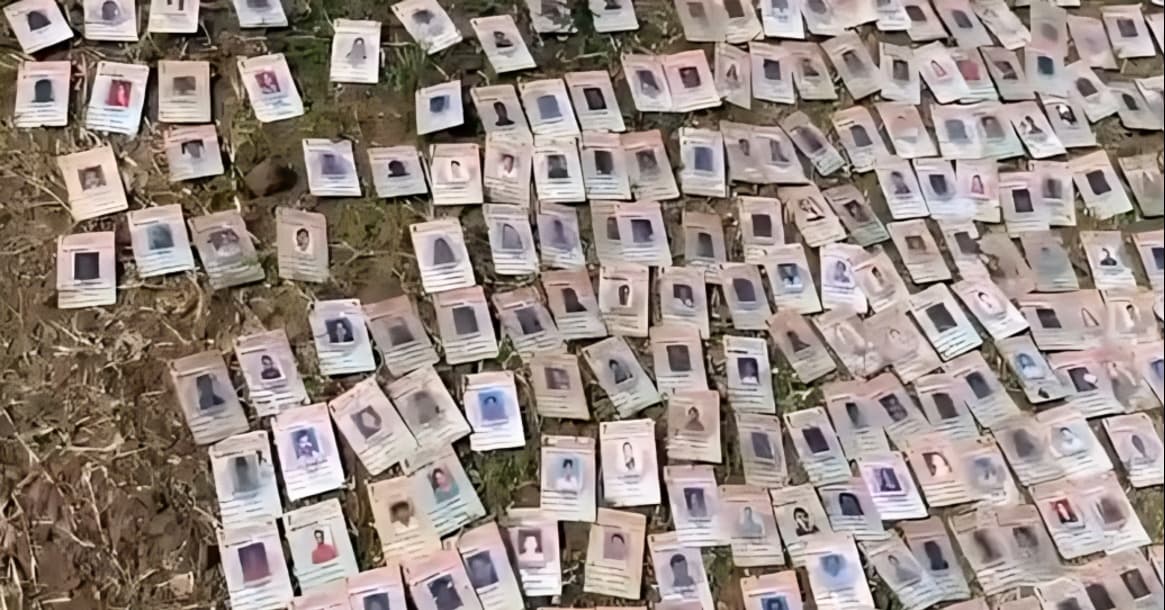
A total of 343 voter identity cards were found abandoned along the banks of the Narmada River in Mandleshwar town of Madhya Pradesh’s Khargone district, triggering a political controversy and prompting the Congress to demand a formal investigation. The cards were discovered on October 25, 2026, during a cleanliness drive along the riverbank.
Preliminary information suggests that the cards carry addresses associated with the Rau Assembly constituency in neighbouring Indore district. However, authorities have not yet established how the cards reached Mandleshwar, who left them there or whether all the recovered cards are authentic.
The discovery comes amid an ongoing political dispute over electoral roll revisions and allegations of irregularities in voter registration. The Congress has called for an impartial investigation and action against anyone found responsible.
Voter Cards Discovered During River Cleanliness Drive
Members of a group participating in a cleanliness drive along the Narmada River reportedly noticed voter identity cards floating in the water and lying along the riverbank near Mandleshwar Ghat. Residents collected the cards and informed the local administration.
The recovered documents were subsequently taken into official custody. A video showing the cards spread along the riverbank circulated on social media, drawing public attention to the incident.
Preliminary reports indicate that the cards contain addresses in Indore, including localities such as Tilak Nagar, Aastha Palace and Akash Nagar. Rau Assembly constituency is located in Indore district, roughly 90 kilometres from Mandleshwar.
The distance between the places has raised questions about how the cards came to be found beside the river. However, their discovery alone does not establish whether the documents were deliberately discarded, lost during transport or brought there under other circumstances.
Authorities are expected to examine the cards and verify their details with the relevant election offices as part of the investigation.
Congress Demands FIR and Independent Investigation
The Congress reacted to the discovery by demanding that the police register a First Information Report and conduct an impartial investigation.
Khargone district Congress president Ravi Naik, accompanied by party workers, approached Mandleshwar police station and submitted a complaint. He questioned how so many voter identity cards associated with another district had been found at the riverbank and called for accountability.
The Congress alleged that the incident raised serious questions about the handling of voter records. Party representatives demanded that the authorities establish how the cards reached Mandleshwar and identify those responsible if any wrongdoing is found.
The party also called for a search of the river with the assistance of divers to determine whether additional voter identity cards had been discarded in the water.
Congress leaders have linked the incident to their wider concerns about the Election Commission of India and the management of electoral rolls. These remain allegations made by the opposition and have not been established as findings of an official investigation.
Police and Revenue Officials Begin Inquiry
Mandleshwar Sub-Divisional Officer of Police Shweta Shukla said the voter identity cards were found during the cleanliness drive along the Narmada River.
According to officials, a revenue team took the cards into custody, and the local police station in-charge was directed to investigate the matter. Police also confirmed receiving a complaint from Congress representatives.
The immediate priority for investigators is to establish the origin and status of the recovered documents. This may include checking the identification numbers, verifying the details with election records and determining whether the cards were issued to registered voters.
Officials have not established publicly how the cards reached the riverbank. Until the inquiry produces verified findings, the circumstances surrounding their discovery remain unclear.
The distinction is important because the presence of voter identity cards at an unexpected location does not, by itself, prove that voter registration records were altered or that votes were manipulated.
Congress Links Incident to Wider Electoral Roll Concerns
The discovery has taken place amid a wider political debate over the Special Intensive Revision of electoral rolls. The Election Commission conducts revision exercises to update voter records, identify duplicate entries and address cases involving deceased, relocated or otherwise ineligible electors.
Opposition parties, including the Congress, have raised concerns about the possibility of eligible voters being removed from electoral rolls during such exercises. They have called for greater transparency and safeguards to prevent administrative errors from affecting voting rights.
The Congress has cited the recovery of the 343 cards as a reason for demanding scrutiny of the electoral administration. However, no established connection between the recovered physical cards and any specific electoral roll revision decision has been demonstrated in the information available so far.
The investigation in Mandleshwar is therefore separate from the broader political allegations. Establishing whether the cards are genuine, when they were issued and how they came to be found at the riverbank will be essential to determining the significance of the incident.
Previous Incident Adds to Political Debate
The latest discovery has also drawn comparisons with an earlier incident in Madhya Pradesh. In October 2025, hundreds of voter identity cards were reportedly found in a pond in Chhatarpur district during a cleaning exercise.
That incident also prompted political claims about possible electoral irregularities. Opposition leaders have referred to such discoveries in their criticism of voter registration and election administration.
However, separate incidents should not automatically be treated as evidence of a common cause. Each case requires an independent investigation into the authenticity of the documents, their ownership and the circumstances in which they were found.
What Happens Next?
The investigation into the 343 voter identity cards is expected to focus on verifying the documents and tracing their origin. Election officials may need to confirm whether the cards correspond to valid entries in the electoral roll and whether any administrative or other explanation exists for their presence in Mandleshwar.
The Congress has demanded an FIR and a wider search of the river, while local authorities have confirmed that the cards were seized and that an investigation has been ordered.
As of October 26, 2026, no verified public finding had established who left the cards at the riverbank or why they were there. The discovery has prompted fresh political criticism of the Election Commission, but allegations of vote theft remain unproven in relation to this incident.
The outcome of the investigation will be important in clarifying whether the recovered cards were lost, discarded or connected to any wrongdoing. Until official findings are available, the incident should be reported as an ongoing investigation rather than proof of electoral fraud.