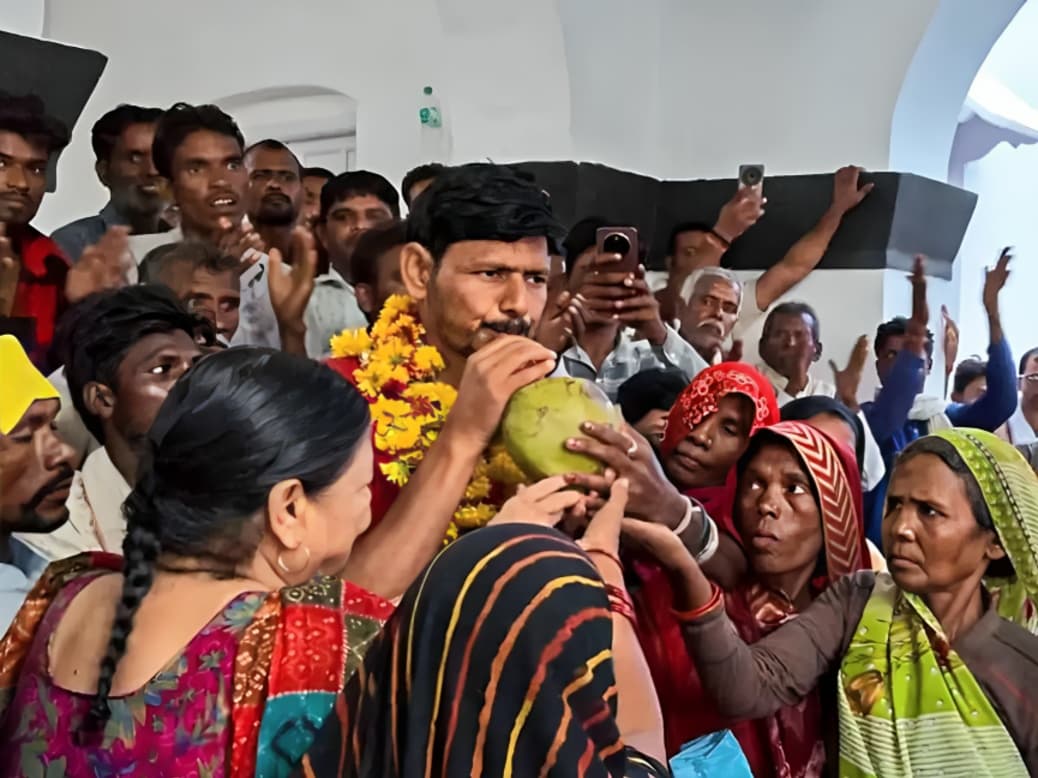
Lahari Bai Baiga, a tribal farmer from Madhya Pradesh, has emerged as a symbol of sustainable agriculture after being honoured with the title Millets Queen for her lifelong contribution to conserving traditional millet varieties. Belonging to the Baiga tribal community, she has dedicated more than two decades to preserving indigenous seeds that were once at risk of disappearing due to modern farming practices.
Living in a remote forest region of Madhya Pradesh, Lahari Bai Baiga began collecting and conserving seeds at a time when hybrid crops were rapidly replacing traditional food grains. Recognising the importance of millets for nutrition, climate resilience, and food security, she made it her mission to protect these native crops for future generations. Today, her seed collection includes more than 150 varieties of traditional crops, many of which are rare and no longer commonly cultivated.
Millets such as kodo, kutki, jowar, and other indigenous grains form the backbone of her farming efforts. These crops require less water, are resistant to pests, and can withstand harsh climatic conditions, making them ideal for dry and forested regions. Through her work, Lahari Bai Baiga has demonstrated how traditional knowledge can offer solutions to modern agricultural challenges such as climate change and declining soil fertility.
Apart from conserving seeds, she actively shares her knowledge with fellow farmers, particularly women from tribal communities. By encouraging them to grow millets and use traditional farming methods, she has helped many families improve their food security and income. Her efforts have also contributed to better nutrition, as millets are rich in minerals, fibre, and essential nutrients.
The recognition as Millets Queen has brought national attention to her work and the importance of indigenous farming systems. Agricultural experts and policymakers have praised her dedication, noting that farmers like Lahari Bai Baiga play a crucial role in preserving biodiversity and promoting sustainable food systems. Her achievement also highlights the valuable contribution of tribal communities to India’s agricultural heritage.
In recent years, millets have gained renewed importance due to their health benefits and ability to grow in challenging environments. Lahari Bai Baiga’s work aligns closely with this national and global focus on sustainable and climate-smart agriculture. Her success story serves as an inspiration to young farmers and reinforces the need to respect and revive traditional farming knowledge.
From a small tribal village to national recognition, Lahari Bai Baiga’s journey reflects the power of perseverance, traditional wisdom, and commitment to nature. Her work continues to inspire efforts to protect indigenous crops and ensure a more sustainable future for Indian agriculture.