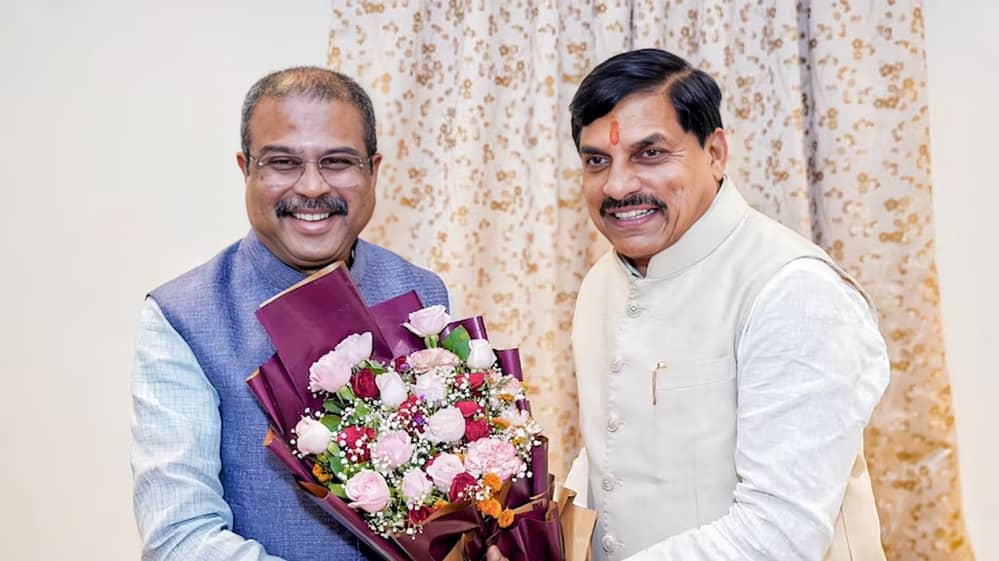
Union Education Minister Dharmendra Pradhan has put forward the idea of adopting a Mahakal Standard Time, drawing attention to the historical and cultural significance of Ujjain. Speaking at a public event, he emphasized the link between science and spirituality, stating that both are interconnected and should be viewed as complementary aspects of knowledge.
Pradhan referred to Ujjain as a place of importance in India’s ancient scientific traditions. He highlighted that the city has historically been associated with astronomical studies and time calculations. Ujjain has long been considered a centre for learning and research in ancient India, particularly in the fields of astronomy and mathematics.
He also mentioned the Mahakal Temple in Ujjain, which holds religious significance and attracts devotees from across the country. According to him, such sites reflect the deep connection between scientific understanding and spiritual practices in Indian tradition. His remarks focused on the idea that traditional knowledge systems can offer valuable insights even in contemporary times.
The proposal to consider Mahakal Standard Time has generated discussion among scholars and the public. While some view it as a recognition of India’s historical contributions to science, others see it as a symbolic statement rather than a practical proposal. Currently, Indian Standard Time is based on a time meridian passing near Allahabad, which is used uniformly across the country.
Experts note that time standards are determined based on global conventions and coordination. Greenwich Mean Time has historically served as a reference point for timekeeping around the world, although it has largely been replaced by Coordinated Universal Time in modern usage. Any change in time standards would require extensive evaluation and international coordination.
Pradhan’s remarks also touched upon the broader theme of integrating traditional knowledge with modern education. He suggested that educational systems should incorporate elements of India’s scientific heritage, helping students understand the contributions of ancient scholars and thinkers.
The discussion has also brought attention to the importance of Ujjain in India’s cultural and historical landscape. The city is known for its association with ancient texts and scholarly traditions. It has been a centre for astronomical observations and calculations for centuries, contributing to the development of timekeeping methods in the past.
The minister’s statement that science is incomplete without spirituality has sparked varied responses. Some scholars agree that integrating different perspectives can enrich understanding, while others emphasize the need to maintain a clear distinction between scientific methods and spiritual beliefs.
As the debate continues, the proposal has opened up conversations about how India’s heritage can be acknowledged in modern contexts. It has also highlighted the role of public figures in initiating discussions on the intersection of science, culture and education.
Overall, the remarks by Dharmendra Pradhan have brought renewed focus on Ujjain’s historical significance and the broader question of how traditional knowledge can be integrated into contemporary discourse. The idea of Mahakal Standard Time, whether symbolic or practical, has added a new dimension to discussions on timekeeping and cultural identity in India.