
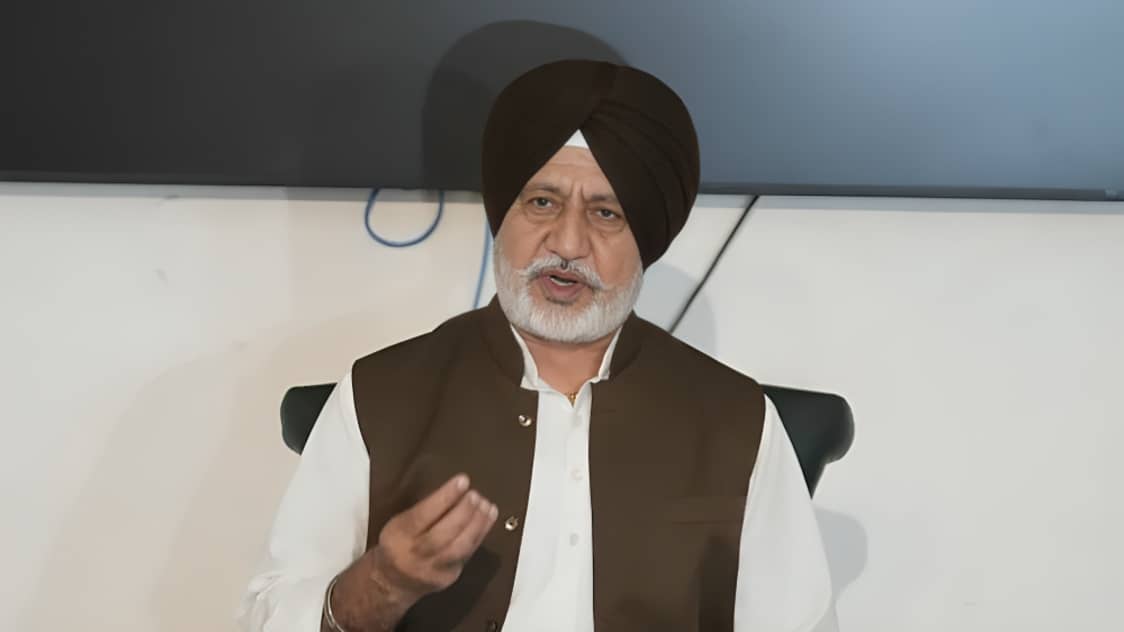

The Punjab government has intensified its campaign against drugs and organised crime, with operations increasingly extending beyond the state's geographical boundaries, according to Aam Aadmi Party Punjab media in-charge Baltej Pannu.
Speaking at a press conference on September 15, Pannu said the Bhagwant Mann government had prioritised action against drug trafficking and organised criminal networks through initiatives referred to as Yudh Nashean Virudh and Gansteraan Te Vaar. He said Punjab Police had continued tracking alleged gangsters who left the country and had brought back more than a dozen individuals from different foreign locations.
One of the latest cases cited by Pannu involved Karamveer Singh, also known as Karamveer Deo or Dev. According to Pannu, Deo was deported from Canada and subsequently arrested at Delhi airport. He described Deo as a close associate of gangster Lawrence Bishnoi. These descriptions and allegations were made by Pannu while outlining the government's actions against organised crime. The criminal cases against individuals involved remain subject to investigation and judicial proceedings.
Pannu said the Punjab Police had brought back alleged gangsters from several countries. The locations mentioned included the United States, Dubai, Malaysia and Moldova. Among the names he cited were Sachin Bishnoi, Manpreet Singh alias Pita, Ramanjit Singh alias Romi, Parminder Singh alias Pindi, Anmol Bishnoi, Amritpal alias Mehro, Gurvinder Singh and Jobandeep Singh alias Joban Billa.
According to Pannu, Anmol Bishnoi was brought back from the United States, while Amritpal alias Mehro was brought back from Dubai. He also said Gurvinder Singh was brought back from Malaysia. Pannu further stated that the Anti-Gangster Task Force had recently brought Amritpal alias Amrit Dalam from Moldova. These claims were presented by the AAP spokesperson as examples of the government's efforts to pursue alleged criminals who had moved abroad.
The Punjab government's campaign has two broad components, according to the AAP's description. Yudh Nashean Virudh focuses on action against drugs and drug trafficking, while Gansteraan Te Vaar refers to operations targeting gangsters and organised criminal networks. The government has said these initiatives are intended to strengthen enforcement and prevent criminal networks from operating within the state.
Pannu also highlighted efforts to modernise the Punjab Police. He said the government had provided police personnel with advanced technology and equipment to improve their ability to prevent crime and track suspects. According to his remarks, the modernisation programme goes beyond providing vehicles and includes technological and operational resources for law enforcement agencies.
The AAP spokesperson also referred to a recent operation in Ludhiana. He said police had received information about a planned attack on a blood donation camp and were able to intervene before the alleged attack could take place. Details of individual criminal cases and police operations remain subject to official investigations and legal proceedings.
Pannu further claimed that Punjab Police is pursuing alleged criminals even in countries where India does not have an extradition treaty. He said international cooperation has become important in tracking individuals accused of criminal activity who leave India. Such international cases can involve deportation, extradition proceedings or other legal mechanisms depending on the country concerned and the circumstances of each case.
During his press conference, Pannu also criticised opposition parties and discussed the history of gangsterism in Punjab. He alleged that organised criminal activity increased during earlier periods of state government and accused previous administrations of failing to adequately address the issue. These were political claims made by the AAP spokesperson and represent the party's position rather than independently established findings.
The Punjab government has previously described its anti-drug campaign as a major law and order priority. In statements earlier in 2026, Chief Minister Bhagwant Mann said the government had taken action against drug traffickers and organised gangs and had strengthened police capabilities. Government figures concerning arrests, seizures and enforcement operations should be considered official claims unless independently verified through police or judicial records.
The latest announcement places international cooperation at the centre of the state's approach to organised crime. According to Pannu, Punjab Police is continuing to work on cases involving alleged gangsters who moved overseas after criminal activity in the state. The arrest of Karamveer Deo after his deportation from Canada was presented as the latest example of this approach.
The government's stated objective is to prevent Punjab-based criminal networks from using foreign countries as places to avoid law enforcement. Pannu said the police would continue pursuing alleged offenders regardless of where they were located. However, the legal status of each individual and the allegations against them must be determined through the relevant investigation and judicial process.
The development comes as Punjab continues to focus on drug trafficking, organised crime and law and order. The government's campaigns have combined domestic police operations with efforts to locate and bring back alleged offenders who have travelled abroad. International coordination is expected to remain an important part of investigations involving suspects located outside India.
For now, the latest statement from the Punjab government focuses on the reported return of more than a dozen alleged gangsters from foreign countries and the arrest of Karamveer Deo following his deportation from Canada. The AAP has presented these developments as evidence of its wider campaign against organised crime, while the legal proceedings in individual cases will determine the allegations and charges against the accused.