
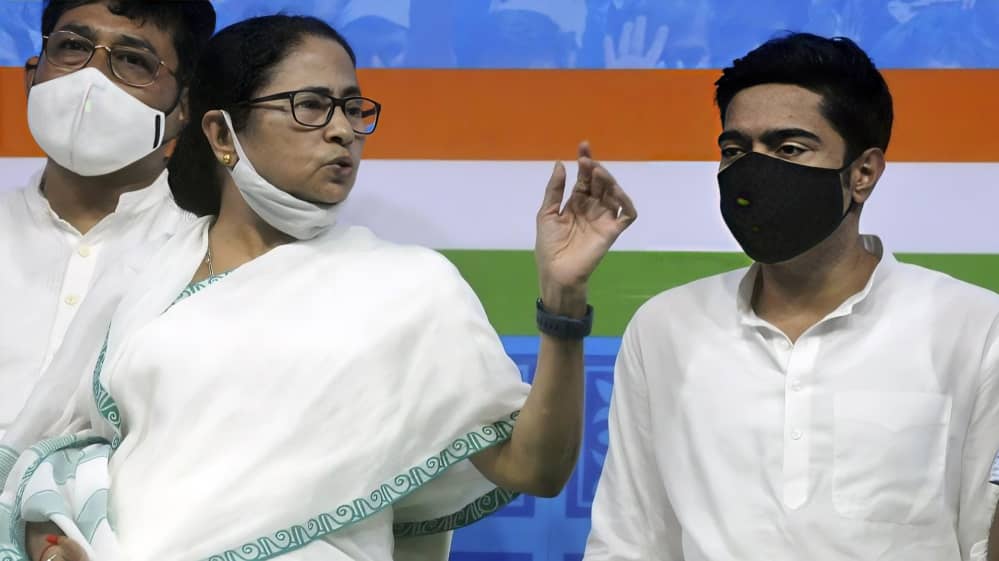
Political tensions have intensified within the All India Trinamool Congress after recent election setbacks triggered internal criticism and disciplinary action against several party leaders. The controversy gained attention after suspended party spokesperson Riju Dutta publicly criticized the functioning of the party and alleged widespread organizational issues.
Riju Dutta stated that he had only spoken the truth while raising concerns about corruption and internal management within the party. His comments came shortly after disciplinary measures were reportedly taken against multiple members who criticized the party leadership following recent electoral performances.
The suspended spokesperson alleged that corruption had become institutionalized within the organization and claimed that internal dissent was not being tolerated. His remarks have sparked wider political debate in West Bengal, where the Trinamool Congress continues to remain the ruling party under the leadership of Chief Minister Mamata Banerjee.
Party officials, however, defended the disciplinary actions and stated that organizational discipline is necessary for maintaining unity within the party. Leaders close to the Trinamool Congress leadership argued that public criticism by party members weakens the organization and creates confusion among supporters.
The controversy emerged at a time when political parties across several states are reassessing strategies after recent election outcomes. Analysts believe internal disagreements often become more visible after electoral setbacks, especially in parties with strong regional influence.
Political observers noted that the Trinamool Congress has historically maintained strict organizational control under Mamata Banerjee’s leadership. The party has frequently acted against leaders accused of anti-party activities or public dissent. However, the latest developments have attracted significant public and media attention because of the serious nature of the allegations raised by suspended members.
Opposition parties quickly reacted to the controversy, accusing the ruling party in West Bengal of failing to address corruption-related concerns. Leaders from rival political parties claimed that the internal criticism reflected growing dissatisfaction within the Trinamool Congress.
Meanwhile, Trinamool Congress representatives dismissed the allegations and accused opposition parties of attempting to exploit internal issues for political gain. Party leaders maintained that the organization remains united and focused on governance and development initiatives in the state.
Political analysts believe the situation could influence the party’s future organizational decisions and electoral planning. Internal unity is considered especially important for regional parties that rely heavily on cadre strength and local leadership networks.
The developments have also generated intense discussion on social media platforms, where supporters and critics of the party have shared differing views regarding the disciplinary action and the allegations raised by suspended members.
Experts note that internal dissent is not uncommon in major political parties, particularly after elections or during periods of organizational restructuring. However, the manner in which leadership responds to criticism often shapes public perception and party morale.
Despite the controversy, the Trinamool Congress leadership has continued to emphasize its commitment to governance and organizational discipline. Party insiders suggest that further internal discussions may take place to address concerns and strengthen coordination within the organization.
As political attention remains focused on West Bengal, the latest episode has once again highlighted the challenges political parties face in balancing internal discipline with demands for transparency and accountability.