The National Museum in New Delhi has announced a six-month-long exhibition of the Piprahwa relics, which are widely believed to be associated with Lord Buddha. The announcement was confirmed by the Director General of the National Museum, highlighting the importance of making these historically significant artefacts accessible to the public for an extended duration.
The Piprahwa relics were discovered during archaeological excavations at Piprahwa, located in Siddharthnagar district of Uttar Pradesh, close to the India-Nepal border. The site is historically significant as it is believed to be part of ancient Kapilavastu, the capital of the Shakya kingdom, where Prince Siddhartha Gautama spent his early life before attaining enlightenment and becoming the Buddha.
The relics include bone fragments believed to be remains of the Buddha, preserved inside stone and crystal caskets, along with inscriptions in Brahmi script. Archaeologists and historians consider these findings among the most important Buddhist archaeological discoveries in the world. The inscriptions suggest that the relics were enshrined by members of the Shakya clan, lending strong historical credibility to their association with the Buddha.
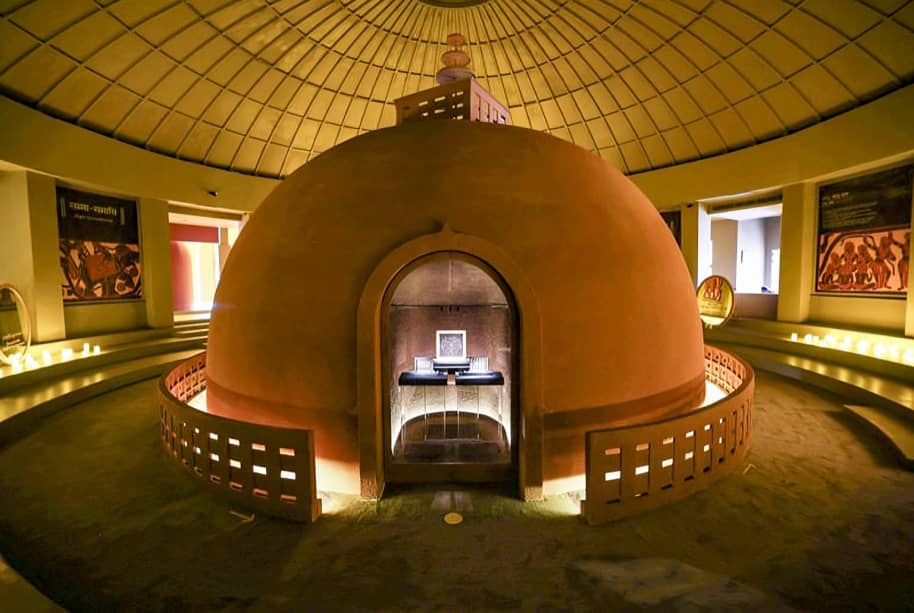
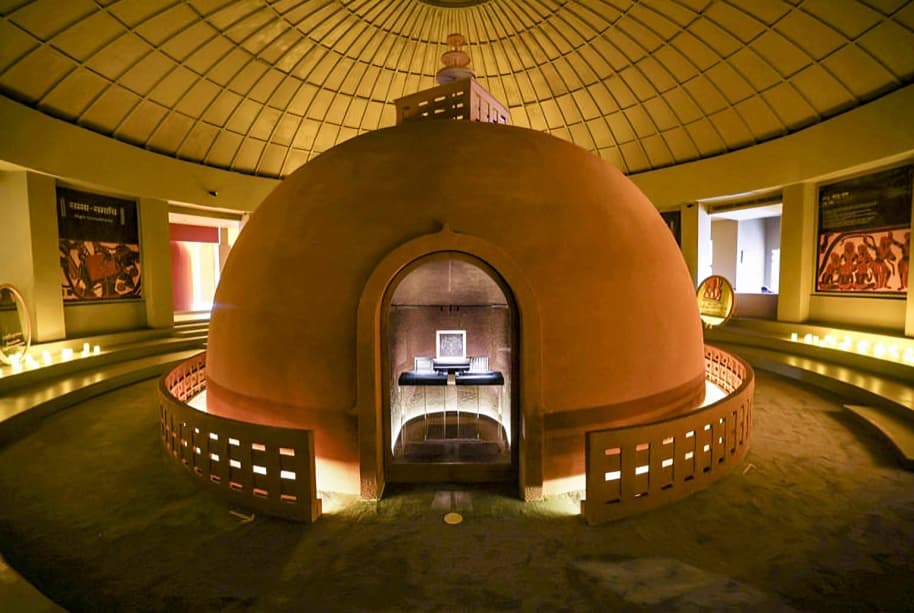
According to museum officials, the exhibition has been curated to provide visitors with a comprehensive understanding of the historical, religious, and cultural significance of the relics. Informational panels, digital displays, and scholarly interpretations accompany the artefacts to help visitors understand their archaeological context and spiritual value. The exhibition also traces the journey of Buddhism from India to other parts of Asia.
Special arrangements have been made to ensure the preservation of the relics during the exhibition period. Temperature-controlled display cases, strict security protocols, and continuous monitoring have been implemented to safeguard the artefacts. The museum has also coordinated with conservation experts to maintain international preservation standards.
The extended duration of the exhibition reflects growing public interest in India’s Buddhist heritage and aligns with efforts to promote cultural awareness and historical education. Officials believe the exhibition will attract scholars, students, and international visitors, especially from Buddhist-majority countries.
The Piprahwa relics exhibition is expected to strengthen India’s cultural diplomacy by highlighting the country’s role as the birthplace of Buddhism. By providing public access to these rare artefacts, the National Museum aims to foster deeper appreciation of India’s ancient history and its enduring spiritual traditions.