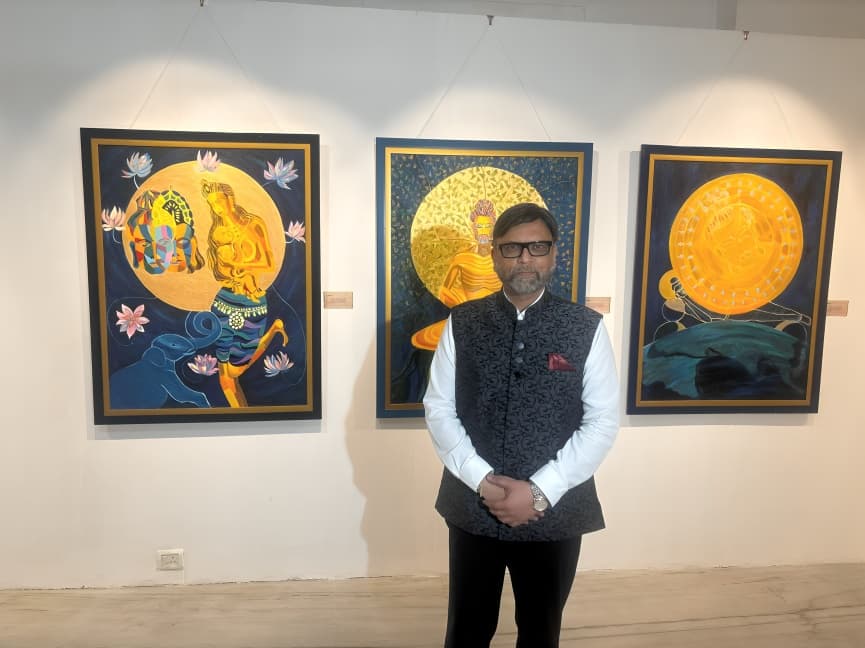
An exhibition currently on view at the India Habitat Centre in New Delhi is drawing attention for its creative exploration of India’s maritime history. Blending traditional textiles with striking mural art, the show provides visitors with a unique cultural experience that highlights the role of artistic expression in documenting trade and cultural exchanges across centuries.
The exhibition focuses on the ancient maritime routes that connected India to distant shores, linking coastal regions with countries in Southeast Asia, the Middle East, and beyond. India’s historical seafaring communities were instrumental not only in transporting goods but also in exchanging ideas, stories, and design traditions. This exhibition uses the mediums of fabric and painted imagery to tell these layered stories in an engaging visual form.
Textiles are central to the display, reflecting India’s long-standing reputation as a hub of weaving, dyeing, and embroidery. Fabrics from different regions showcase patterns and motifs that often carry influences from cross-cultural trade. Alongside these are murals that narrate tales of seafaring voyages, depictions of ports, and representations of the cultural life surrounding maritime trade. By placing textiles and murals together, the exhibition highlights how both crafts have served as powerful carriers of memory and heritage.
Curators of the show emphasize the need to view India’s maritime past not only through economic or political history but also through cultural expression. While maritime trade enabled the exchange of spices, textiles, and precious items, it also led to artistic collaborations and cross-cultural creativity. The blend of murals and textiles at the India Habitat Centre aims to remind audiences of this wider significance, placing art at the centre of heritage studies.
The exhibition also serves as a reminder of how deeply connected coastal communities were to artistic traditions. Many of the mural depictions feature everyday life, rituals, and cultural practices that developed around ports and trading centres. Similarly, the fabrics displayed represent techniques that evolved as craftspeople absorbed influences from international buyers and foreign artisans.
Visitors to the exhibition are offered an opportunity to see history not through textbooks or archaeological finds alone, but through art that carries traces of lived experiences. Each piece on display tells a story of journeys across seas, cultural dialogue, and the creativity that emerged from these encounters. The experience is designed to be both educational and immersive, enabling viewers to appreciate how India’s maritime legacy has shaped its cultural richness.
By bringing together these art forms under one roof, the exhibition not only preserves memory but also inspires new generations to reflect on the importance of India’s historical maritime connections. It reinforces the understanding that heritage is not confined to monuments or artefacts, but also lives through crafts, visual traditions, and cultural practices. The India Habitat Centre, by hosting this event, adds another important chapter to the ongoing conversation on how art and heritage can keep history alive for contemporary audiences.