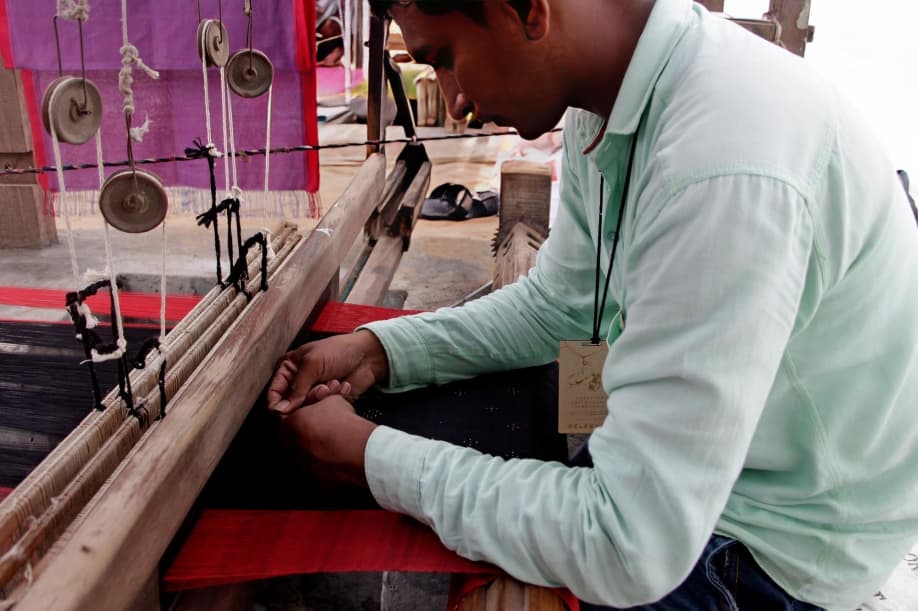
Gujarat’s Tangaliya weaving, a centuries-old handloom tradition, is witnessing renewed interest due to a series of government initiatives aimed at preserving and promoting this unique craft. Known for its intricate geometric patterns and distinctive textures, Tangaliya weaving has historically been practiced by the Patel and Dudhia communities in the Surendranagar and Rajkot regions. The craft produces fabrics for sarees, dupattas, and other garments, each piece reflecting a combination of skill, heritage, and artistic expression.
Over the years, Tangaliya weaving faced a decline as younger generations shifted to alternative livelihoods, and mechanized fabrics became more popular. However, recognizing the cultural significance of this craft, the Gujarat government and associated handloom boards have implemented programs to support weavers. These initiatives include skill development workshops, financial subsidies, and assistance in obtaining raw materials at subsidized rates. Artisans are also being provided access to modern design techniques while maintaining traditional patterns, ensuring the craft remains relevant in contemporary markets.
Market access has been a critical focus of these government efforts. Weavers now have opportunities to display and sell their products in exhibitions, fairs, and government-backed e-commerce platforms. Promotional campaigns at state, national, and international levels help connect Tangaliya fabrics to wider audiences, increasing demand and awareness. As a result, more young artisans are choosing to pursue Tangaliya weaving, ensuring the continuation of this cultural legacy.
Additionally, government schemes aim to create sustainable livelihoods for Tangaliya weavers. Financial support and recognition through awards and certifications have helped raise the profile of artisans, while cooperative societies enable them to negotiate fair prices and improve production efficiency. NGOs and cultural organizations are collaborating with government agencies to document the craft, preserve traditional techniques, and mentor new weavers.
The revival of Tangaliya weaving not only protects Gujarat’s heritage but also contributes to the state’s economy. Increased visibility of Tangaliya products has led to higher demand, benefitting local communities financially. The craft’s distinctive patterns and sustainable handloom production have also attracted attention in the fashion industry, linking cultural preservation with contemporary relevance.
Through these combined efforts, Tangaliya weaving is being positioned as both a symbol of Gujarat’s rich heritage and a viable economic opportunity. Government support ensures that artisans are empowered, the craft is sustained, and younger generations are motivated to carry forward a tradition that reflects skill, creativity, and cultural pride. Tangaliya’s revival serves as a model for safeguarding traditional crafts across India, blending cultural preservation with modern development strategies.