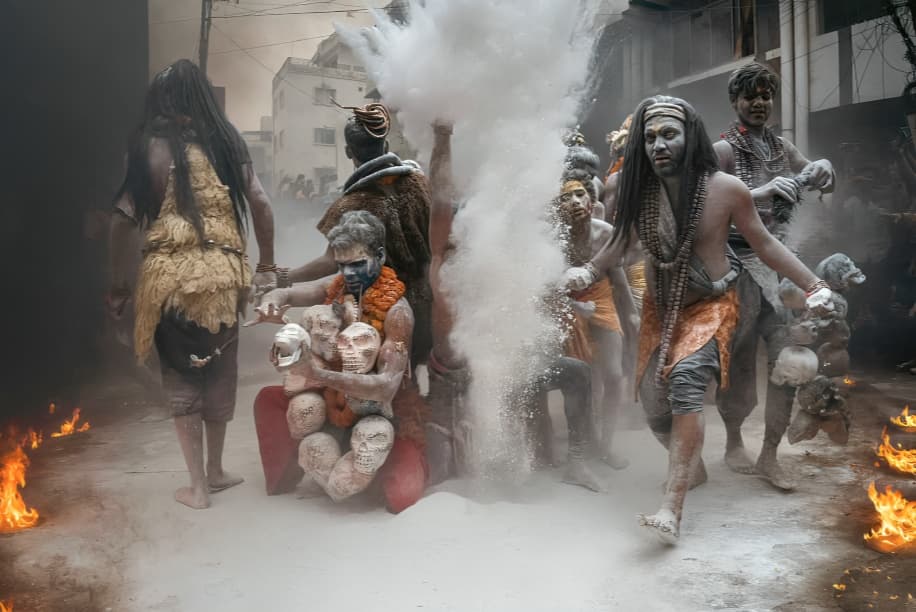
Masaan Holi, also known as Bhasma Holi or Smashan Holi, is a distinctive spiritual tradition observed at Manikarnika Ghat in Varanasi. The ritual presents a solemn and contemplative dimension to the festival of Holi, setting it apart from the colourful celebrations seen across most parts of India. Rooted in centuries old Shaivite customs, the observance symbolises the philosophical acceptance of life and death.
While Holi in many regions is marked by vibrant gulal, water sprays and festive gatherings, Masaan Holi unfolds in a markedly different atmosphere. Devotees assemble on the ghats along the Ganga, where cremation rituals are regularly performed. Instead of coloured powders, participants apply sacred ashes collected from funeral pyres. The ashes, referred to as bhasma, hold deep spiritual meaning in Hindu belief, representing the impermanence of life and the ultimate return of the body to nature.
Manikarnika Ghat is one of the oldest and most revered cremation grounds in India. It is closely associated with Lord Shiva, who in Hindu tradition is regarded as both the destroyer and transformer. Devotees believe that liberation from the cycle of birth and death can be attained in Kashi, another name for Varanasi. Masaan Holi therefore becomes not merely a festival but a symbolic reminder of life’s transient nature and the pursuit of spiritual liberation.
The celebration typically begins after rituals dedicated to Lord Shiva are performed at nearby temples. Sadhus and devotees chant Har Har Mahadev while participating in the observance. The environment, though solemn, carries an intense devotional energy. The use of ashes instead of colours reflects a theological perspective that views death not as an end but as a transition.
Cultural historians note that the ritual underscores the inclusive nature of Hindu traditions, where festivals can assume diverse forms shaped by local beliefs and historical practices. In Kashi, where spirituality permeates daily life, Masaan Holi serves as a profound expression of faith. The event draws pilgrims, ascetics and visitors who seek to witness this rare and symbolic ceremony.
Authorities in Varanasi coordinate arrangements to manage the flow of visitors during the observance. Security and crowd management measures are implemented to ensure safety at the ghats, especially given the continuous cremation activities that take place there.
Masaan Holi stands as a reminder that Indian festivals are not limited to outward celebration but often carry layered philosophical meanings. At Manikarnika Ghat, Holi transforms from a festival of colours into a meditation on existence itself. Through chants, rituals and sacred ashes, participants honour both the vibrancy of life and the certainty of mortality.