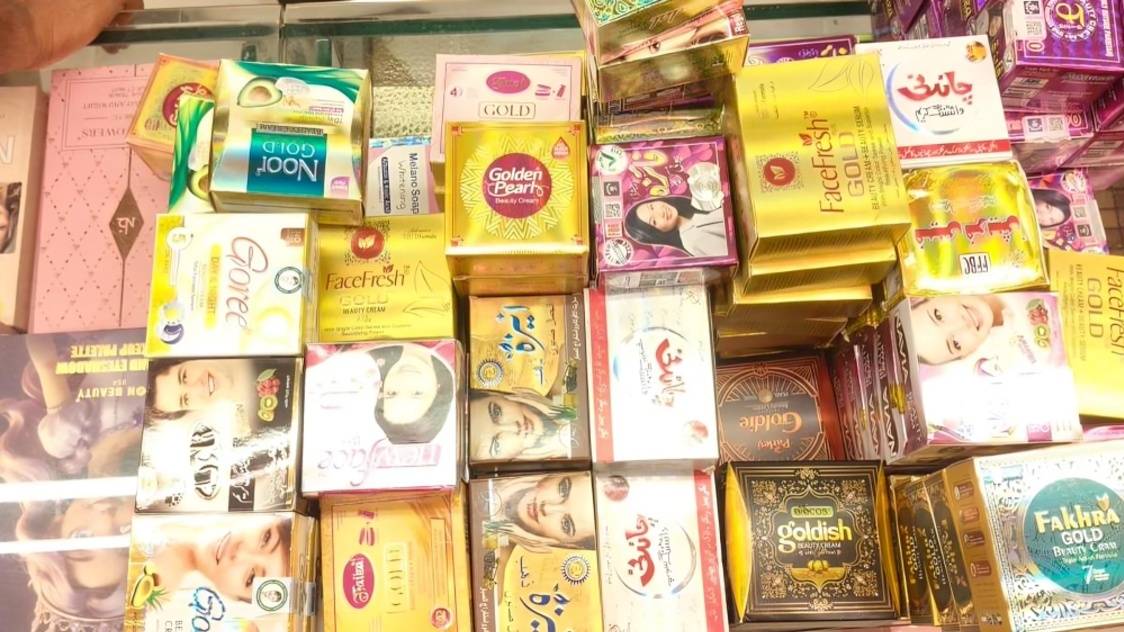
A government laboratory report has revealed extremely high levels of mercury in Pakistani-labelled beauty creams seized from a shop in Nanded district of Maharashtra. The seized cosmetics, valued at approximately Rs 39.69 lakh, were found to contain mercury concentrations far exceeding the permissible limit. One of the tested products recorded more than 48,000 times the permitted level, raising serious concerns about the safety of cosmetics being sold without proper regulatory approval.
The products were seized during a joint operation conducted by Nanded police and officials from the Maharashtra Food and Drug Administration (FDA) on July 9. The raid took place at Afrah Collection, also known as Afrah Tours and Travels, in the Makkah Galli area of Nanded. Police identified the shop operator as Mohammad Ziauddin Mohammad Wajid. According to the information provided by the authorities, the shop was found stocking cosmetics carrying labels in Urdu and English that claimed Pakistani origin.
Laboratory Tests Reveal Extremely High Mercury Levels
Samples collected during the raid were sent for examination at a government laboratory. The test results identified significant mercury contamination in two beauty creams.
PARLEY 24K Gold Gleam Beauty Cream was found to contain 48,453.44 parts per million (PPM) of mercury. The permissible limit mentioned in the laboratory findings was 1 PPM. This means the mercury concentration in the tested sample was approximately 48,453 times higher than the stated limit.
Another product, GOREE Beauty Cream with Lycopene, was found to contain 6,924.94 PPM of mercury. This level was also substantially above the permitted limit.
The findings have highlighted the potential risks associated with cosmetics containing excessive amounts of toxic heavy metals. Products marketed for skin-lightening or cosmetic purposes may appear harmless to consumers, but ingredients that are unsafe or present in excessive concentrations can create serious health concerns.
Earlier Warnings From Maharashtra FDA
The latest findings follow earlier regulatory action against Pakistani-origin skin-lightening creams in Maharashtra. In July 2026, the Maharashtra Food and Drug Administration issued a warning after laboratory tests identified excessive levels of toxic metals, including mercury and lead, in certain cosmetic products.
The FDA directed that the use, sale and distribution of three identified products be stopped. It also advised consumers not to purchase or continue using the products covered by its warning. Retailers, wholesalers and distributors were instructed to stop selling and distributing the affected cosmetics.
The FDA action demonstrated that concerns about the quality and safety of certain imported or Pakistani-labelled beauty products had already come to the attention of state authorities. The latest laboratory report from the Nanded seizure has added further evidence of the need for strict monitoring of cosmetic products entering local markets.
The Times of India+1
CDSCO Also Issued a Public Health Alert
The Central Drugs Standard Control Organisation (CDSCO), India's central drug regulatory authority, issued a public health alert in September 2026 against the use of two unauthorised Pakistani-made cosmetic products.
The products named in the CDSCO notice were Goree Beauty Cream and Chandni Whitening Cream. The regulator stated that the products had not received the required registration certificates for import and sale in India. It also warned that testing had found excessive heavy metals beyond specified limits, which could pose health risks to consumers.
The CDSCO advised the public not to purchase the named products and not to use them if they had already been bought. The notice also reminded consumers that cosmetic products sold in India must comply with the applicable regulatory requirements.
The central warning and the earlier Maharashtra FDA action indicate that the safety of unauthorised skin-lightening cosmetics has become an important public health and consumer protection issue.
CDSCO+1
Why Excessive Mercury in Beauty Creams Is a Health Concern
Mercury is a toxic heavy metal that can affect several organs and systems in the human body. The World Health Organization (WHO) identifies mercury exposure as a major public health concern. Depending on the form of mercury and the level and duration of exposure, it can affect the nervous system, kidneys, digestive system, skin and eyes.
Skin-lightening products containing mercury are particularly concerning because the substance can enter the body through repeated contact with the skin. Long-term exposure may contribute to kidney damage, skin problems and neurological effects. Pregnant women, unborn children and young children are among the groups that require particular protection from mercury exposure.
World Health Organization+1
The laboratory results from Nanded do not establish whether any consumer has suffered health effects from the seized products. However, the unusually high mercury concentrations reported in the samples underline why consumers should avoid cosmetics that are unauthorised or have been flagged by regulators.
Consumer Safety and Regulatory Monitoring
The seizure has drawn attention to the importance of checking the safety and regulatory status of cosmetics before purchasing or using them. Consumers should be cautious about products with unclear manufacturing details, missing labels or claims that cannot be verified. They should also follow official advisories issued by the FDA and CDSCO.
People who have purchased products specifically identified in regulatory alerts should stop using them and follow the relevant health authority's advice. Anyone concerned about possible exposure to mercury should seek guidance from a qualified medical professional rather than attempting self-treatment.
The Nanded case also highlights the role of coordination between police and regulatory departments in identifying and seizing potentially unsafe products. Laboratory testing is an important part of such investigations because it helps authorities establish whether products meet required safety standards.
With the seized stock valued at nearly Rs 39.69 lakh, the case has raised questions about how such cosmetics entered the local market and whether other similar products may be circulating through retail channels. The reported laboratory findings make consumer awareness, effective enforcement and continued monitoring essential to prevent unsafe cosmetics from reaching the public.