
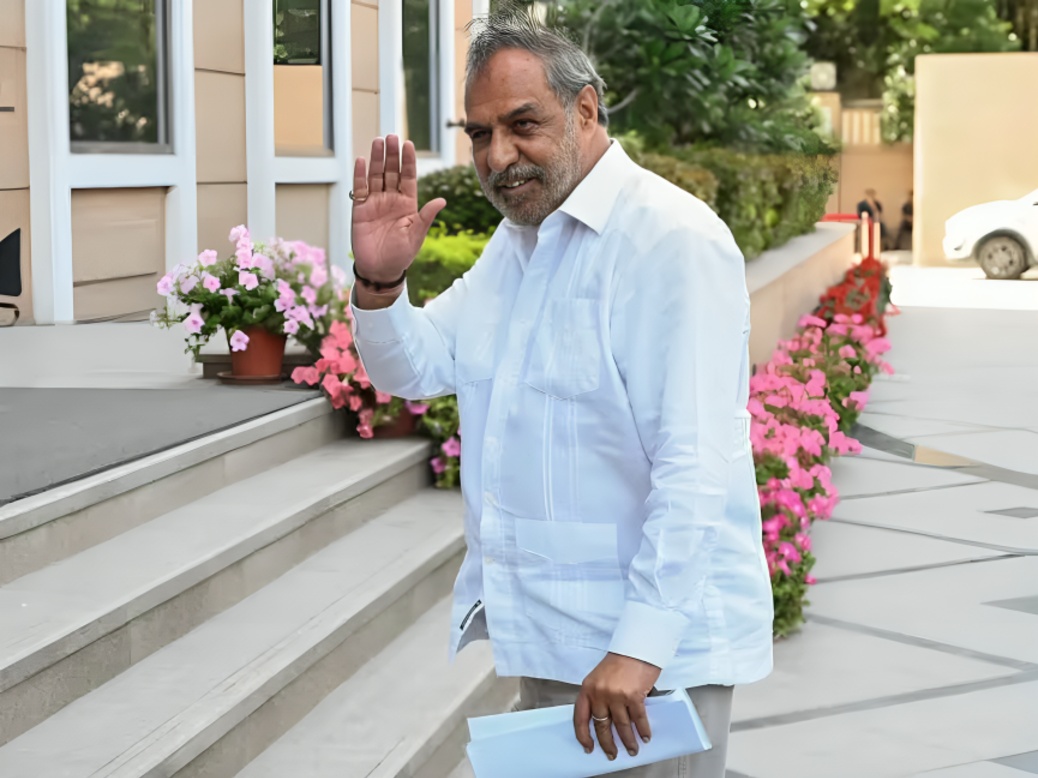
Congress leader and former Union Commerce Minister Anand Sharma has urged the Indian government to reject the latest tariff measures announced by the United States and put the proposed India US trade agreement on hold until the tariff-related issues are fully resolved. His remarks come amid renewed concerns over the possible impact of US measures targeting countries that purchase Russian oil and gas.
Sharma said India should not proceed with signing a trade agreement with the United States while major tariff-related differences remain unresolved. He argued that any agreement should address the concerns arising from the latest US tariff measures before India moves forward with the proposed arrangement.
The Congress leader was responding to the signing of the Sanctioning Russia and Iran Act of 2026 by US President Donald Trump. According to reports, the legislation authorises the US president to impose tariffs of up to 100 percent on countries purchasing Russian oil and gas. India and China are among the countries that could be affected by the provisions because of their purchases of Russian energy.
Sharma described the latest US measures as a matter of serious concern for India. He said the possible tariffs could have consequences for the country’s energy security, economy and international trade. His comments were particularly focused on India’s dependence on imported crude oil and the role of Russian crude in the country’s energy supply.
According to Sharma, India should firmly reject any tariff measure that affects its ability to maintain economic and trading relationships with other countries. He argued that India should protect its sovereign interests while dealing with international trade partners.
Sharma also questioned what he described as the selective nature of the proposed US tariff measures. He referred to Turkey, Hungary and Slovakia and argued that these countries could receive different treatment under the US policy. These comments were part of his criticism of the way the new tariff provisions could be applied to countries maintaining economic relations with Russia.
The former Union minister further raised concerns about the compatibility of the US tariff regime with international trade commitments. Sharma argued that US domestic legislation should not override commitments made under the World Trade Organization framework. His comments reflect his assessment of the legal and trade implications of the latest US measures.
Sharma also pointed to the United States’ own imports of products such as uranium and fertilisers. He said these imports demonstrate the complexity of international trade relationships and questioned why certain products or countries could receive different treatment under the new legislation. These observations were part of his broader criticism of the tariff policy.
The proposed US measures are linked to the broader US policy of imposing economic pressure on Russia and countries involved in purchasing Russian energy. The Sanctioning Russia and Iran Act of 2026 gives the US administration authority to introduce significant tariffs and other restrictions under specified circumstances. The law also contains provisions concerning sanctions against Russia and Iran.
The legislation gives the US president discretion regarding the implementation of the tariff provisions, including the countries that may be affected and the level of tariffs imposed. Reports indicate that the provisions could involve duties of up to 100 percent on goods imported from countries that meet specified criteria related to purchases of Russian crude oil or natural gas.
For India, the issue is closely connected with energy imports. India has remained a major importer of Russian crude oil, and changes in the cost or availability of such imports could affect the country’s energy procurement strategy. Sharma therefore linked the US tariff measures to wider concerns over energy security and economic stability.
Sharma said India should defend its interests while maintaining its economic relationships with partner countries. He urged the government to carefully assess the implications of the US tariff policy before finalising any trade agreement with Washington.
The remarks also come against the background of ongoing India US trade negotiations. Both countries have been discussing trade and tariff-related issues as part of efforts to expand bilateral economic cooperation. The latest tariff developments have added another issue to the negotiations.
Sharma’s position is that India should not sign what he described as an unequal trade agreement while tariff-related concerns remain unresolved. He has called on the government to wait until the tariff dispute is addressed before proceeding with the proposed agreement.
The Congress leader’s comments represent the position he has publicly expressed regarding the latest US measures. The Indian government’s approach to the proposed trade agreement and the tariff issue will depend on ongoing diplomatic and trade discussions with the United States.
The tariff issue has wider implications because India and the United States maintain significant economic relations covering goods, services, investment and technology. Any substantial change in tariffs could influence exporters, importers and businesses operating across the two markets.
Energy is another important part of the issue. India imports a large share of its crude oil requirements, making international oil prices and access to multiple sources important factors in its energy policy. Any restrictions affecting Russian crude purchases could therefore become a factor in India’s broader energy and trade calculations.
Sharma has argued that India should retain the ability to make independent decisions regarding its international economic partnerships. He said the country should protect its trading interests while responding to tariff measures imposed by other countries.
The latest developments are expected to remain part of the broader India US economic dialogue. The proposed trade agreement, tariff levels and the treatment of Russian oil purchases are issues that could influence future negotiations between the two countries.
For now, Anand Sharma has called on the Centre to reject the latest US tariff measures and pause the proposed trade agreement until the tariff dispute is resolved. His comments add to the political debate in India over how the country should respond to Washington’s new tariff and sanctions framework.
The final outcome will depend on further discussions between India and the United States, including negotiations on tariffs, trade concessions and the implementation of the new US legislation. Until those discussions progress, the proposed India US trade agreement remains an important issue in India’s economic and foreign policy debate.