
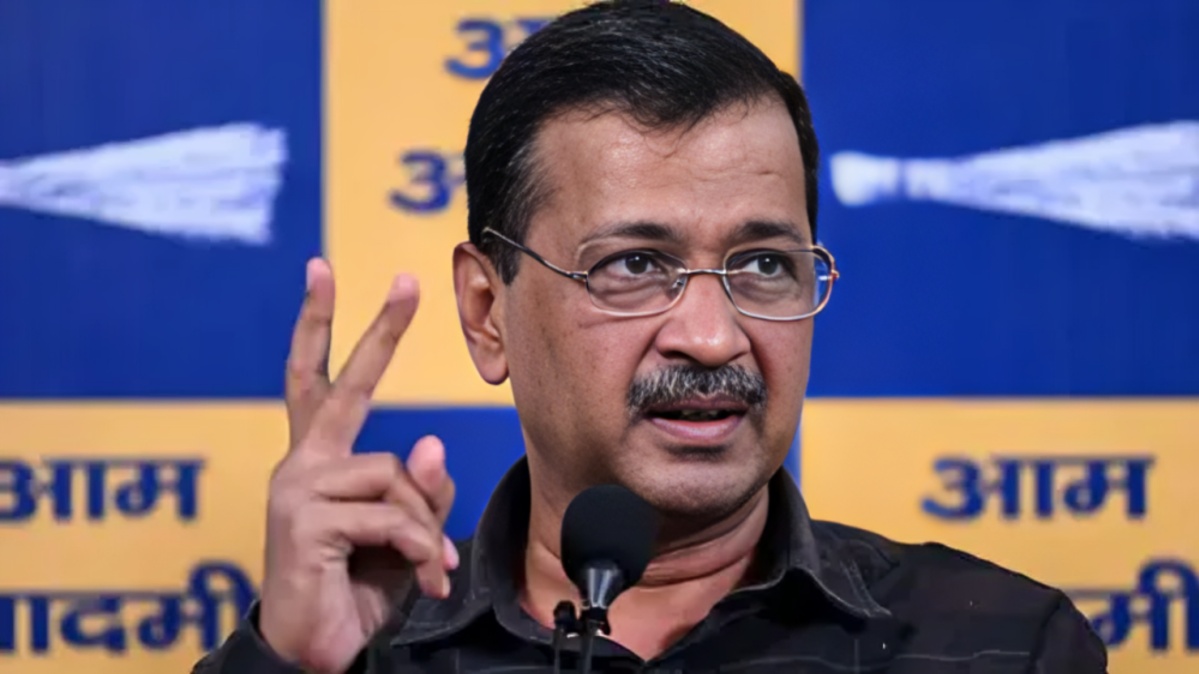
A political exchange over the issue of drug trafficking in Punjab has intensified following remarks by Aam Aadmi Party National Convenor Arvind Kejriwal and the launch of the Bharatiya Janata Party’s Nasha Mukt Punjab Yatra.
Arvind Kejriwal said on September 21 that the fight against drugs should begin at Gujarat’s Mundra Port rather than in Punjab. His statement came in response to comments by BJP National President Nitin Nabin, who recently launched the party’s 13 day Nasha Mukt Punjab Yatra from Pathankot.
Kejriwal said that efforts to tackle drug trafficking should focus on stopping the movement of narcotics into the country and specifically referred to Gujarat’s Mundra Port. He argued that addressing supply routes was an important part of tackling the drug problem in Punjab. These remarks represent Kejriwal’s position in the ongoing political debate over responsibility for controlling the drug supply chain.
The comments came after Nitin Nabin launched the BJP’s statewide anti drug campaign in Pathankot on September 18. The campaign has been organised as a 13 day programme under the name Nasha Mukt Punjab Yatra. According to reports, four separate yatras are planned as part of the campaign.
The four routes began or are scheduled to begin from Pathankot, Fatehgarh Sahib, Fazilka and Talwandi Sabo. Together, the yatras are planned to cover approximately 4,000 kilometres and reach all 117 Assembly constituencies in Punjab. The campaign is scheduled to conclude in Jalandhar on September 30.
The BJP has said that the campaign is focused on addressing drug trafficking and drug abuse in the state. Its stated areas of focus include disrupting interstate and international drug supply networks, targeting financial assets allegedly linked to illegal drug activities, rehabilitation of people affected by addiction and greater involvement of local communities.
The party has also described the campaign as an effort to create greater public awareness about the effects of drug abuse, particularly among young people. BJP leaders have said that education, employment opportunities and rehabilitation should also form part of the broader response to the problem.
The political debate has also involved questions about the routes through which narcotics enter Punjab. Kejriwal has previously claimed that a significant portion of the drug supply reaching Punjab now comes from states governed by the BJP and has specifically mentioned Gujarat, Rajasthan, Haryana, Uttar Pradesh and Delhi. These are political claims made by Kejriwal and have become part of the wider debate over drug trafficking in the state.
Punjab Chief Minister Bhagwant Mann had also previously raised the issue of drug seizures at ports in Gujarat and argued that action against supply routes should form part of efforts to tackle the problem. The claims and counterclaims have contributed to an ongoing political dispute between the AAP and BJP over responsibility for the drug situation in Punjab.
The BJP, meanwhile, has criticised the Punjab government over its handling of drug abuse and has presented the Nasha Mukt Punjab Yatra as a statewide public campaign. The party has said that its objective is to take the anti drug message to every part of Punjab and involve people in efforts to address trafficking and addiction.
The campaign is taking place ahead of the 2027 Punjab Assembly election, adding a political dimension to the issue. Reports have described the BJP’s programme as both a social outreach campaign and a political exercise ahead of the election. The party has planned the four yatras to cover every Assembly constituency in the state.
Drug trafficking in Punjab involves several dimensions, including international and interstate supply routes, organised criminal networks, enforcement, rehabilitation and public awareness. Political parties have put forward different views on how responsibility for tackling these issues should be divided between the state and central authorities.
Kejriwal’s latest statement has therefore shifted attention towards the role of ports and wider supply networks, while the BJP’s campaign has focused primarily on taking its anti drug message across Punjab and addressing trafficking, addiction and rehabilitation within the state.
The Nasha Mukt Punjab Yatra is scheduled to culminate in Jalandhar on September 30. The BJP has said that Union Home Minister Amit Shah is scheduled to participate in the concluding programme.
The continuing exchange between the AAP and BJP highlights the political debate surrounding drug trafficking in Punjab. While the AAP has emphasised the need to address supply routes outside Punjab, the BJP has focused on a statewide campaign involving enforcement, rehabilitation and public participation. The effectiveness of these approaches will depend on enforcement measures, cooperation between agencies, disruption of trafficking networks and rehabilitation efforts.