
The Bharatiya Janata Party has announced a new organisational team of state in-charges and co-in-charges under party president Nitin Nabin, completing another stage of the party’s organisational restructuring ahead of the upcoming Assembly election cycle.
The appointments, announced on September 23, cover all 28 states and eight Union Territories. The restructuring comes after the BJP announced a new national team in August and is intended to establish a wider organisational structure connecting the party’s central leadership with its state units.
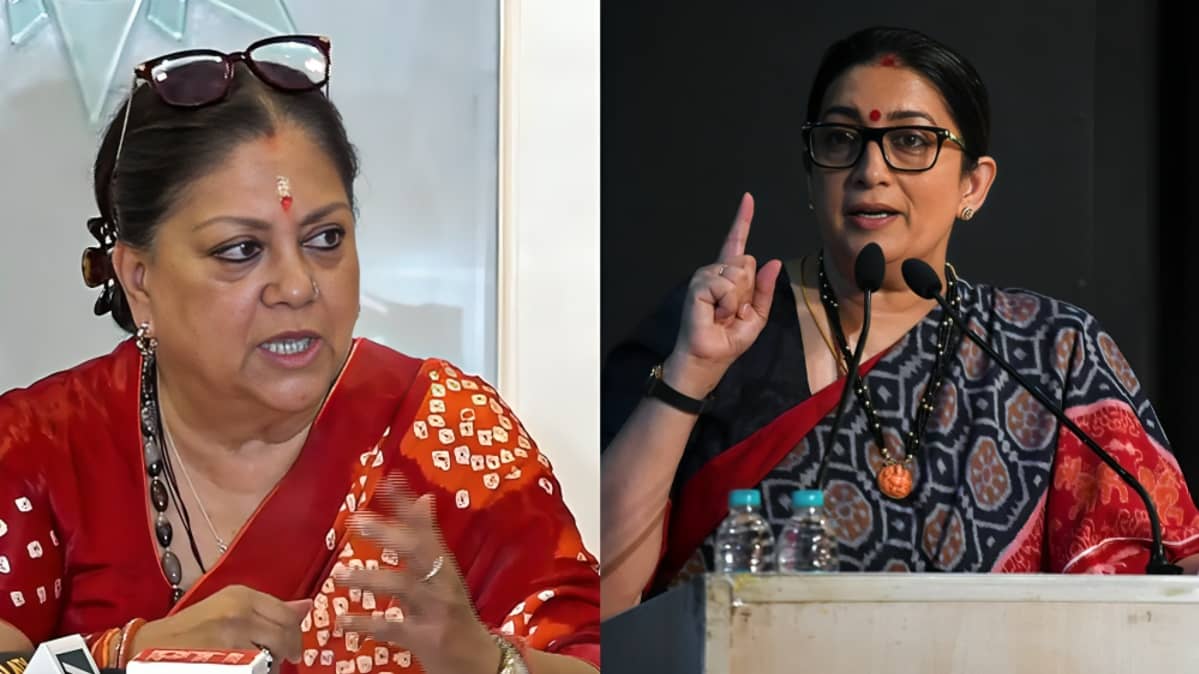
According to The Economic Times, 65 leaders have been assigned state-level responsibilities and 21 of them are women. This represents around 32 percent of the leaders included in the new arrangement. Four women have been appointed as state in-charges, while 17 others have been named co-in-charges.
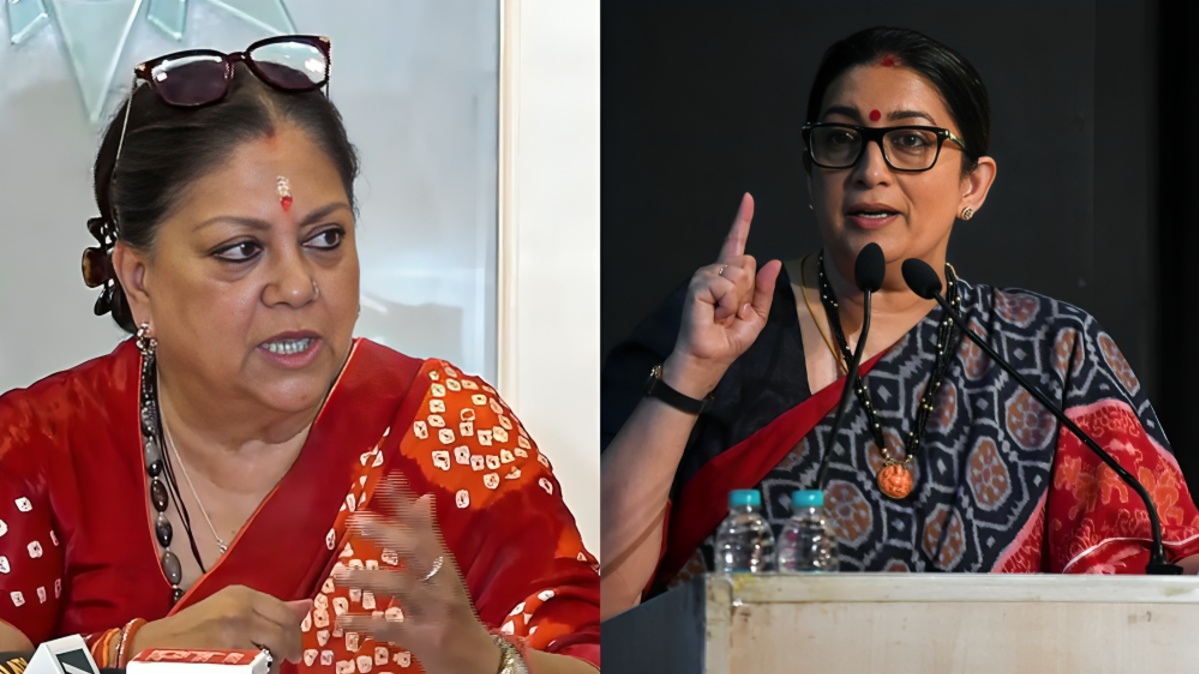
Among the prominent appointments is BJP national general secretary Smriti Irani, who has been given responsibility for Haryana and Chhattisgarh. D Purandeswari has been appointed in-charge of Odisha, while Bharati Pawar has been given responsibility for Goa. Varshaben Doshi has been appointed in-charge of Dadra and Nagar Haveli and Daman and Diu.
The new arrangement also includes women leaders as either in-charges or co-in-charges across several major states. The reported list of women leaders with organisational responsibilities includes Kavita Patidar, Bansuri Swaraj, Kamaljeet Sehrawat, Rekha Verma, Rekha Sharma, Pinky Kushwaha, D K Aruna, Darshana Singh, Darshanaben Jardosh and Vanathi Srinivasan.
A significant appointment for southern India is that of Ram Madhav. He has been given organisational responsibility for both Tamil Nadu and Uttarakhand. Separate co-in-charge teams will assist him in the two states. Madhav was also brought back into the BJP’s national organisational structure during the party’s August reshuffle, when he was appointed a national vice-president.
The Tamil Nadu appointment is significant from an organisational perspective because the state is among the regions where the BJP is seeking to strengthen its political and organisational network. The new state-level team will work with the party’s local leadership and coordinate organisational activities under the central structure.
In Uttar Pradesh, Vinod Tawde has been appointed as the state in-charge. He will be assisted by four co-in-charges, Jagdish Patel, Medha Kulkarni, Pardeep Varma and Anant Ojha. Uttar Pradesh has been given one of the larger organisational teams in the new arrangement.
Maharashtra will be overseen by BJP vice-president Baijayant Jay Panda. Amit Malviya, Sadanand Shet Tanawade and Kamaljeet Sehrawat have been appointed as co-in-charges. The appointment gives the state a four-member organisational team at the in-charge level.
For Delhi, Vinay Sahasrabuddhe has been appointed in-charge, with Jamyang Tsering Namgyal and Darshana Jardosh serving as co-in-charges. The arrangement places experienced organisational leaders in charge of coordinating the BJP’s activities in the national capital.
The party has also assigned responsibilities across the eastern and northeastern states. Sunil Bansal has been given responsibility for Telangana and West Bengal. Satish Poonia will oversee Punjab and Jammu and Kashmir, while Harish Dwivedi has been assigned Bihar and Karnataka. Anil Antony has been given responsibility for Goa and Nagaland.
The BJP has also made changes in its media and communication structure. According to The Economic Times, the party has placed its media and social media wings under a broader communication structure. The current media in-charge, Anil Baluni, has been elevated as coordinator of the communication department, while Ashish Agarwal has been appointed convener of the media department.
The restructuring comes at a time when several states are scheduled to hold Assembly elections in 2027. These include Uttar Pradesh, Punjab, Uttarakhand, Himachal Pradesh, Gujarat and Manipur, among others. The new organisational appointments provide the BJP with designated leaders to coordinate with state units ahead of these electoral cycles.
The party’s new organisational map also includes responsibilities for smaller states and Union Territories. The appointments cover regions including Arunachal Pradesh, Nagaland, Mizoram, Meghalaya, Ladakh, Lakshadweep and the Andaman and Nicobar Islands. This provides a common organisational framework across the BJP’s state and Union Territory units.
The latest appointments follow the BJP’s national organisational reshuffle announced in August. At that time, the party announced a 65-member national team, including national vice-presidents, general secretaries and secretaries. The August restructuring included 10 women among the office bearers, according to reports.
The September appointments therefore represent another layer of the BJP’s organisational restructuring. While the August exercise focused on the national leadership, the latest announcement establishes the state-level network of in-charges and co-in-charges.
The new team includes both senior leaders and relatively younger organisational figures. Leaders with previous experience in state and national organisational roles have been assigned responsibilities in different regions, while several leaders have been given responsibility outside their home states.
The appointment of multiple leaders to the same state is another feature of the new structure. Larger states such as Uttar Pradesh have been assigned several co-in-charges, while Maharashtra and West Bengal have also received multiple organisational functionaries. According to The Economic Times, five leaders have been given responsibility for two states.
The BJP has not described the appointments simply as a change of personnel. The organisational restructuring creates a formal chain of coordination between the national leadership and state units. The in-charges are expected to work with state leaders and party workers on organisational matters, while co-in-charges will assist them in managing the responsibilities assigned to each state.
The inclusion of 21 women among the 65 state-level appointees has also become a notable feature of the new structure. Four women have received the primary state in-charge responsibility, while 17 women have been appointed as co-in-charges. These appointments include responsibilities in several major states and Union Territories.
The new organisational arrangement will now be followed by the party’s state-level coordination and preparations as the 2027 Assembly election cycle approaches. The appointments also provide the BJP with designated leaders for its organisational activities in states where elections are not immediately due.
Overall, the latest restructuring establishes the BJP’s state in-charge and co-in-charge network under Nitin Nabin’s leadership. It combines experienced leaders, new organisational faces and a significant number of women leaders while also introducing changes to the party’s communication structure.