
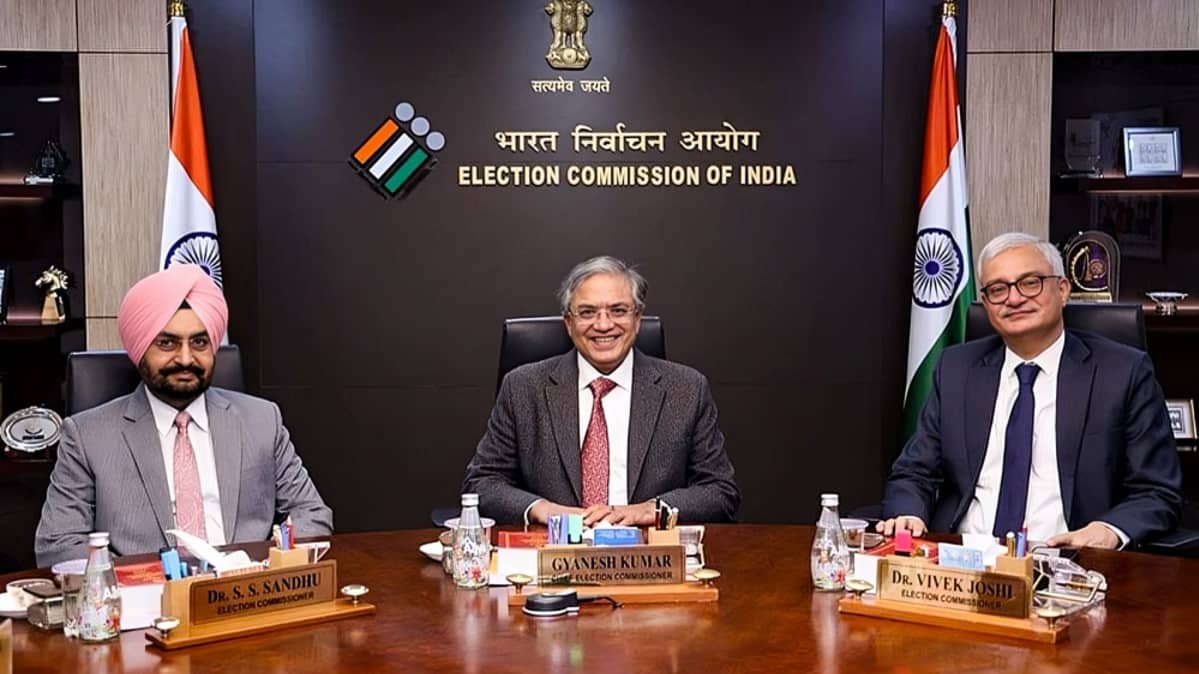
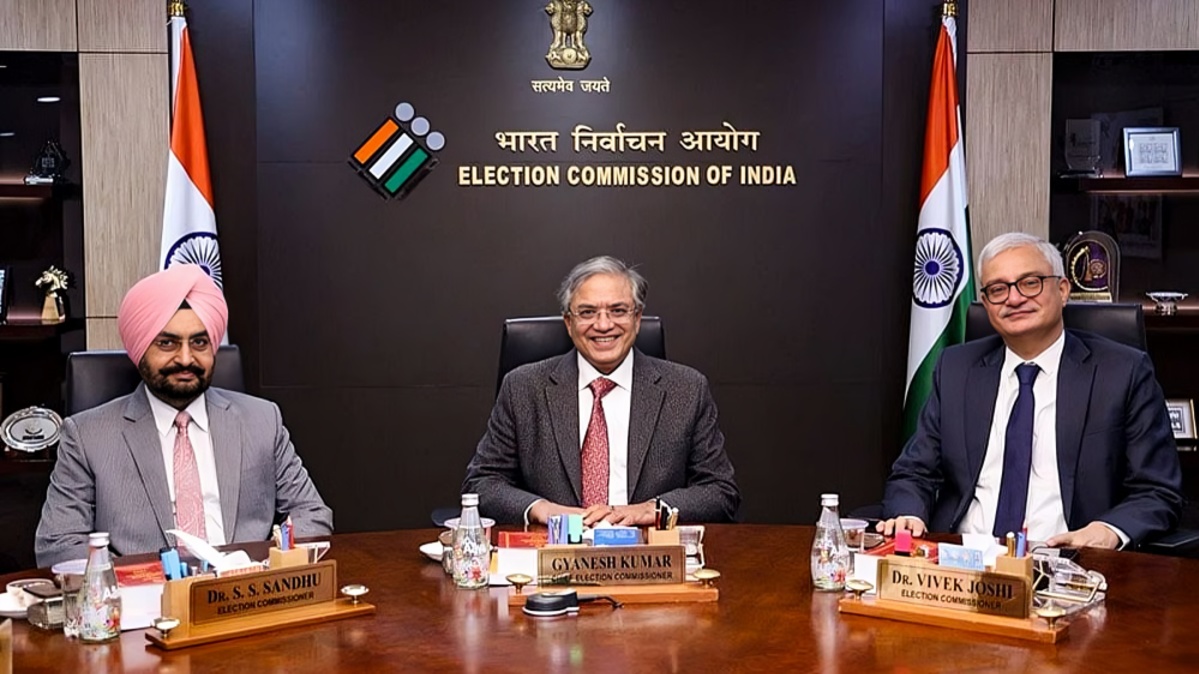
The Congress has stepped up its criticism of the Election Commission of India over the ongoing Special Intensive Revision of electoral rolls, commonly referred to as SIR. The political controversy intensified after a report by The Indian Express said that Election Commissioners Sukhbir Singh Sandhu and Vivek Joshi had formally raised objections on several occasions over decisions and procedures connected with electoral roll revision.
According to the report, the two Election Commissioners recorded at least 14 objections over a period of about 10 months. The reported concerns covered issues including the addition and deletion of voters, changes to Form 6 used for new voter registration, access to electoral roll databases and certain procedures associated with the SIR exercise.
The Congress has used the report to renew its criticism of Chief Election Commissioner Gyanesh Kumar and the Election Commission. Congress leaders have alleged that the SIR process could result in eligible voters being excluded from electoral rolls. The party has also raised concerns about the possible impact on young and first time voters who may face difficulties during the registration or verification process.
One of the major issues highlighted in the controversy concerns Form 6. The form is used by eligible citizens to apply for inclusion in the electoral roll as new voters. According to The Indian Express report, a new declaration linked to the previous SIR was added to the online version of Form 6. Applicants were reportedly asked whether their name, or the name of a parent or grandparent, appeared in the electoral roll prepared during the previous SIR.
The report said Election Commissioner Vivek Joshi had earlier raised concerns that statutory forms could not be changed without amendments to the relevant electoral rules. Election Commissioner Sukhbir Singh Sandhu reportedly agreed with that position and later described the changes as unauthorised and illegal in a written communication, according to the report.
The issue has generated particular discussion about first time voters. Critics of the change have argued that young citizens should be able to register based on the legal requirements for voter registration rather than the electoral status of their parents or grandparents. The reported objections have therefore become an important part of the wider debate over the implementation of the SIR process.
Another issue concerns access and control of electoral roll data. The Indian Express reported that the two Election Commissioners had raised concerns about the management of electoral roll databases and the role of centralised digital systems. Questions were reportedly raised over whether Electoral Registration Officers retained adequate access to the systems used to prepare and maintain voter lists.
The controversy has also drawn attention to the legal structure of the Election Commission. Under Article 324 of the Constitution, the Election Commission is a constitutional body consisting of the Chief Election Commissioner and Election Commissioners. The 2023 law governing the appointment and service conditions of the Election Commissioners states that the business of the Commission should, as far as possible, be conducted unanimously. Where the members differ in opinion, decisions are determined by the majority.
Following the reports, opposition parties have demanded action against Chief Election Commissioner Gyanesh Kumar. Congress leaders have questioned the functioning of the Election Commission and called for greater transparency in the SIR process. Other opposition parties, including the Trinamool Congress, Samajwadi Party and Aam Aadmi Party, have also criticised the Election Commission and demanded various forms of inquiry or action.
Congress has also used strong political language while criticising the Election Commission. The phrase Method of Disenfranchising Indians, or MODI, has been used by Congress as a political description of its allegations regarding the voter revision exercise. This is a political allegation by the party and should not be treated as an established description of the Election Commission's process.
The Election Commission, however, has rejected the suggestion that the reported objections represented a breakdown in its decision making. In its response, the poll body said that written notes, observations, technical suggestions and internal checks are normal parts of institutional deliberations. The Commission said that differences of view during the drafting and deliberation stage do not necessarily mean disagreement with the final decision.
The Election Commission further stated that decisions taken during the past year, including those relating to electoral roll revision and SIR, were approved unanimously by the full Commission. It also said that its digital platforms operate under security protocols and that Electoral Registration Officers and District Election Officers continue to exercise their statutory responsibilities relating to voter registration and deletion.
The dispute therefore centres on two different accounts of the functioning of the poll panel. Opposition parties and the Congress have highlighted the reported written objections of two Election Commissioners and have questioned whether the SIR process could affect eligible voters. The Election Commission maintains that internal observations are a normal part of deliberations and that its final decisions have been taken unanimously.
The SIR controversy is consequently likely to remain an important issue in the political and electoral debate, particularly as questions continue to be raised about voter registration, deletion of names, verification procedures and access to electoral roll data. For voters, the central issue remains ensuring that eligible citizens have an opportunity to verify their electoral details and seek correction or inclusion through the procedures provided by the Election Commission.