
The Congress has criticised the Centre over the introduction of a new Merchant Discount Rate on certain UPI transactions, describing the measure as a “Modi tax.” The political controversy follows the government's decision to introduce a 0.4 percent MDR on eligible person to merchant UPI payments above Rs 2,000 from October 15, 2026.
The new framework applies to transactions in which customers make payments to merchants through the Unified Payments Interface. The charge is not a direct fee imposed on customers for using UPI. Instead, the Merchant Discount Rate is charged to eligible merchants for specified transactions. Person to person UPI transfers will continue to remain free regardless of the transaction amount.
Congress has nevertheless raised concerns about the possible effect of the new MDR on consumers. Congress media and publicity department head Pawan Khera described the 0.4 percent charge as the “Modi tax” and criticised the government's decision. His comments were part of the Opposition's broader criticism of the new UPI fee framework.
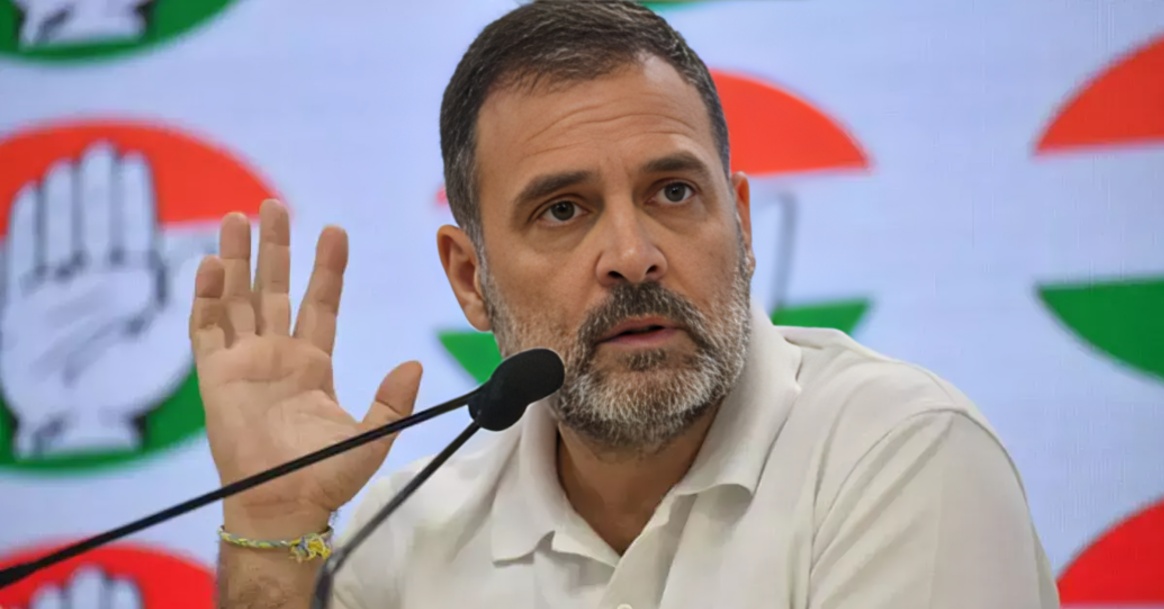
Congress leader Rahul Gandhi also criticised the policy and questioned whether merchants could eventually recover the additional cost from customers through prices. Gandhi argued that even if the charge is formally imposed on merchants, the financial impact could potentially be reflected in the prices of goods or services. These are political claims made by the Congress and should be distinguished from the government's stated position on the policy.
The government has maintained that consumers will not directly bear the MDR. According to the new framework, the charge is applicable to eligible merchant transactions, while person to person payments remain outside the MDR structure. The government has also indicated that the new arrangement is intended to support the long-term sustainability of the digital payments ecosystem.
The National Payments Corporation of India has notified the 0.4 percent MDR for eligible person to merchant UPI transactions above Rs 2,000. The charge will be capped at Rs 300 for transactions of Rs 75,000 and above. The framework is scheduled to become effective on October 15, 2026.
The distinction between person to merchant and person to person transactions is important in understanding the new rules. A person paying a shop, business or other eligible merchant falls under the merchant transaction category. A person transferring money to another individual, such as a family member or friend, continues to be able to use UPI without the new MDR.
Small-value transactions are also protected under the framework. Payments of Rs 2,000 or below are not subject to the new 0.4 percent MDR. The government has also announced provisions intended to protect certain small merchants from the charge. The framework therefore does not mean that every UPI transaction will attract a fee.
Certain essential and thin-margin sectors have a different structure. According to reports on the new framework, sectors including railways, telecommunications, insurance and fuel will have a flat MDR of Rs 5 for eligible transactions above Rs 2,000. These provisions are intended to take account of the characteristics of essential services and their payment patterns.
The introduction of the MDR marks a change after several years in which UPI merchant transactions operated without a conventional transaction charge. UPI has become one of India's principal digital payment systems, with millions of transactions processed every day.
The new framework has therefore generated discussion among political parties, digital payment companies, merchants and consumers. Supporters of the policy have pointed to the need to maintain and finance the infrastructure supporting digital payments. Critics, including the Congress, have questioned whether the additional cost could eventually affect consumers despite the formal charge being levied on merchants.
The Congress has also connected its criticism to wider allegations concerning US pressure on India's digital payments policy. Rahul Gandhi alleged that the government had yielded to American pressure, comparing the issue with his criticism of India's trade policy. The allegation is a political claim by Gandhi and has been rejected by the BJP.
The BJP has defended the government's decision and accused the Congress of creating confusion about the new UPI rules. BJP spokesperson Pradeep Bhandari said the government had made it clear that MDR would not be charged directly to consumers. The BJP has also highlighted the continued exemption for person to person transactions and the protections available for smaller merchants.
The disagreement therefore centres on both the policy itself and its possible economic consequences. Congress has focused on the possibility that merchants could pass the cost to customers, while the government has emphasised that the official MDR is a merchant-side charge and that consumers are not supposed to be directly billed for using UPI.
Another important aspect is the Rs 300 cap. Under the new framework, the standard MDR rate is 0.4 percent, but the charge cannot exceed Rs 300 for transactions of Rs 75,000 and above. This means that a higher-value transaction will not result in an unlimited increase in the MDR.
The new rules are expected to require banks, payment aggregators, fintech companies and other participants in the UPI ecosystem to update their systems before the October 15 implementation date. The additional time is intended to allow payment platforms and businesses to make the necessary technical and accounting changes.
The policy also comes with provisions aimed at limiting the impact on smaller businesses. Reports on the framework indicate that small vendors receiving up to Rs 1 lakh per month through UPI QR directly into their accounts will not face the MDR levy. This is intended to prevent the new payment structure from placing an additional burden on smaller merchants.
The controversy is consequently not about the introduction of a universal charge on every UPI payment. The new MDR applies to specified merchant transactions above the Rs 2,000 threshold, while person to person transfers remain free. The charge is formally imposed on merchants rather than individual consumers.
The Congress's use of the term “Modi tax” is a political description of the policy and not the official name of the charge. The official framework refers to the Merchant Discount Rate. Similarly, Rahul Gandhi's allegations concerning US pressure represent his political position and should be distinguished from the government's explanation of the policy.
The new UPI framework will take effect from October 15, 2026. Until then, banks, payment companies and merchants will have time to prepare for the changes. The implementation will provide further clarity on how the MDR operates across different categories of merchant transactions.
For consumers, the most important distinction is that person to person UPI payments remain free, while eligible merchant payments above Rs 2,000 will come under the new MDR framework. The government has also stated that merchants should not pass the MDR directly to customers.
The political debate is expected to continue as the implementation date approaches. Congress has raised concerns over the potential effect on consumers and merchants, while the government and BJP have defended the structure and stressed that ordinary person to person UPI payments will remain free.
The latest development therefore involves both a policy change in India's digital payments system and a political dispute over its implications. The 0.4 percent MDR is scheduled to apply to eligible merchant transactions above Rs 2,000 from October 15, subject to the exemptions and caps specified under the framework.