
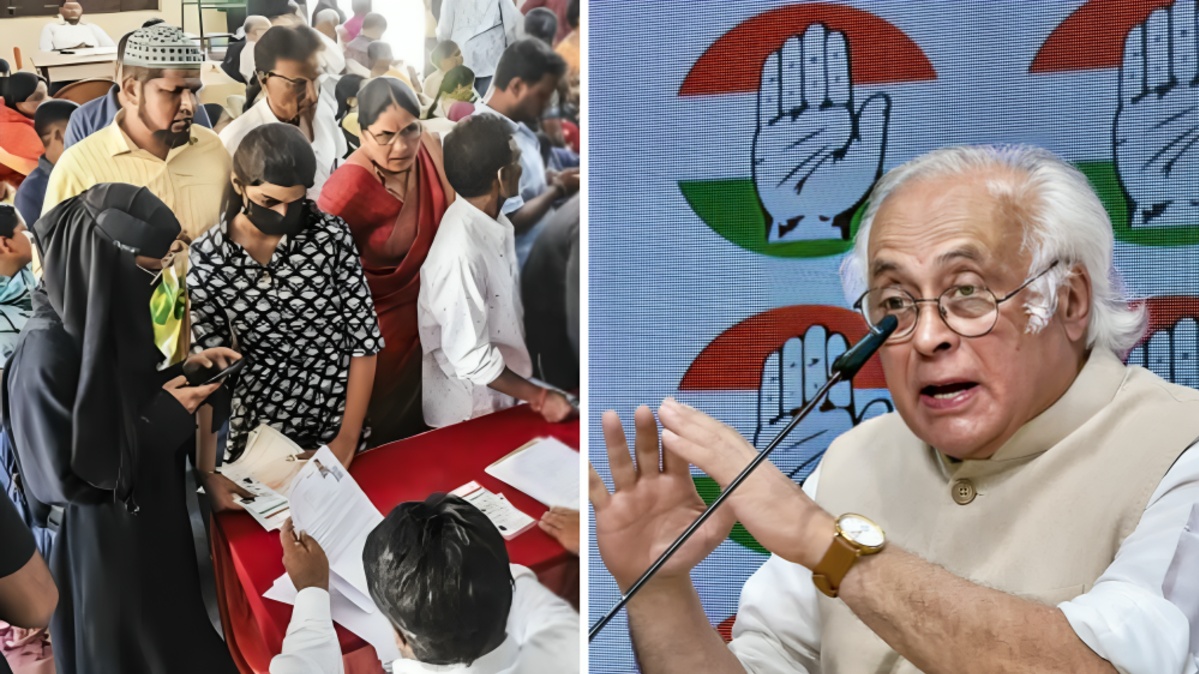
The Congress has raised concerns over the ongoing Special Intensive Revision of electoral rolls, alleging that the exercise could result in the exclusion of a large number of eligible voters. Congress general secretary Jairam Ramesh criticised the process on September 20, 2026, and described it as an alleged large scale removal of voters.
The Special Intensive Revision, commonly referred to as SIR, is being conducted by the Election Commission of India as part of the process of revising electoral rolls. The exercise involves verification of voter details and identification of entries that may require correction, deletion or further verification.
Jairam Ramesh said the first phase of the SIR process began in Bihar in June 2025, followed by a second phase in November 2025 covering nine states and three Union Territories. According to figures cited by Ramesh, 7.8 crore names were deleted during the first two phases. He said this represented about 13 percent of the electoral roll before the SIR exercise.
Ramesh has questioned the scale of the deletions and the procedure being followed for verification. He argued that the process places a significant documentation burden on citizens who may be required to establish their eligibility to remain on the electoral roll.
The Congress leader also criticised the requirement for voters to produce additional documents during the verification process. He argued that some citizens may not possess documents that were originally issued or maintained by government authorities.
Ramesh said that the state should bear responsibility for maintaining accurate electoral rolls rather than shifting the burden of verification entirely to citizens. He described the current process as a potential mechanism for exclusion and said the issue required greater transparency.
The Congress leader also raised concerns about the third phase of the SIR process. According to figures cited by him from 12 states and two Union Territories, 6.18 crore voters out of 36.06 crore covered in the ongoing phase had their names deleted. He calculated the deletion rate at more than 17 percent.
Ramesh further claimed that another 5.43 crore voters had received notices requiring additional documentation to retain their names on the electoral rolls. According to his calculation, this represented an additional risk of deletion involving around 15 percent of voters covered by the data he cited.
Based on these figures, Ramesh said that approximately one in three voters in the areas covered by the data had either been deleted or faced a risk of deletion. These figures are based on data and calculations presented by the Congress leader and should therefore be understood as the party's assessment of the SIR process.
Ramesh also raised concerns about the impact of the revision on economically and socially disadvantaged sections of the population. He alleged that vulnerable groups could face greater difficulties in providing the documents required during the verification process.
The Congress leader further claimed that women had been removed from electoral rolls at higher rates than men in several major states. These claims were included in his statement criticising the SIR exercise.
Ramesh also referred to differences in deletion rates across states. According to the figures he cited, Delhi recorded a deletion rate of 53.73 percent, Chandigarh 52.58 percent, Telangana 48.90 percent, Jharkhand 39.57 percent, Haryana 37.5 percent, Uttarakhand 35.71 percent and Meghalaya 35.36 percent. He also cited figures for Maharashtra, Karnataka, Odisha, Andhra Pradesh and Punjab.
The Congress has questioned whether the high levels of deletion and additional verification requirements indicate problems with the methodology being used during the SIR process.
Ramesh also criticised the availability of information relating to voters whose names have been flagged for further verification. He said that voter lists and details concerning possible deletions should be made available to the public so that citizens can verify their status.
The issue has also generated legal and administrative attention. In Delhi, more than 33 lakh voters have reportedly received notices during the ongoing SIR process. The notices relate to issues such as voters who could not be mapped to an earlier electoral roll or entries classified as having logical discrepancies.
Importantly, receiving an SIR notice does not automatically mean that a voter's name has been permanently deleted from the electoral roll. The Delhi Chief Electoral Officer's office has clarified that voters receiving notices can respond and provide supporting documents during the verification process.
The electoral revision process has also led to legal proceedings. The Supreme Court is scheduled to hear a petition concerning transparency in the Delhi SIR process. The petition seeks greater disclosure regarding the names of voters who received notices and the reasons for those notices.
The issue has also been debated in connection with voter appeals. Recent reporting on West Bengal showed that voters whose names were removed during the SIR process have been able to challenge the decisions through the prescribed appeal mechanism. The Election Commission has told the Supreme Court that a substantial proportion of voters who appealed their deletion decisions were successful.
The Election Commission's position and the Congress's criticism represent different perspectives on the ongoing electoral-roll revision. Congress has focused on the number of deletions, documentation requirements and the potential impact on vulnerable voters. Election authorities, meanwhile, have continued the verification and appeal process as part of the electoral-roll revision exercise.
Ramesh described the SIR using the phrase Shah Instigated Removal, referring to Union Home Minister Amit Shah, and called the exercise an assault on the Constitution. This is a political allegation made by the Congress leader and is not presented as an established finding.
The controversy has therefore expanded beyond the question of electoral-roll administration into a wider political debate over voter rights, transparency and the responsibilities of election authorities.
For voters, the central practical issue is whether their names remain on the electoral roll and whether they have received any notice requiring verification or additional documentation. Voters affected by the process can use the procedures provided by election authorities to check their status and respond to notices.
The Congress has called for greater transparency in the SIR process and has questioned the scale of voter deletions reported across different phases. The party has also urged authorities to ensure that eligible citizens are not excluded because of difficulties in producing documents.
The ongoing debate is expected to continue as the third phase of the SIR progresses and electoral authorities process objections, claims and appeals.
The final impact of the exercise will depend on the verification process, decisions by electoral authorities and the outcome of appeals filed by voters. The figures cited by Congress will also need to be considered alongside official Election Commission data and the reasons recorded for individual deletions.
As of September 21, 2026, the principal political dispute concerns the scale and implementation of the SIR process. Congress has alleged that millions of voters have been removed or placed at risk of removal, while the electoral authorities continue the statutory process of revising and verifying electoral rolls.
The issue remains significant because inclusion in the electoral roll is directly connected to a citizen's ability to participate in elections. Transparency, accurate verification and accessible appeal mechanisms are therefore central to the continuing discussion around the SIR exercise.