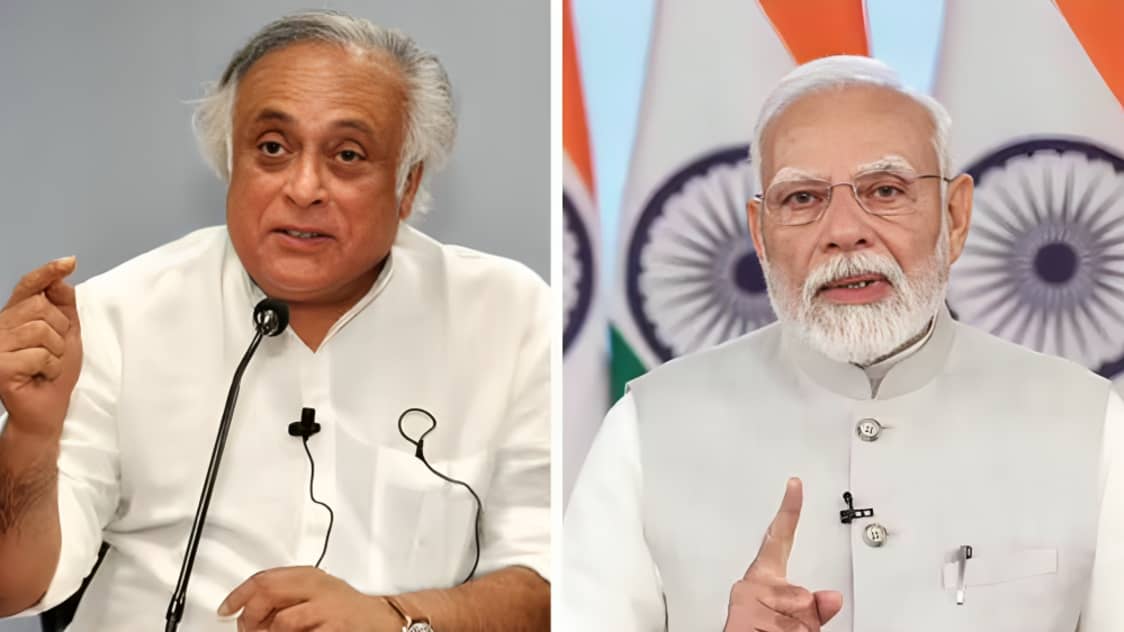
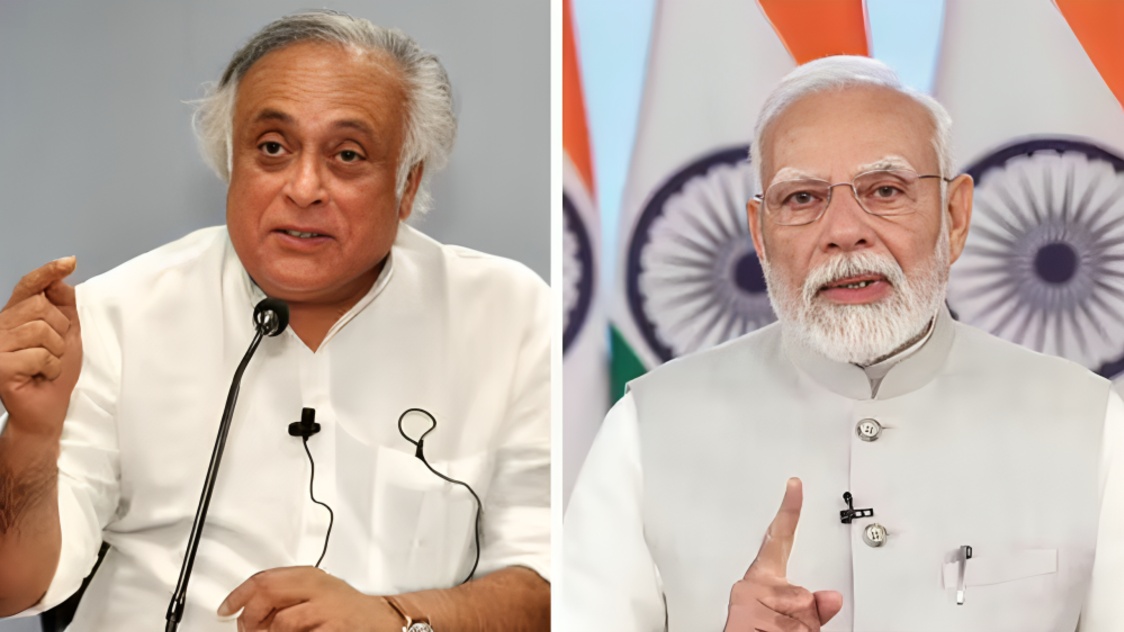
Congress general secretary in charge of communications Jairam Ramesh has criticised the Narendra Modi government's reported approach towards private participation in India's space programme. In a statement on Monday, Ramesh alleged that the Centre was pursuing an aggressive privatisation agenda and expressed concern over the possible impact on the Indian Space Research Organisation and its long-established capabilities.
Ramesh's remarks came after reports emerged about possible changes to ISRO's future role in the country's space programme. According to his statement, the reported policy direction could significantly reduce ISRO's involvement in rocket development and manufacturing, while some satellite-related assets could be transferred to private companies. The Congress leader questioned whether strengthening private space companies should involve reducing the responsibilities and capabilities of the country's premier space research organisation.
ISRO has played a central role in India's space programme for several decades. The organisation was established in 1969 and has been responsible for the development of launch vehicles, satellites and a wide range of space technologies. Ramesh referred to the contributions of scientists and former ISRO leaders including Vikram Sarabhai, Satish Dhawan, Brahm Prakash, U R Rao and A P J Abdul Kalam while highlighting the capabilities developed by the organisation over the years.
The Congress leader also raised concerns about the proposed role of private companies in operating or acquiring access to certain space-related assets. He specifically referred to reports concerning the second spaceport being developed in Tamil Nadu. Ramesh alleged that a private company could eventually be given a significant role in the facility, while noting that the government is investing substantially in its development.
The second spaceport in Tamil Nadu is intended to expand India's launch infrastructure and support future space activities. Ramesh also questioned what the reported changes could mean for the future of the established Satish Dhawan Space Centre at Sriharikota in Andhra Pradesh. His comments reflect the Congress party's broader concern about the balance between government institutions and private companies in strategic sectors.
Another issue raised by Ramesh was the reported resignation of experienced professionals from ISRO. In a post on social media, he claimed that around 100 to 120 key ISRO professionals had left the organisation in recent months and suggested that this could be connected to concerns about the reported changes in the space sector. These figures were presented by Ramesh and should be viewed as his political claim unless independently confirmed through official personnel data.
The debate comes at a time when India is encouraging greater participation by private companies and startups in the space sector. The policy approach is intended to increase private investment, promote innovation and expand India's commercial space capabilities. Private companies have increasingly become part of India's growing space ecosystem.
At the same time, the Congress has argued that expanding private participation should not weaken ISRO's scientific, technological and strategic role. Ramesh said the organisation's capabilities were built through decades of public investment and the work of generations of scientists and engineers.
The latest criticism is therefore part of a larger debate over the future structure of India's space programme. The key issue is how responsibilities should be divided between ISRO, government institutions and private space companies while ensuring that India's research and technological capabilities remain strong.
The government has promoted private participation in the space sector as part of efforts to build a larger and more competitive Indian space industry. The Congress, however, is questioning whether the reported transfer of certain responsibilities and assets could affect ISRO's long-term institutional strength.
The controversy is expected to remain a subject of political and policy debate as further details emerge regarding the proposed changes to India's space programme, the future role of ISRO and the participation of private companies.