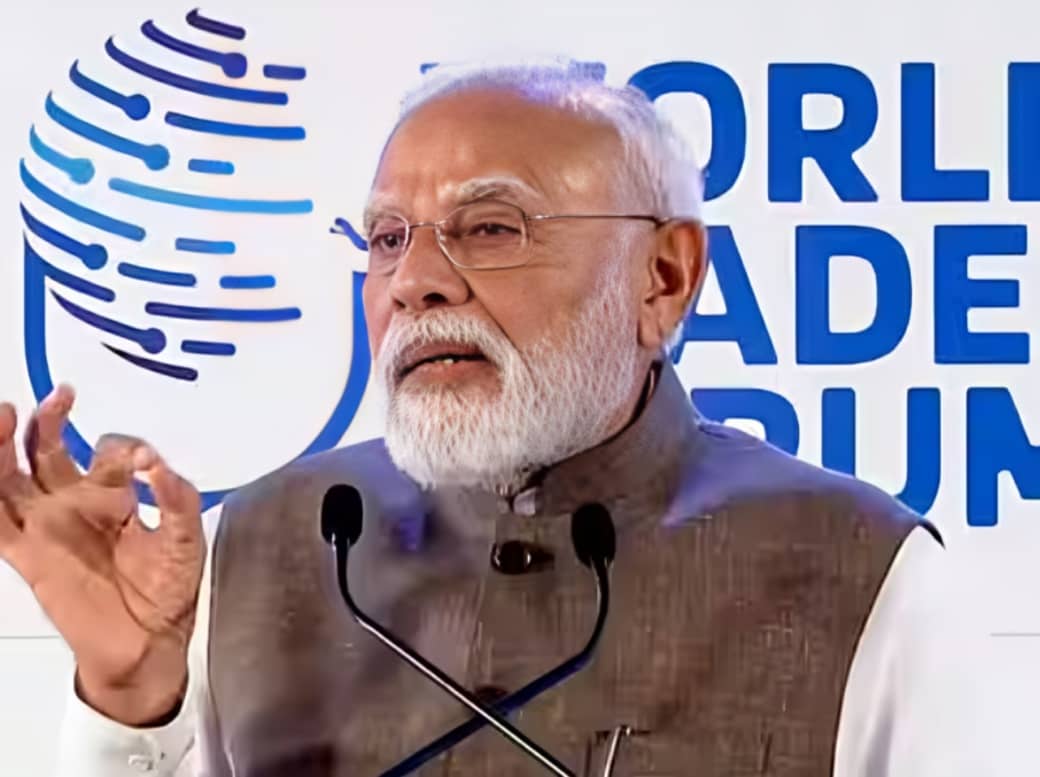
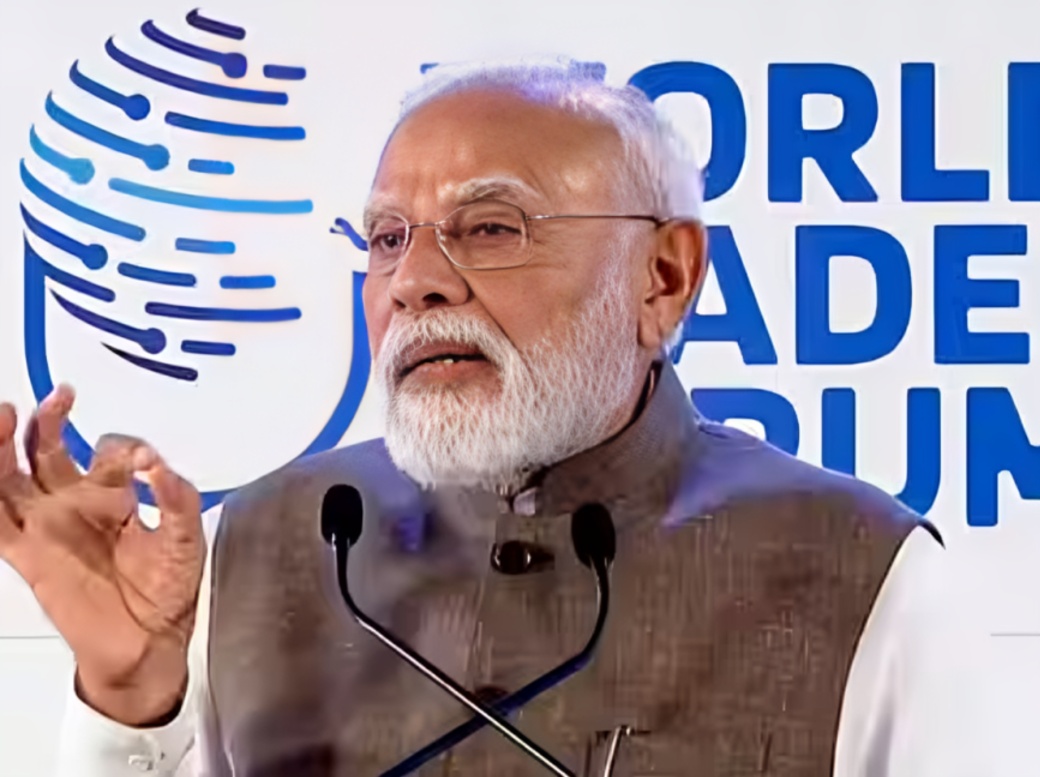
Prime Minister Narendra Modi has announced that the government will move ahead with greater speed on its reform agenda, stressing that India’s political stability and policy continuity can contribute to global stability. He made the remarks while addressing the Economic Times World Leaders Forum 2026 in New Delhi.
Modi described India as a bright spot for global growth and hope at a time when several countries are facing economic and geopolitical uncertainties. He said India’s stability provides an important foundation for continued economic development and international cooperation.
The Prime Minister said the government is pursuing next generation reforms at both the policy and governance levels. According to him, the objective is not merely to change regulations but to create an environment that improves the everyday lives of citizens and encourages economic activity.
One of the major themes of his address was the government's approach to simplifying rules and reducing unnecessary restrictions. Modi said the country is moving away from an approach where activities are prohibited unless specifically permitted towards a system in which activities are permitted unless prohibited by law.
He said this shift is intended to reduce unnecessary barriers for businesses, entrepreneurs and citizens. Simplification of procedures, digitisation of approvals and decriminalisation of minor offences are among the measures being pursued as part of the wider reform programme.
Modi also referred to the transformation of India's economic policy from what he described as a production-linked punishment approach to an incentive-based model. He cited the Production Linked Incentive scheme as an example of policies designed to encourage companies to expand manufacturing and increase production.
The Prime Minister said the government wants reforms to create new opportunities for investment, manufacturing and employment. He emphasised that improving ease of doing business must go together with improving ease of living for ordinary citizens.
The welfare and economic empowerment of different sections of society also featured prominently in his address. Modi said the government would continue working for young people, women, farmers, the poor and the middle class. He linked economic reforms with the objective of expanding opportunities and improving living standards.
The Prime Minister also highlighted India's political continuity. He argued that stable governance and consistent policies provide confidence to investors, businesses and citizens. In his view, this stability can help India play a larger role in the global economy.
Modi's remarks came against the backdrop of significant changes in the global economic and geopolitical environment. He said the world is looking towards India as a source of growth and hope and emphasised the importance of resilience, reform and long term planning.
The government has also been working on reforms across several sectors. Modi referred to initiatives involving taxation, infrastructure, manufacturing, ports, shipping, mining and other areas. He said the objective is to modernise regulations and create conditions that support economic expansion.
The Prime Minister stressed that reforms should have a visible impact on people's lives. He said infrastructure development should not be measured only by the construction of roads, railways, airports and other facilities but also by how these projects improve convenience and quality of life.
He also emphasised the importance of manufacturing in India's future economic strategy. With global supply chains undergoing changes, the government wants India to strengthen its manufacturing base and become more competitive internationally.
The focus on manufacturing is also linked to employment generation. Greater industrial activity can create opportunities for young people while supporting the growth of businesses and supply chains across the country.
Modi's emphasis on youth reflects the government's broader effort to position India's young population as a major economic strength. Skills, entrepreneurship, technology and employment are expected to remain important components of the country's development strategy.
Farmers and rural communities also remain a significant part of the government's policy agenda. The Prime Minister has repeatedly linked infrastructure, technology and access to markets with the objective of improving opportunities for rural India.
Women and economically weaker sections have also been highlighted as key beneficiaries of government initiatives. Modi said economic empowerment and access to opportunities are essential elements of India's development process.
At the international level, the Prime Minister argued that India's progress can have wider consequences for the global economy. A stable and growing India, he said, can contribute to international economic resilience and stability.
The remarks at the Economic Times World Leaders Forum come at a time when investors and businesses are closely watching India's economic trajectory. Policy stability, regulatory reforms, infrastructure development and domestic demand are among the factors shaping expectations about India's future growth.
The Prime Minister's message was therefore focused on continuity as well as acceleration. While the government intends to continue existing reform initiatives, Modi indicated that the pace of reforms would increase further.
He also presented the reform agenda as a long term effort rather than a response to a temporary crisis. The government wants to simplify regulations, improve governance, encourage investment and create opportunities across sectors.
The overall message from the forum was that India intends to use political stability and economic reforms to strengthen its position in the global economy. Modi said the country is preparing for future challenges while seeking to create greater opportunities for its citizens.
As the reform programme moves forward, the effectiveness of these measures will ultimately depend on their implementation and their impact on businesses, workers, farmers, young people and households.
The Prime Minister's address nevertheless underlined the government's continued emphasis on reform, economic growth, stability and ease of living. He expressed confidence that a stable and reform-oriented India can play a larger role in supporting global growth and stability in the years ahead.