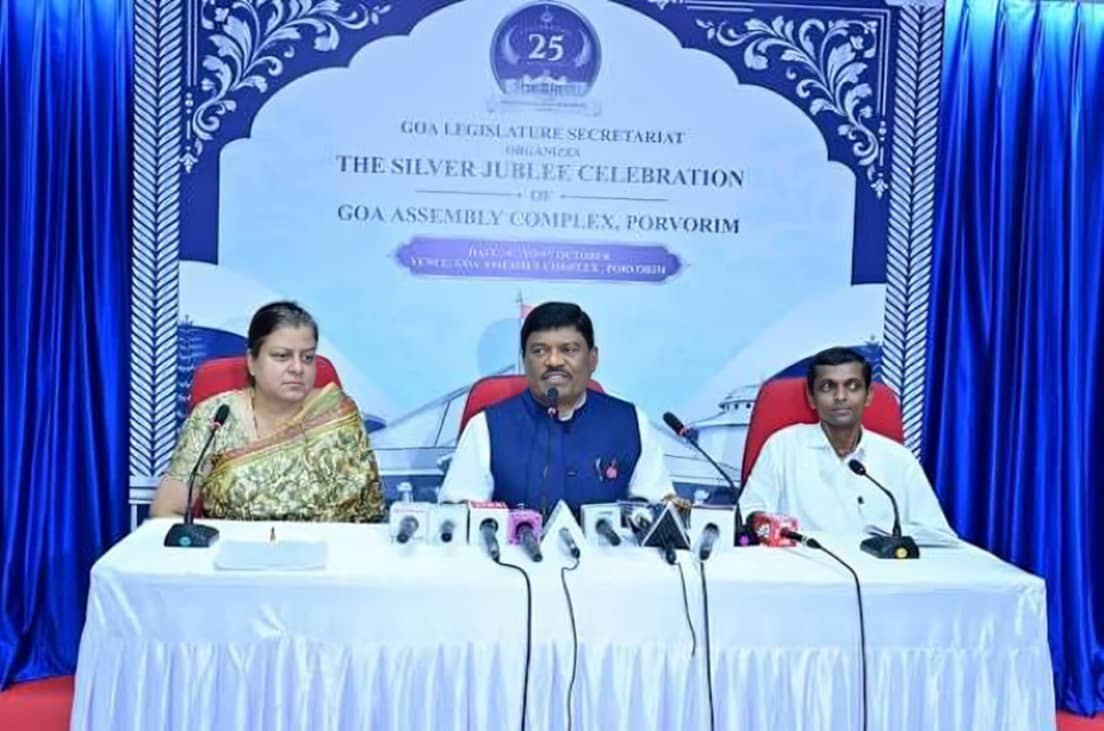
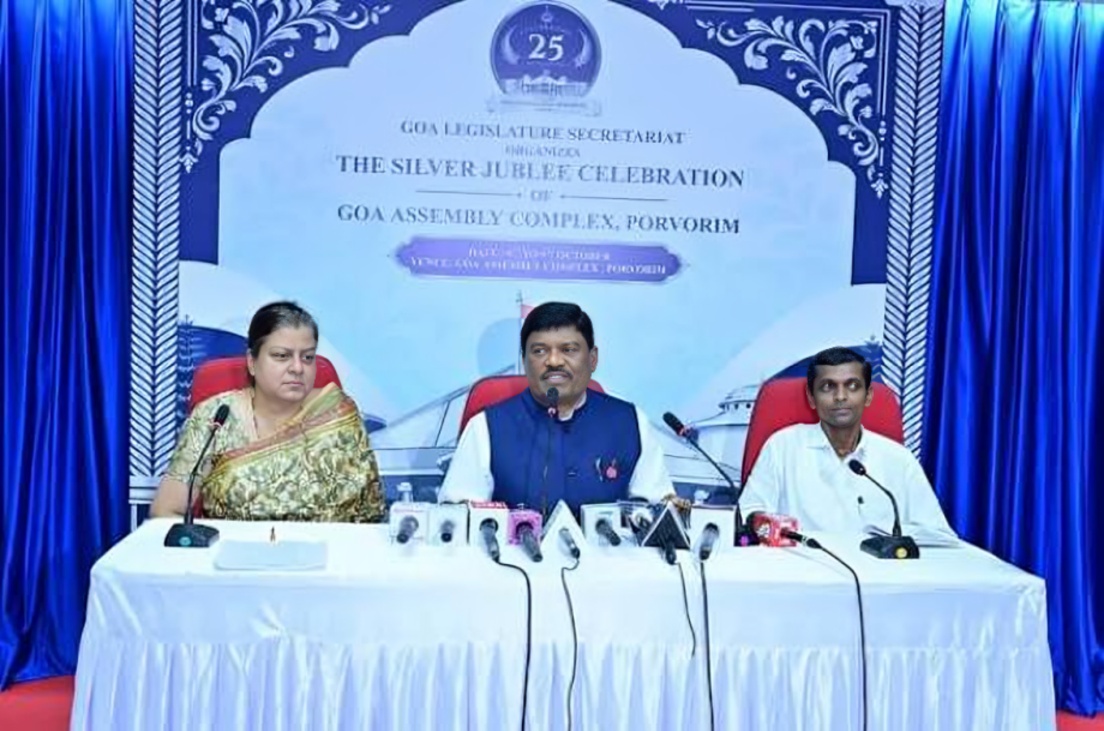
The Goa Legislative Assembly Complex at Porvorim has completed 25 years, marking an important milestone in the state’s legislative and democratic journey. The Silver Jubilee celebrations brought together senior political leaders and representatives to reflect on the development of Goa’s legislative institution and discuss the priorities that could shape its future.
The celebrations were inaugurated on October 6, 2026, by Goa Governor Pusapati Ashok Gajapathi Raju. Lok Sabha Speaker Om Birla, Goa Chief Minister Pramod Sawant, Goa Legislative Assembly Speaker Ganesh Gaonkar, Legislative Affairs Minister Mauvin Godinho and Leader of Opposition Yuri Alemao were among those who addressed the programme.
The event focused not only on the history of the Assembly complex but also on the importance of strengthening democratic participation. Speakers discussed the role of legislative institutions in representing citizens and responding to changing social and technological conditions.
Goa’s Legislative Journey
Chief Minister Pramod Sawant highlighted the contribution of successive governments to Goa’s political and developmental journey. The Assembly has functioned through different administrations and has witnessed debates and decisions involving major issues affecting the state.
The Porvorim Assembly complex was established to provide a permanent and suitable location for legislative proceedings. Before the present complex, the Goa Assembly functioned from the historic Adil Shah Palace in Panaji along with the Civil Secretariat. The state government had identified the need for a dedicated building with better facilities for Assembly proceedings and committee meetings.
The current Assembly complex was inaugurated in March 2000. Over the years, it has become an important centre for legislative discussions, policy debates and decisions concerning Goa.
The Assembly has witnessed changes in governments and political leadership while remaining a key institution for democratic decision making in the state. Issues including tourism, mining, infrastructure, environmental protection and economic development have featured prominently in legislative discussions over the years.
Focus on Public Participation
Lok Sabha Speaker Om Birla stressed that meaningful public participation is essential for a strong democracy. He said democratic institutions become stronger when different views and perspectives are heard and discussed.
Birla called for greater involvement of citizens in the functioning of democratic institutions and emphasised the importance of dialogue and diverse viewpoints. He also highlighted the role of young people and women in shaping the future of democracy.
According to the Press Information Bureau, the Lok Sabha Speaker suggested that the Goa Assembly prepare a 25 year roadmap with greater participation from youth, women and citizens.
The emphasis on public participation comes at a time when legislative institutions are increasingly looking at ways to improve communication with citizens. Technology is also creating new opportunities for people to access legislative information and understand government decision making.
Role of Technology in Democracy
Technology was another important theme during the Silver Jubilee celebrations. Birla said technological innovation and greater youth participation could provide a new dimension to democratic institutions.
Digital platforms have already changed the way citizens access government information. Legislative institutions can use technology to make proceedings, documents, committee work and other public information more accessible.
The use of technology can also help younger citizens understand parliamentary and legislative processes. Greater digital access could encourage more people to follow legislative debates and participate in discussions about public policy.
However, technological development also requires institutions to maintain transparency, accuracy and accessibility. The objective is not simply to introduce new technology but to ensure that it improves communication between elected representatives and citizens.
Importance of Youth Participation
The Silver Jubilee discussions also placed considerable emphasis on the participation of young people in democracy.
Young citizens represent an important section of the electorate and are increasingly involved in public discussions through digital platforms. Encouraging their participation in legislative and civic activities could help strengthen awareness of democratic institutions.
Birla called for a future roadmap that gives greater space to young people and women. The objective is to ensure that the democratic process reflects a wider range of voices and experiences.
For Goa, the issue is particularly relevant because the state has to balance economic development with environmental protection, heritage conservation and the interests of local communities.
Balancing Development and Heritage
Goa has experienced significant economic development through tourism, industry, trade and other sectors. At the same time, the state faces the challenge of protecting its natural environment, cultural heritage and quality of life.
During the Silver Jubilee event, Birla noted that Goa had worked to balance economic development with the preservation of its heritage and natural environment. He highlighted tourism, industry and education as areas in which the state has developed while maintaining its distinctive identity.
This balance is likely to remain an important part of Goa’s legislative agenda in the coming years. Decisions relating to infrastructure, tourism expansion, environmental protection and natural resources can have a direct impact on the state’s future.
The Assembly provides a platform for elected representatives to debate these issues and examine different perspectives before policies are implemented.
Assembly as a House of the People
The Goa government describes the Assembly building not simply as a seat of political power but as a house representing the people of the state. The concept of the Porvorim complex was developed with the objective of creating a suitable environment for legislative business and strengthening the relationship between citizens and their elected representatives.
The Silver Jubilee celebrations therefore served both as a historical occasion and as an opportunity to discuss the future role of the institution.
The next phase of the Assembly’s journey is expected to involve greater use of technology, wider public engagement and continued efforts to make legislative institutions more accessible.
Political Participation
The Silver Jubilee event also reflected the political diversity of Goa. Members from different political backgrounds have contributed to debates within the Assembly over the years.
The importance of allowing different opinions to be heard was highlighted during the celebrations. Birla said agreement and disagreement are both part of a healthy democratic process, stressing that strong institutions depend on dialogue and the exchange of ideas.
At the same time, the event took place amid political differences. Goa Forward Party leader and MLA Vijai Sardesai chose not to attend the Silver Jubilee programme and criticised the manner in which the event was organised. His absence highlighted continuing political differences within the state.
The contrasting positions underline the broader role of legislative institutions, where different political parties and viewpoints are expected to participate in democratic debate.
Future Roadmap
The call for a 25 year roadmap gives the Silver Jubilee celebrations a forward looking dimension. Such a roadmap could focus on strengthening legislative procedures, improving citizen access, expanding digital systems and encouraging young people and women to participate more actively in democratic institutions.
The proposal also reflects the need for legislative institutions to adapt to changing public expectations.
For Goa, future governance will involve managing development while protecting the state’s environment and cultural identity. Legislative debates will continue to play an important role in determining how these competing priorities are addressed.
The Assembly’s next phase will therefore be shaped not only by elected representatives but also by the participation of citizens, civil society, young people and other stakeholders.
Conclusion
The 25th anniversary of the Goa Legislative Assembly Complex marks an important stage in the state’s democratic journey. The Silver Jubilee celebrations provided an opportunity to recognise the contributions of successive governments and legislators while discussing the future of democratic institutions.
Chief Minister Pramod Sawant highlighted the legislative journey of Goa, while Lok Sabha Speaker Om Birla called for greater citizen participation, stronger youth and women’s involvement and wider use of technology.
The focus on a 25 year roadmap indicates an effort to look beyond the Assembly’s past achievements and consider how the institution can evolve. Greater transparency, technological innovation and public participation could become important elements of Goa’s legislative future.