
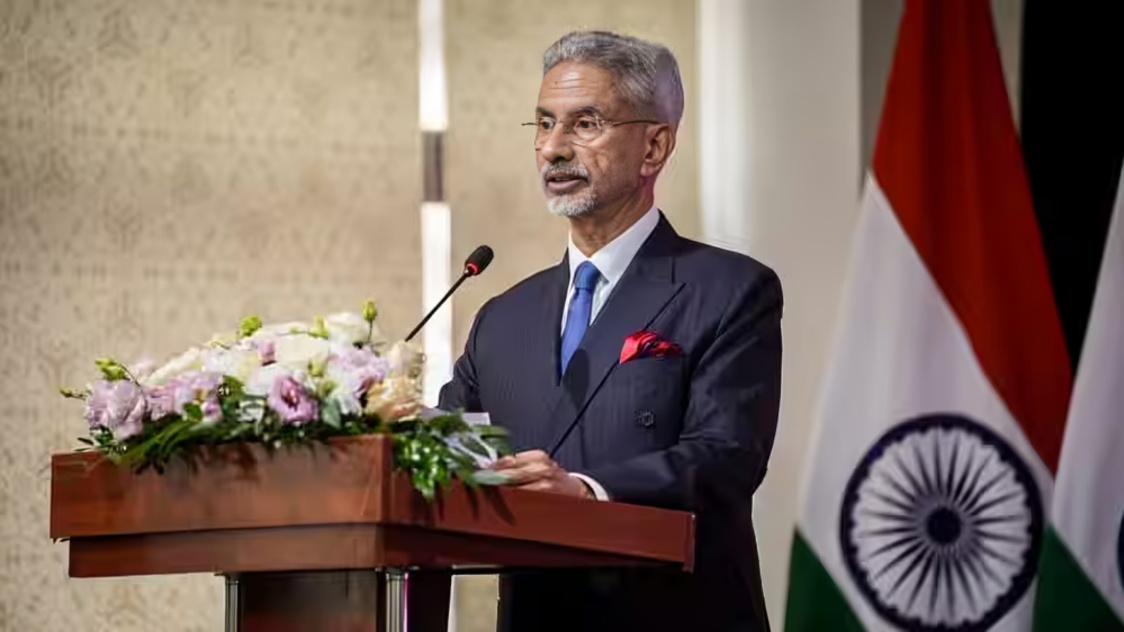
External Affairs Minister S Jaishankar has said that India is destined to rise in a turbulent and increasingly uncertain global environment, while cautioning that the country’s growing international role will bring new diplomatic responsibilities and intellectual challenges.
Jaishankar made the remarks on September 15, 2026, while addressing the valedictory session of the Silver Jubilee celebration of the Indian Council of World Affairs in New Delhi. The event marked 25 years since the organisation received the status of an Institution of National Importance.
During his address, Jaishankar outlined six broad issues that he said Indian diplomacy would need to address in the coming decades. These include the consequences of India’s rapid growth, the international movement of talent and skills, communication and artificial intelligence, India’s engagement with the Global South, the country’s civilisational identity and strategic autonomy.
Jaishankar said India’s economic expansion and increasing capabilities would have implications beyond domestic development. According to him, the country’s growing economic and technological capabilities would affect its global footprint, its relationships with other countries and its participation in major international debates.
He noted that India’s position in the international system has changed considerably over the past decade. He linked this change to the country’s expanding capabilities and said that greater influence would also mean greater responsibility in international affairs.
The minister also highlighted the changing nature of India’s workforce and the increasing movement of Indian professionals and skilled workers across borders. He said a globalised workplace would increasingly require a globalised workforce.
This development, according to Jaishankar, would create additional responsibilities for Indian diplomacy. Consular services, the welfare of Indian communities abroad, rapid-response capabilities and agreements concerning the movement of people would become increasingly important areas of foreign policy.
He described this as evidence of a more people-centric approach to Indian foreign policy. The growing number of Indians working, studying and living abroad means that diplomatic engagement increasingly involves issues that directly affect individuals and communities outside India.
Another major issue identified by Jaishankar was the transformation of communication through digital technology and social media. He said diplomacy now operates in an environment where information travels rapidly and governments need to respond more quickly.
Artificial intelligence is expected to add another layer of complexity. Jaishankar said diplomacy in the AI era would require new approaches as governments deal with rapidly changing technologies, communication patterns and information environments.
Jaishankar also discussed India’s relationship with the Global South. India has sought to strengthen engagement with developing countries on issues including development, technology, economic cooperation and international institutions.
The minister further highlighted the importance of India’s civilisational identity in its external relations. He described India as a civilisation with a long historical continuity that is seeking a greater role on the global stage.
According to Jaishankar, India’s distinctive historical and cultural characteristics need to be communicated clearly to the rest of the world. He said that as India becomes more prominent internationally, its approach and identity may receive greater attention and interpretation from other countries.
Peace and development were another central theme of his remarks. Jaishankar said India’s diplomatic approach places importance on dialogue and diplomacy and argued that prolonged conflicts should ultimately give way to an end to war.
He said Indian diplomacy would continue to place peace and development at the centre of its international engagement. He also connected this approach with the idea of a multipolar international system, in which several major centres of influence coexist.
Strategic autonomy was the sixth major issue highlighted by the external affairs minister. Jaishankar described India’s independent approach to international affairs as a fundamental feature of the country’s foreign policy.
He said strategic autonomy would remain important as India navigates relationships with different major powers and responds to changing geopolitical conditions. His comments came amid a global environment marked by conflicts, trade tensions, technological competition and changes in international partnerships.
Jaishankar also referred to the foreign policy dimensions of the government’s Viksit Bharat by 2047 objective. He indicated that India’s domestic transformation and international role would increasingly be connected as the country’s capabilities expand.
His remarks came shortly after India hosted the BRICS summit in New Delhi on September 12 and 13, bringing together leaders from the expanded grouping at a time of significant geopolitical uncertainty.
The minister said the international environment was becoming more turbulent and uncertain, requiring Indian diplomatic institutions to provide intellectual and strategic support for policymakers.
The Indian Council of World Affairs, which hosted the event, is expected to continue its role in research, analysis and discussion on international affairs. Jaishankar’s address highlighted the importance of institutions that can examine the changing global environment and contribute to discussions about India’s external relations.
Overall, Jaishankar’s remarks presented India’s growing international role as a development accompanied by both increased influence and increased responsibility. His six areas of focus indicate the range of issues that Indian diplomacy may need to address as the country’s economic, technological, demographic and geopolitical significance evolves.