
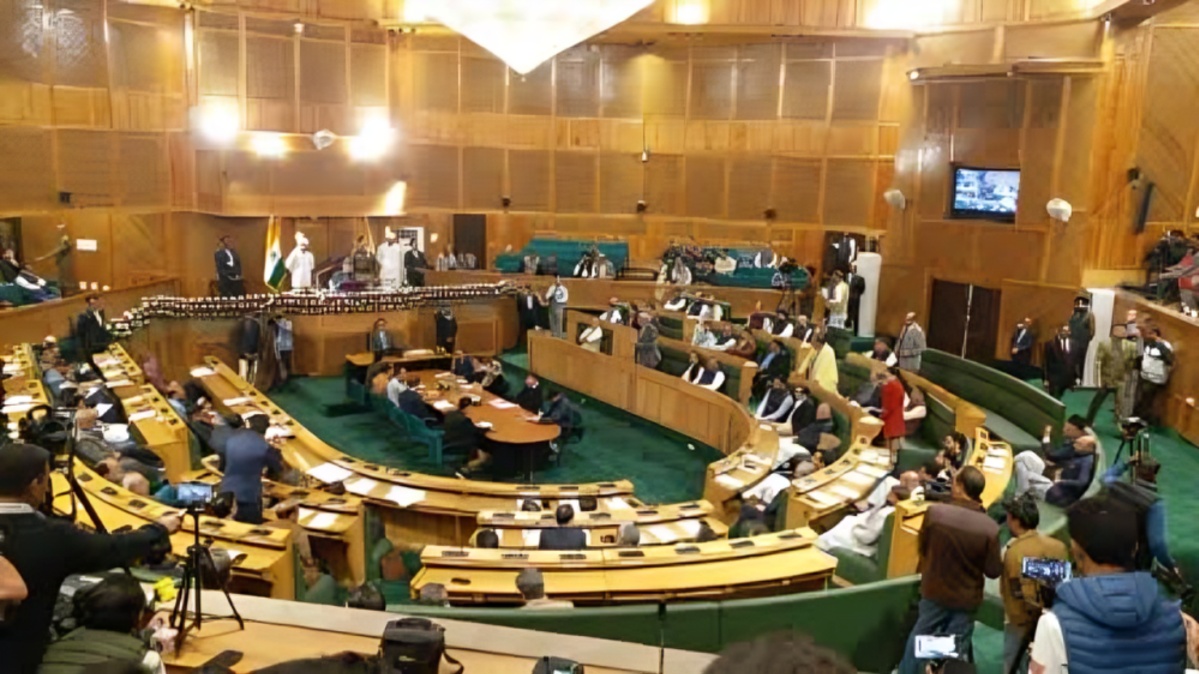
The autumn session of the Jammu and Kashmir Legislative Assembly begins in Srinagar on September 21, 2026, with opposition parties preparing to raise a range of issues concerning governance, employment, reservation and the restoration of statehood.
The session is scheduled to continue until September 30 and will have seven sittings spread across the 10 day period. Political parties have been preparing their strategies ahead of the session, with several parties planning to raise issues they say are important to the people of Jammu and Kashmir.
The BJP, which is the principal opposition party in the 90 member Assembly, is expected to question the Omar Abdullah led government on issues including the outsourcing of government jobs, alleged corruption in public offices and delays in holding elections to Panchayats and Urban Local Bodies.
BJP leaders have also said they intend to raise questions about electoral promises made during the 2024 Assembly elections. The party has raised concerns relating to employment, public services, electricity and development works. These are positions expressed by BJP leaders and are expected to form part of the party’s approach during the Assembly session.
The Peoples Democratic Party is also preparing to raise several issues. PDP representatives have said unemployment, outsourcing of government jobs, reservation policy and the regularisation of daily wage workers will be among the subjects they want to discuss in the House.
The issue of daily wage workers has been a significant concern in the political debate in Jammu and Kashmir. Opposition representatives have said workers employed in different government departments and public programmes require greater job security and clarity regarding regularisation.
Reservation policy is another important subject expected to receive attention during the session. Political parties have expressed different views on the existing reservation framework and its impact on employment and educational opportunities. The issue is likely to generate discussion as legislators raise constituency level concerns.
The restoration of statehood is also expected to remain an important political issue. Jammu and Kashmir was reorganised as a Union Territory in 2019, and the restoration of statehood has remained a major issue in the region’s political discourse. The subject has also figured in recent discussions involving the Jammu and Kashmir government and the Union government.
Congress is another important participant in the upcoming discussions. Although the Congress is an alliance partner of the National Conference in Jammu and Kashmir, Pradesh Congress Committee president and Srinagar MLA Tariq Hameed Karra has said that the party will continue to raise public issues in the Assembly.
Karra has stated that being part of an alliance with the National Conference does not prevent Congress legislators from raising concerns affecting the public. The party has therefore indicated that its legislators will maintain their own position on matters of public importance while continuing the alliance arrangement.
Meanwhile, the ruling National Conference has been preparing its strategy for the session. The party held a meeting of its legislators and independent members supporting the government to discuss the issues expected to come before the House.
National Conference president Farooq Abdullah and Chief Minister Omar Abdullah were involved in the discussions. The party has asked its legislators to give priority to issues raised by people in their respective constituencies and to present the government’s work during the session.
National Conference representatives have said that the government is working towards fulfilling its electoral commitments. The ruling party has also indicated that it expects the opposition to raise public issues through the legislative process and that the government will respond to questions in the House.
The Assembly session will also include legislative business apart from political debates. According to the provisional schedule, the opening day on September 21 will begin with obituary references. Government business is scheduled for September 22.
Private members’ bills are scheduled for September 24, followed by private members’ resolutions on September 25. The House is scheduled to consider private members’ bills again on September 28, followed by government business on September 29 and 30.
The session is also expected to consider reports and legislative proposals relating to governance and public administration. A House committee report concerning the implementation of the Jal Jeevan Mission in Jammu and Kashmir is scheduled to be presented. A bill relating to amendments to the Jammu and Kashmir Cooperative Societies Act is also listed for consideration.
Public services are another area likely to receive attention. Opposition representatives have raised concerns about staff shortages in schools and hospitals, damaged roads, civic facilities and other basic infrastructure. These concerns have been raised by opposition leaders ahead of the session and are expected to be brought before the House.
The BJP has also indicated that it plans to raise concerns relating to government recruitment and outsourcing. Party representatives have alleged irregularities in outsourcing and corruption in public offices. These are allegations made by opposition leaders and have not been presented here as established findings.
The National Conference government is expected to respond to these allegations and questions during the Assembly proceedings. The ruling party has maintained that it is working to address public concerns and implement its electoral commitments.
The autumn session therefore provides an important platform for elected representatives to discuss governance and public policy in Jammu and Kashmir. Employment, reservation, statehood, public services, local elections and implementation of electoral promises are among the issues expected to receive attention.
The discussions could also provide an opportunity for legislators to seek clarification from the government on administrative decisions and development programmes. Questions raised by members can lead to official responses and discussions on the floor of the Assembly.
With seven sittings scheduled between September 21 and September 30, political parties have a limited period to raise their respective issues. Opposition parties have indicated that they intend to use the session to question the government on matters affecting the public, while the ruling National Conference is preparing to respond and highlight its work.
The proceedings will therefore be closely watched as the Jammu and Kashmir government and opposition parties debate governance, employment, reservation policy, public services and the demand for restoration of statehood.
The final outcome of the debates will depend on the discussions and decisions taken during the Assembly session. The issues raised by individual parties represent their respective political positions, while the government’s responses will provide its side of the debate.