
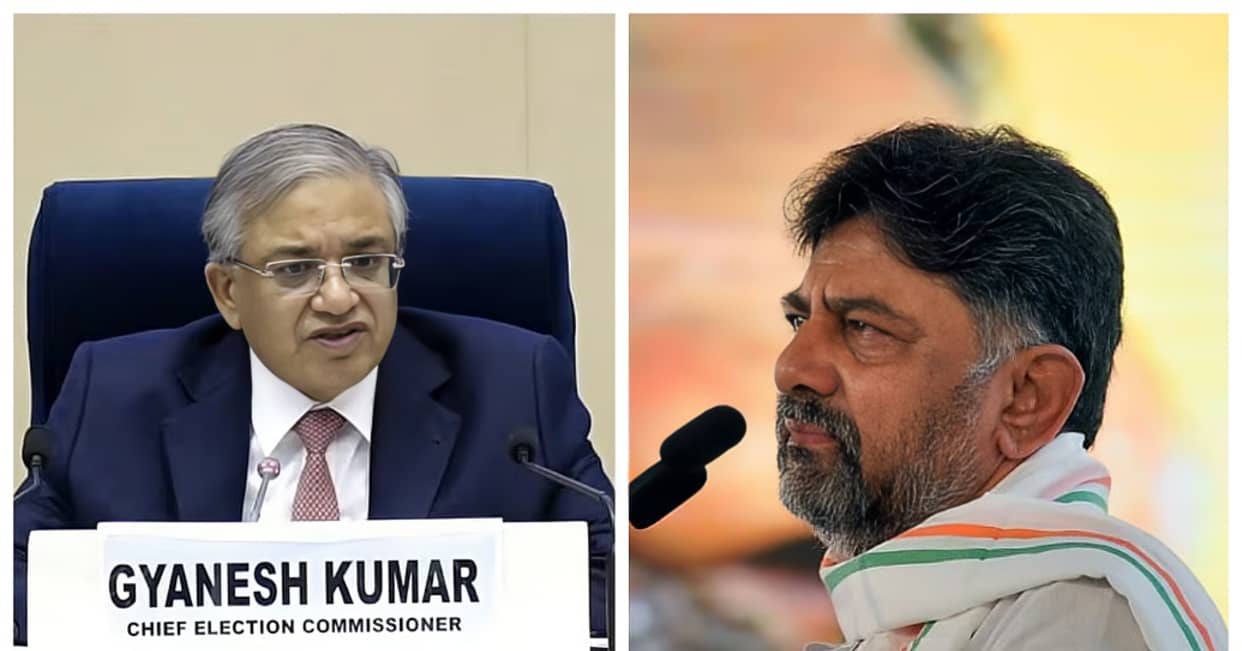
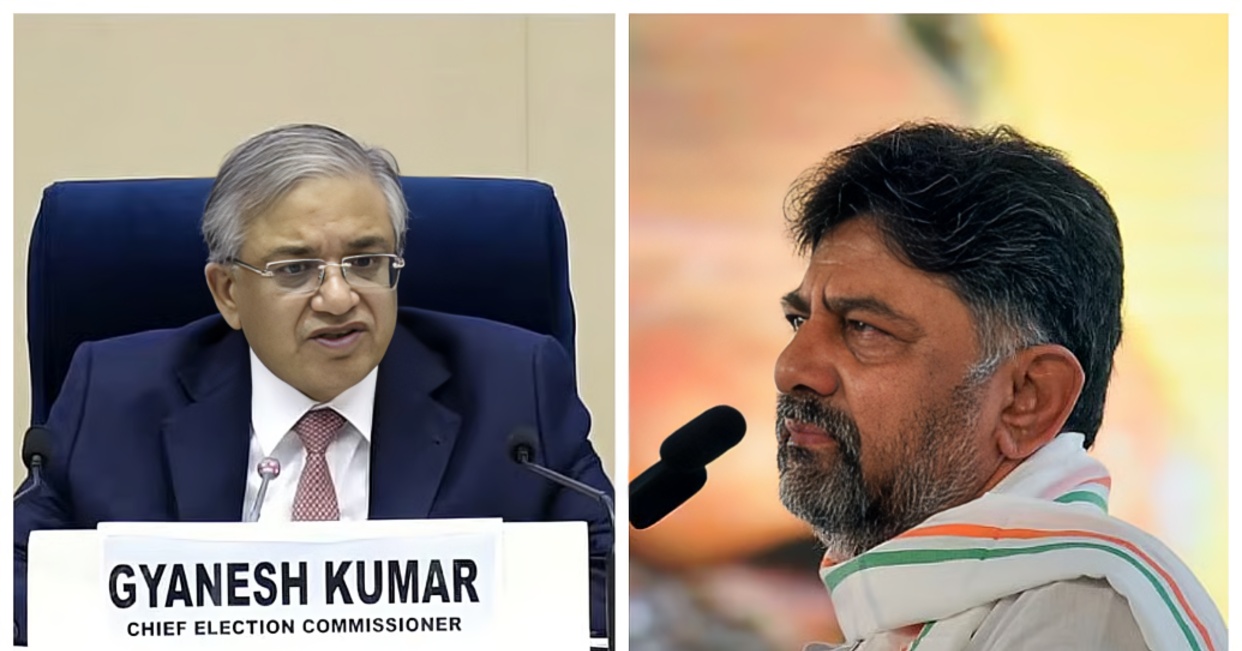
Karnataka Chief Minister D K Shivakumar has called for the resignation of Chief Election Commissioner Gyanesh Kumar and demanded a fresh revision of electoral rolls, amid an ongoing political debate over the Special Intensive Revision of electoral rolls.
Shivakumar made the demand while raising concerns about the possible impact of the revision exercise on eligible voters. He has argued that the electoral roll process should be reviewed comprehensively so that genuine citizens are not excluded from the voter list. He has also called for wider discussion of the issue in Parliament.
The Special Intensive Revision, commonly known as SIR, is an electoral roll revision exercise being conducted by the Election Commission of India. The process has become a major political issue in several states, with opposition parties raising questions about voter verification, deletion of names, documentation requirements and the time available to voters to submit claims and objections.
Shivakumar has previously written to the Election Commission seeking additional time for voters to file claims and objections in Karnataka. In August, he raised concerns after the draft electoral rolls identified a large number of electors under the Absent, Shifted, Dead, Duplicate and Others category, commonly referred to as ASDDO. He also raised concerns about voters who could receive notices over what the Election Commission describes as logical discrepancies.
According to the figures cited by Shivakumar in his earlier communication, around 1.08 crore of Karnataka’s approximately 5.54 crore electors had been placed under the ASDDO category. He also said about 43.8 lakh voters could receive notices relating to logical discrepancies or the absence of a link with the 2002 electoral roll. The Chief Minister argued that additional time would be necessary for voters to establish their eligibility and submit the required documents.
Shivakumar has also argued that the claims and objections process should provide sufficient opportunity to citizens who may have been away from their registered addresses because of employment, migration, health or other legitimate reasons. He had requested additional time and stronger verification mechanisms, saying that deadlines should allow genuine electors to respond before any adverse decision is taken.
In his latest statement, Shivakumar went further by demanding that Chief Election Commissioner Gyanesh Kumar resign. He questioned the functioning of the Election Commission and referred to reports about differences among members of the poll panel. According to reports, Shivakumar said that when members of a multi-member commission disagree, decisions should not be imposed unilaterally. He said the CEC should consider resigning on moral grounds. These are Shivakumar’s political assertions and do not constitute an independent finding about the functioning of the Election Commission.
The Karnataka Chief Minister also demanded that the ongoing SIR exercise be scrapped and replaced with a fresh revision. He said the objective should not be to protect the interests of any particular political party but to ensure that every eligible citizen has an opportunity to remain on the electoral roll.
The issue comes at a time when the Election Commission is facing wider political criticism over the SIR exercise. A recent report by The Indian Express said Election Commissioners Sukhbir Singh Sandhu and Vivek Joshi had recorded objections on several occasions concerning decisions related to electoral roll procedures, including issues involving voter additions, deletions, Form 6 and access to electoral databases.
The report has intensified the political debate over the internal functioning of the Election Commission. Opposition parties have cited the reported objections while questioning the decision-making process under CEC Gyanesh Kumar.
The Election Commission, however, has rejected the suggestion that differences expressed during internal deliberations mean that final decisions were not properly taken. The poll body has said that internal checks, observations and differing views are part of the functioning of a multi-member constitutional institution. It has maintained that final decisions relating to the SIR process were taken unanimously.
The Election Commission’s position is significant in the ongoing debate because the controversy involves both the electoral roll revision process and the institutional functioning of the poll panel. While political leaders have questioned aspects of the process, the Election Commission has defended its procedures and decision-making.
The Karnataka controversy also highlights the importance of the claims and objections stage of electoral roll revision. Voters whose names are missing from a draft roll, or whose details require verification, can use the procedures prescribed by the Election Commission to raise claims or objections. The process is intended to identify eligible voters, correct errors and remove entries that do not meet electoral requirements.
Shivakumar has argued that sufficient time, manpower and verification mechanisms are necessary for this process. Earlier, he requested additional electoral officials and more time for voters facing verification issues. He also argued that local-level mechanisms should be strengthened so that errors can be identified before the final electoral rolls are prepared.
The demand for a fresh revision is therefore part of a larger political dispute over how electoral rolls should be prepared and verified. Shivakumar has called for a comprehensive review of electoral data and a discussion in Parliament, while the Election Commission has maintained that the revision is part of its constitutional responsibility and that its decisions are being taken according to established procedures.
The controversy is expected to continue as political parties, governments and the Election Commission debate the procedures followed during SIR. The key issues include the accuracy of electoral databases, the verification of voter information, the treatment of disputed entries, the time available for claims and objections, and safeguards to ensure that eligible citizens are not inadvertently excluded from electoral rolls.
For voters, the dispute underlines the importance of checking their electoral details and using the official procedures available for correction, inclusion or objection. The final outcome of the political and legal discussions surrounding the SIR process will determine how the concerns raised by different stakeholders are addressed.