The Jammu and Kashmir National Conference is facing growing political challenges, with internal dissatisfaction among party legislators coinciding with a major disagreement over its political direction. Chief Minister Omar Abdullah's government, which came to power after the 2024 Assembly elections, is dealing with questions over cabinet representation, party decision-making and the fulfilment of election promises.
Party president and veteran leader Farooq Abdullah has stepped in to address the concerns of dissatisfied legislators. At the same time, the departure of former Srinagar MP Aga Syed Ruhullah Mehdi has created another challenge for the party, particularly over its position on the restoration of Article 370 and other political commitments.
The developments have raised questions about Omar Abdullah's leadership and the ability of the party's senior leadership to maintain unity. The National Conference has also accused the BJP of attempting to exploit its internal differences, describing the alleged effort as an Operation Lotus. However, the party's internal problems have brought its leadership and political strategy under increased scrutiny.
Cabinet Expansion Triggers Discontent Among National Conference MLAs
One of the major reasons behind the latest internal disagreement is the cabinet expansion carried out by Omar Abdullah in October 2026. Four new ministers were inducted into the Jammu and Kashmir Council of Ministers on October 27, marking the first major expansion since the National Conference returned to power in 2024.
The reshuffle, however, disappointed several senior legislators who were expecting ministerial positions or greater representation in the government. At least 18 National Conference MLAs reportedly expressed dissatisfaction and held meetings to discuss their concerns.
Some legislators argued that seniority, political experience and loyalty to the party had not received sufficient consideration during the cabinet expansion. Others raised questions about regional representation and the way important decisions were being taken within the organisation.
The dissatisfaction was not limited to the distribution of ministerial positions. Several legislators also sought changes in the functioning of the government and greater consultation with elected representatives.
Among their reported demands were a review of ministerial performance, changes to the existing cabinet arrangement and the removal of Chief Minister Omar Abdullah's adviser Nasir Aslam Wani. Some legislators also questioned the influence of individuals close to the Chief Minister in government and party affairs.
The developments revealed that the dissatisfaction had been building for some time and that the cabinet expansion brought the differences into the open.
The Indian Express+2
Farooq Abdullah Steps In to Address the Grievances
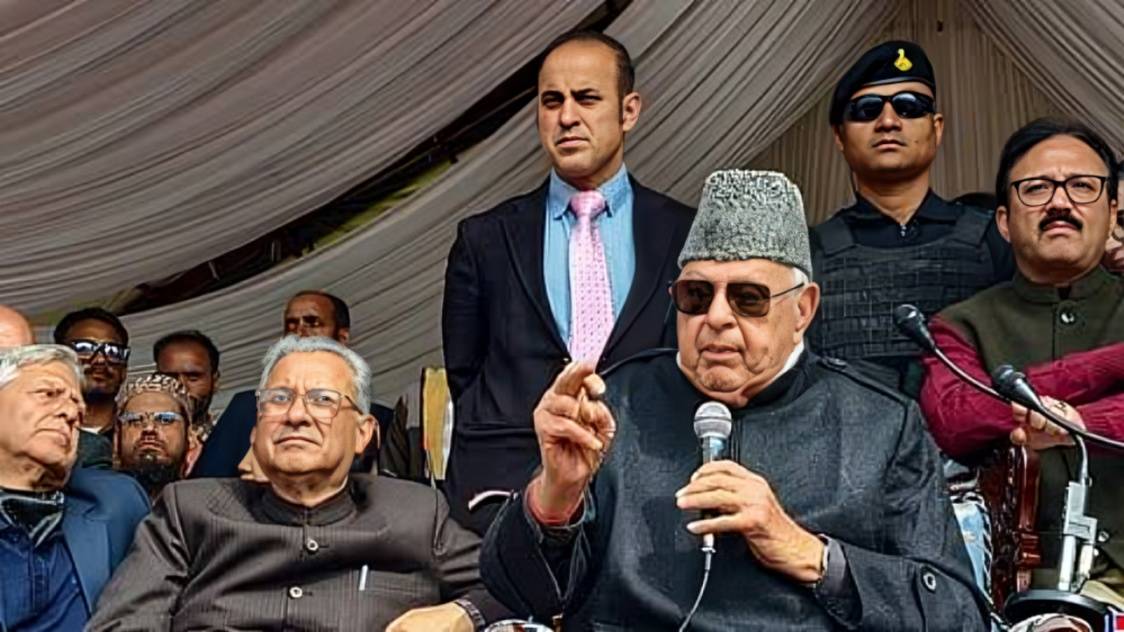
As dissatisfaction spread among legislators, National Conference president Farooq Abdullah intervened to bring the two sides together. He and Chief Minister Omar Abdullah held discussions with the unhappy MLAs in Srinagar on November 6.
During the meeting, the legislators reportedly presented their concerns about the cabinet expansion, party functioning and the treatment of senior leaders. Farooq Abdullah acknowledged that some of their concerns were genuine and indicated that the leadership would consider steps to address them.
He also rejected suggestions that the party was breaking apart, maintaining that the National Conference remained united.
According to reports published on November 11, Farooq Abdullah has now proposed a mechanism to give legislators a greater role in government-related discussions. The party plans to form informal advisory groups of MLAs attached to individual ministers.
Under the proposed arrangement, legislators will act as a link between the party organisation and the government. Ministers are expected to hold regular meetings with their respective advisory groups and keep them informed about important policy decisions and departmental progress.
Each legislator will be allowed to join two advisory groups. Farooq Abdullah has asked MLAs to submit their preferred ministers in order of priority so that the groups can be organised accordingly. The party expects to complete the process within two weeks.
The initiative is intended to improve communication between ministers and legislators, while giving party representatives a greater opportunity to raise constituency-level concerns. However, the advisory groups do not automatically address all the demands raised by the dissatisfied MLAs.
India News - The Indian Express+2
Omar Abdullah's Offer to Resign During Internal Discussions
The seriousness of the disagreement became more apparent during the meeting between the party leadership and the dissatisfied legislators.
According to reports, Omar Abdullah offered to resign from the Chief Minister's position to make way for another leader if the legislators were unhappy with his leadership. The legislators reportedly did not accept the offer.
The incident highlighted the level of concern within the party following the cabinet expansion. It also demonstrated the difficulty of balancing the expectations of senior legislators with the limited number of ministerial positions available.
For Omar Abdullah, the challenge is not simply to manage disagreements over cabinet appointments. He must also maintain the confidence of party legislators while ensuring that the government functions effectively.
The National Conference leadership has begun taking steps to prevent the disagreement from developing into a larger organisational crisis. Whether the proposed advisory groups and further discussions will satisfy the legislators remains to be seen.
Aga Syed Ruhullah Mehdi's Exit Raises Ideological Questions
While the dissatisfaction among MLAs is largely connected to cabinet representation and internal decision-making, the departure of Aga Syed Ruhullah Mehdi has raised a separate political challenge for the National Conference.
Ruhullah, who represented Srinagar in the Lok Sabha, announced his decision to leave the National Conference on November 3. He also announced his resignation from Parliament, marking a major break with the party that had been central to his political career.
His disagreement with the leadership had developed over several months. One of the major issues was the party's position on the restoration of Article 370, which had granted special constitutional status to Jammu and Kashmir before its abrogation in August 2019.
Ruhullah accused the National Conference leadership of failing to fulfil its election commitments, particularly its promise to pursue the restoration of Jammu and Kashmir's constitutional rights. He also raised concerns about political prisoners and the direction taken by the party after coming to power.
His departure is significant because he had been an important political voice in Srinagar and had publicly raised questions about the government's approach to sensitive political issues.
The disagreement also reflects a wider challenge for the National Conference. While the party has to work within the existing constitutional and administrative framework, some of its supporters expect stronger action on the political commitments made during the election campaign.
BJP Accused of Exploiting the Party's Internal Differences
The National Conference has accused the BJP of taking advantage of the disagreements within the party to weaken its political position in Jammu and Kashmir. Some party leaders have described the alleged effort as Operation Lotus.
The term Operation Lotus is commonly used in Indian political discussions to refer to allegations that the BJP attempts to attract legislators from rival parties and influence changes in governments. In this case, the National Conference has suggested that its internal problems could be exploited by political opponents.
However, allegations of an organised attempt to destabilise the party should be distinguished from the confirmed internal disagreements among its legislators. The reports of dissatisfaction following the cabinet expansion and Ruhullah's departure are separate developments, and they do not by themselves establish that the BJP orchestrated them.
Ruhullah's criticism has also focused on the National Conference leadership's political decisions and election promises. His departure has therefore added an ideological dimension to the party's difficulties, beyond the disagreements over ministerial positions.
Limited Powers of a Union Territory Add to the Government's Challenges
The political difficulties facing Omar Abdullah's government are also connected to the special administrative structure of Jammu and Kashmir.
Following the reorganisation of the former state in 2019, Jammu and Kashmir became a Union Territory with a legislature, while Ladakh became a separate Union Territory without a legislature. The elected government in Jammu and Kashmir exercises powers over several subjects, but important areas remain under the authority of the Lieutenant Governor and the Union government.
This arrangement has created political challenges for successive elected representatives, particularly over issues relating to administration, public order and the restoration of full statehood.
The National Conference returned to power in October 2024 after campaigning on promises that included the restoration of Jammu and Kashmir's political rights and statehood. These commitments created considerable expectations among voters and party supporters.
However, governing a Union Territory with limited powers has made it difficult for the elected administration to implement every political promise independently. This has contributed to criticism from sections of the party and its supporters.
The government must therefore balance its election commitments with the constitutional and administrative realities under which it operates. This challenge has become an important part of the wider debate over Omar Abdullah's leadership.
Can Farooq Abdullah Restore Unity Within the National Conference?
The National Conference is now dealing with two different but connected challenges. The first involves legislators who are unhappy with cabinet appointments, regional representation and the functioning of the party. The second concerns the political direction of the organisation following Ruhullah's departure and his criticism of its handling of key election promises.
Farooq Abdullah's intervention has helped bring dissatisfied legislators into discussions with the party leadership. The proposed advisory groups are an attempt to provide MLAs with a more active role in government coordination.
However, the party will need to address the underlying concerns if it wants to prevent further disagreements. Improving communication, considering regional representation and providing clarity on election commitments are likely to remain important issues.
For Omar Abdullah, maintaining unity within the ruling party is essential to the stability of his government. The coming weeks will show whether Farooq Abdullah's efforts can contain the internal dissent and whether the National Conference can rebuild confidence among its legislators and supporters.
The current developments do not necessarily indicate an immediate threat to the government, but they underline the political and organisational challenges facing the party as it approaches the next phase of its administration.