
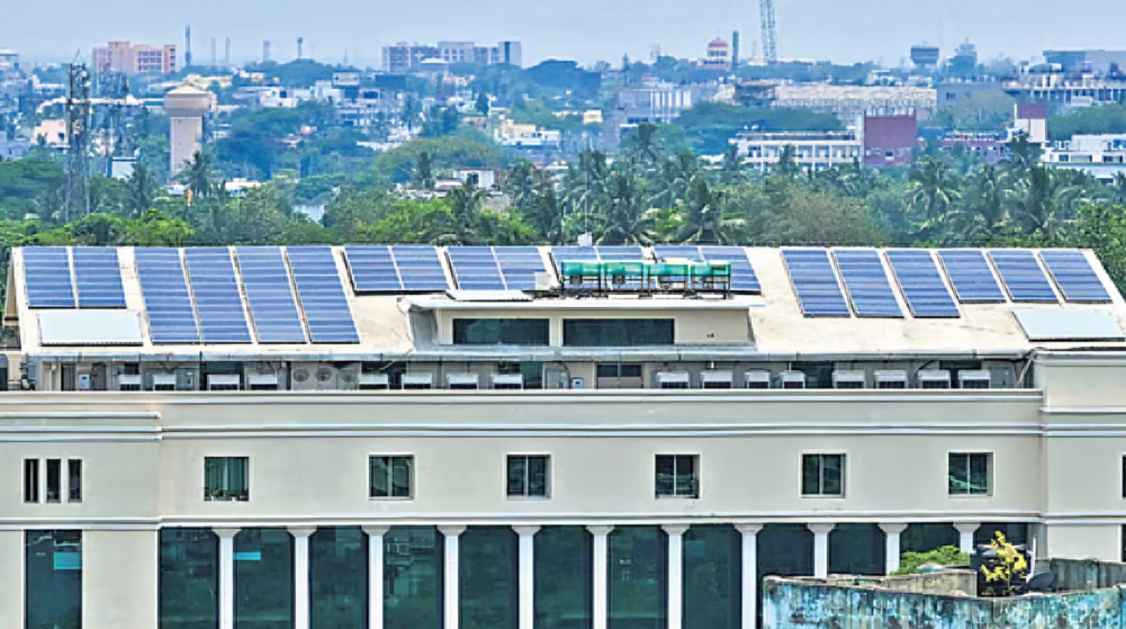
More than 19,000 residential communities have installed community rooftop solar systems under the PM Surya Ghar Muft Bijli Yojana, according to figures cited by government officials.
The installations are intended to meet the electricity requirements of common facilities in housing societies and residential communities. These include lifts, common-area lighting, water pumps, security systems and sewage treatment plants.
Officials said the initiative has benefited more than 9 lakh households by enabling residential communities to use solar power for their shared electricity requirements. The programme is part of the government's wider effort to expand rooftop solar generation and encourage households and residential associations to shift towards renewable energy.
Community rooftop solar systems can play an important role in large housing complexes, where electricity used for common facilities forms a significant part of monthly maintenance expenses. Electricity is required not only inside individual homes but also for facilities that are shared by all residents.
In many apartment complexes, lifts operate throughout the day, while lighting is required in corridors, entrances, parking areas and other common spaces. Water pumps also require regular electricity to supply water to residents. Security systems, including surveillance equipment and other electrical installations, add to the common electricity demand.
Solar systems installed on available rooftop areas can help residential communities generate part of this electricity locally. The electricity generated during sunlight hours can be used for eligible common facilities, subject to the applicable system and electricity regulations.
According to the figures cited by officials, the government has released around Rs 422 crore as central financial assistance to Resident Welfare Associations and similar residential bodies to support the installation of rooftop solar systems.
The financial assistance is intended to reduce the initial cost of installing solar systems for common facilities. The PM Surya Ghar scheme provides support for rooftop solar installations, including systems for group housing societies and Resident Welfare Associations for common facilities.
The cumulative rooftop solar capacity installed for these communities has reportedly crossed 278 MW. This capacity represents the combined solar generation potential of systems installed across the participating residential communities.
The expansion of rooftop solar in housing societies is also expected to contribute to the country's renewable energy objectives. Solar power does not require fuel during generation and can help reduce dependence on electricity generated from conventional sources.
For residents, one of the potential advantages of community solar installations is a reduction in recurring electricity expenses associated with common facilities. The actual savings for individual housing societies can vary depending on factors such as system capacity, electricity consumption, local tariffs, sunlight availability, maintenance costs and the structure of the society's electricity arrangements.
Officials have highlighted the financial benefits for large housing complexes in particular. In societies with hundreds of households, electricity charges for lifts, pumps, lighting and other common services can form a substantial part of monthly maintenance bills.
The availability of central financial assistance can help Resident Welfare Associations overcome some of the initial investment challenges involved in installing rooftop solar systems. Once installed, the systems can generate electricity for several years, subject to appropriate operation and maintenance.
The programme also has an environmental dimension. Increased use of rooftop solar can support the transition towards cleaner electricity and help residential communities participate in renewable energy generation.
The PM Surya Ghar Muft Bijli Yojana was launched by the Union government to promote rooftop solar installations among households. The scheme aims to expand the use of solar energy and provide financial support to eligible beneficiaries.
The scheme includes provisions for residential consumers as well as group housing societies and Resident Welfare Associations. For common facilities, including areas such as electric vehicle charging infrastructure, eligible group housing societies and RWAs can receive central financial assistance subject to the scheme's conditions and limits.
The growth of community rooftop solar also reflects the increasing role of residential buildings in India's renewable energy transition. Apartment buildings and housing complexes often have significant rooftop areas that can potentially be used for solar generation.
However, the installation of solar systems in large housing societies requires coordination among residents, the RWA or housing association, electricity distribution companies and authorised solar system providers. Technical feasibility, rooftop availability, electrical infrastructure and regulatory requirements also need to be considered before installation.
The reported figure of more than 19,000 residential communities indicates growing participation by housing societies in the rooftop solar programme. With more than 9 lakh households reportedly benefiting from these installations, the initiative is extending solar adoption beyond individual homes to shared residential infrastructure.
The reported 278 MW cumulative capacity also represents a significant addition to decentralised renewable energy generation. Instead of relying entirely on electricity supplied through the grid for common facilities, participating communities can generate a portion of their electricity requirements on site.
Government support for such systems is particularly relevant because the upfront installation cost can otherwise be a barrier for housing associations. Financial assistance can make rooftop solar projects more accessible to residential communities while potentially improving the long-term economics of common-area electricity consumption.
The initiative is also aligned with the broader push towards energy efficiency and renewable energy adoption in urban areas. As cities expand and the number of apartment communities increases, the electricity requirements of common facilities are expected to remain an important component of urban power consumption.
The continued expansion of rooftop solar among residential communities will depend on awareness, financial support, suitable rooftop space, technical implementation and effective maintenance. Housing societies will also need to assess their individual electricity requirements before deciding the appropriate system capacity.
Overall, the reported figures indicate that community rooftop solar is gaining ground under the PM Surya Ghar scheme. More than 19,000 residential communities are reported to have adopted such systems, with over 9 lakh households benefiting and cumulative capacity exceeding 278 MW.
The government has also provided central financial assistance to support Resident Welfare Associations in installing these systems. By helping housing societies generate electricity for common facilities, the programme aims to reduce recurring power expenses while encouraging greater use of renewable energy.