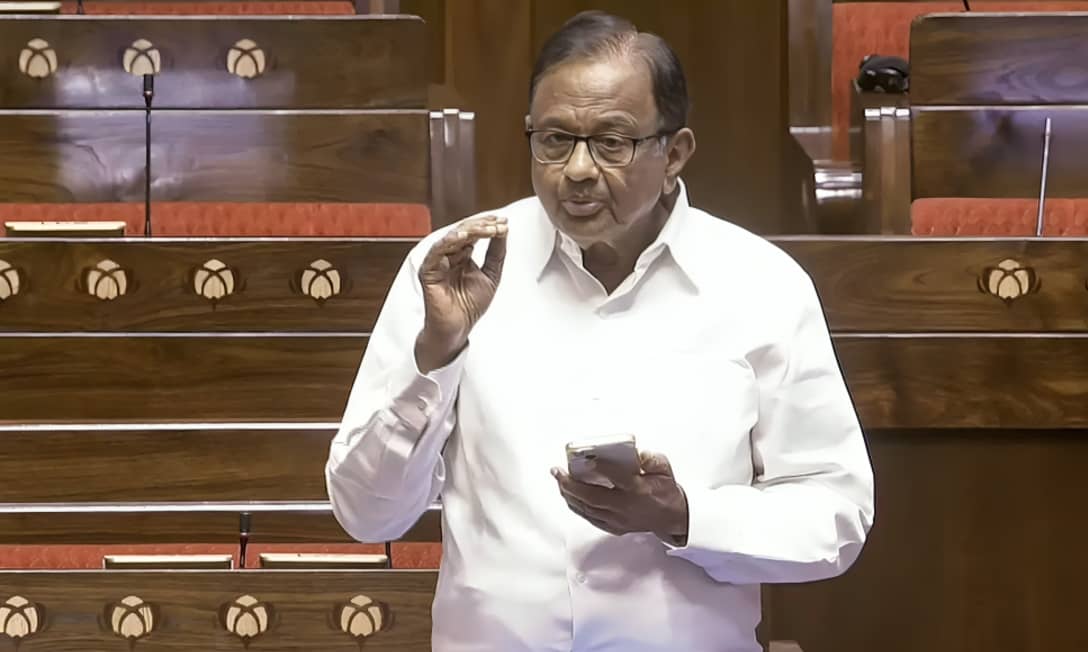
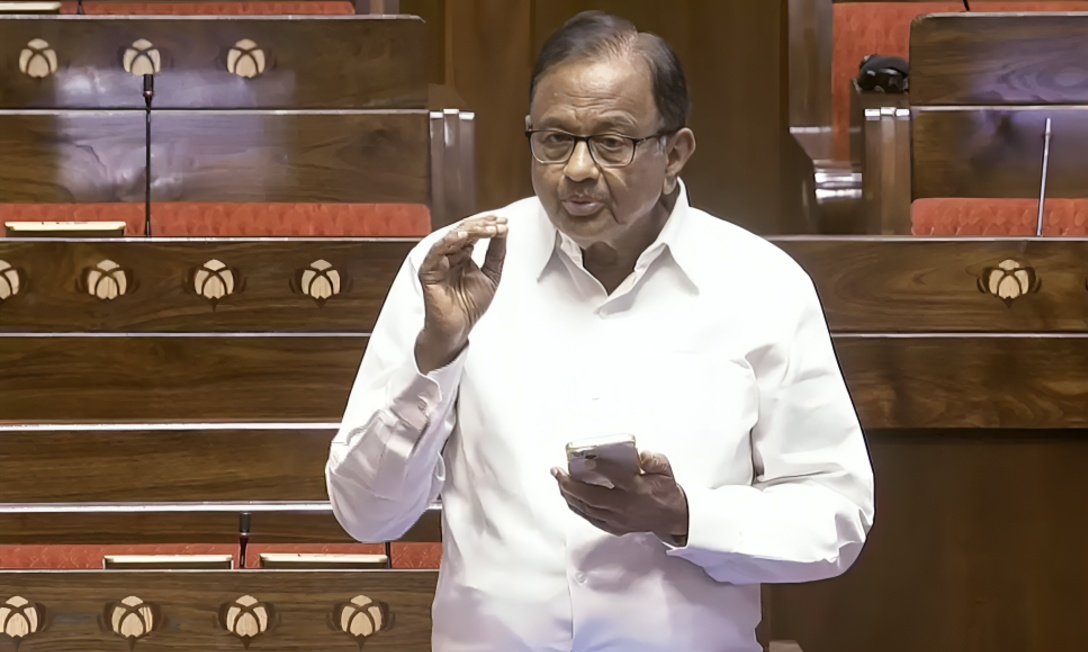
The proposed One Nation One Election framework has come under renewed constitutional scrutiny after former Union Minister and Congress leader P Chidambaram strongly opposed the proposal before the Joint Parliamentary Committee.
Chidambaram appeared before the parliamentary panel examining the Constitution 129th Amendment Bill, 2024, along with the Union Territories Laws Amendment Bill, 2024. The proposed legislation seeks to establish a framework for holding Lok Sabha and state Assembly elections simultaneously.
During his presentation before the committee, Chidambaram described the One Nation One Election proposal as unconstitutional. He argued that changing or shortening the tenure of elected legislatures could conflict with the basic structure of the Constitution.
According to reports based on sources familiar with the proceedings, Chidambaram maintained that legislatures are elected for a five year term and that curtailing their tenure to bring different elections into a common electoral cycle could raise serious constitutional questions. He also questioned whether the government has the required two thirds majority in Parliament to pass the proposed constitutional amendment.
The former Union minister has been a prominent critic of simultaneous elections. His latest submission before the parliamentary panel has added another significant political and constitutional objection to the proposed framework.
The debate is not limited to political opposition. The Vidhi Centre for Legal Policy, a legal policy research organisation, also presented its views before the Joint Parliamentary Committee. The organisation called for substantial safeguards and redrafting of several provisions in the proposed One Nation One Election framework.
One of the major concerns raised by the Vidhi Centre relates to the proposed Article 82A. According to its presentation, a provision under the proposed framework could give the Election Commission powers to modify certain constitutional provisions for implementing simultaneous elections. The organisation argued that such an arrangement could potentially raise concerns about the delegation of Parliament’s constitutional amendment powers.
The Vidhi Centre also highlighted a potential conflict of interest in allowing the Election Commission to modify provisions that govern elections while the same institution would be responsible for conducting those elections.
Another recommendation concerned the circumstances under which elections to a state Assembly could be postponed. The organisation suggested that the grounds for deferring state elections should be clearly defined to avoid uncertainty.
The think tank also proposed restrictions on the use of President’s Rule in situations where elections are deferred. It suggested that elections should be held within a specified period, including a six month limit in the circumstances discussed before the panel.
The concerns raised by Chidambaram and the Vidhi Centre reflect two different dimensions of the ongoing debate. While Chidambaram has questioned the constitutional validity and democratic implications of changing the tenure of elected legislatures, the Vidhi Centre has focused on the legal structure and safeguards required to implement simultaneous elections.
The One Nation One Election proposal seeks to synchronise elections to the Lok Sabha and state Assemblies. Supporters of the proposal have argued that conducting elections together could reduce the frequency of electoral exercises and associated administrative and financial requirements.
Opponents, however, have raised questions about federalism, the independence of state legislatures, the tenure of elected governments and the practical difficulties involved in maintaining a common election cycle.
India has historically experienced periods when parliamentary and state elections were held around the same time. However, the election cycles gradually became staggered because of premature dissolution of legislatures and other political developments. The proposed framework seeks to establish a mechanism to bring the elections back into a coordinated cycle.
The constitutional question surrounding the tenure of legislatures is therefore central to the proposal. If elections are synchronised, some state Assemblies may have to complete their terms earlier or continue for a shorter period so that their election schedule matches the national cycle. This is one of the key issues raised by critics of the proposal.
Chidambaram has argued that elected legislatures receive a constitutional mandate for a defined period and that altering their tenure for electoral synchronisation could have implications for parliamentary democracy and the federal structure.
The Vidhi Centre has approached the issue from another perspective by examining the proposed constitutional provisions and the powers that could be given to constitutional and electoral authorities.
The Joint Parliamentary Committee now has the responsibility of examining the views submitted by political leaders, legal experts, organisations and other stakeholders. BJP MP and committee chairman PP Chaudhary said that Chidambaram had provided useful inputs, while maintaining that the One Nation One Election proposal does not violate the basic structure of the Constitution.
The committee is expected to consider the various submissions before preparing its recommendations. The final recommendations will be important in determining how the proposed constitutional amendments and related legislation may proceed.
The debate has also expanded beyond the question of cost and administrative efficiency. Constitutional principles, federalism, democratic representation and the tenure of elected institutions have emerged as major areas of discussion.
The proposal has consequently become one of the significant constitutional and political issues currently under consideration by Parliament.
For the moment, the One Nation One Election framework remains under parliamentary examination. No final decision on the proposed constitutional changes has been made based solely on the submissions presented before the Joint Parliamentary Committee.
The views expressed by Chidambaram and the Vidhi Centre are part of the wider consultation process. The committee will have to consider these objections alongside arguments supporting simultaneous elections before making its recommendations.
The outcome of this process could have a long term impact on India's electoral system if the proposed constitutional amendments are eventually approved and implemented.