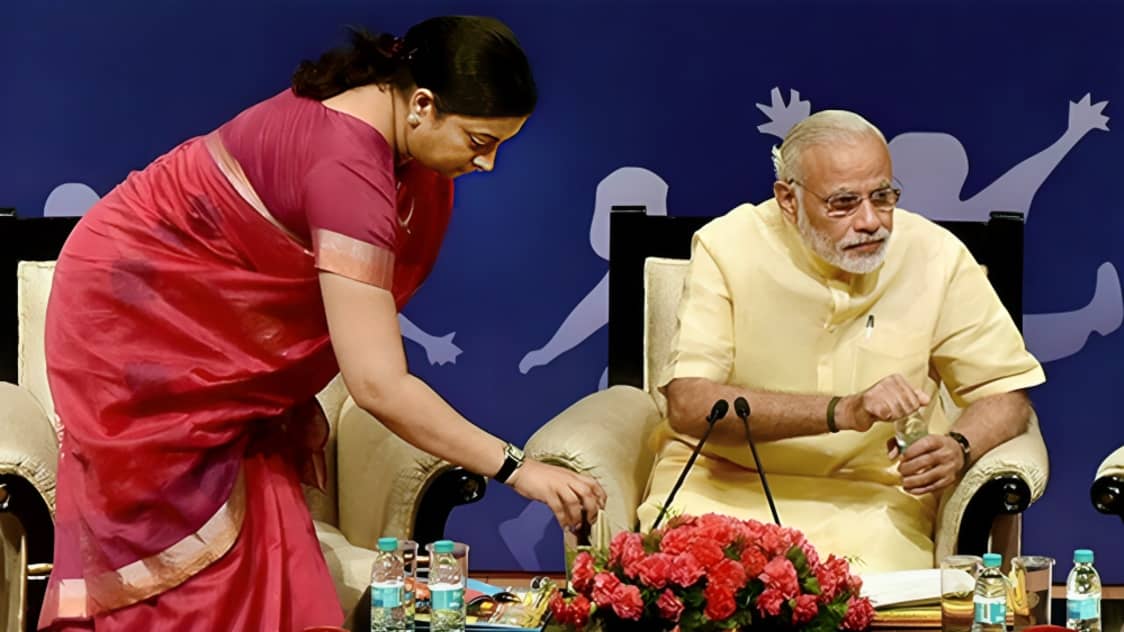
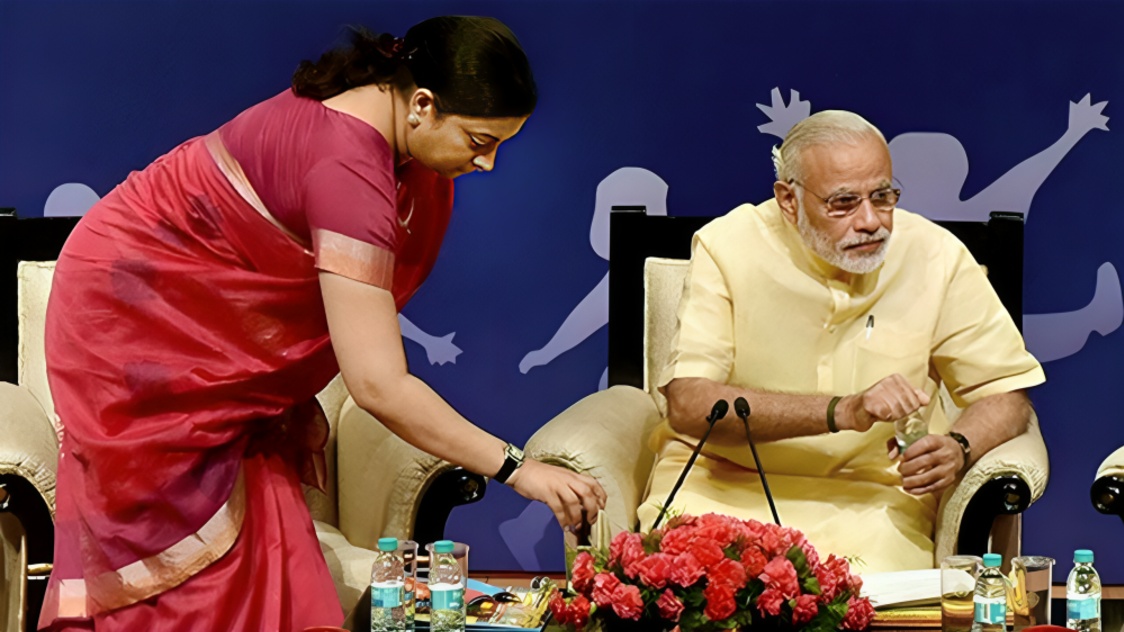
BJP National General Secretary Smriti Irani has said that Prime Minister Narendra Modi has remained responsive to the concerns and aspirations of India's youth. Speaking at the Economic Times World Leaders Forum, Irani said political differences should not prevent people from coming together when the objective is to improve government systems and public institutions.
Irani's remarks focused on the relationship between younger citizens, political leadership and governance. She argued that public participation should not be restricted by political affiliations or differences. According to her, people from different political backgrounds can contribute to strengthening systems when there is a common objective of improving governance.
She cited Prime Minister Modi's approach as an example of this idea. Irani said that Modi had demonstrated through his conduct that individuals who may have political differences can still be brought together for specific tasks aimed at improving systems. She referred to the creation of a task force involving people who had previously contested elections against Modi as an example of this approach.
The BJP leader also addressed the question of whether there is a disconnect between the government and younger generations. She pointed to Modi's use of social media and direct communication with citizens as an indication that the Prime Minister remains attentive to public sentiment and the concerns of young people.
Irani said the discussion about youth should not become an argument that older people are no longer relevant. She stressed that a country needs the energy and impatience of young people while also benefiting from the experience of those who have spent decades contributing to society and democratic institutions.
According to Irani, generational differences should not become a reason to dismiss the contributions of citizens simply because of their age. She argued that people with experience have an important role in guiding institutions, while younger generations can bring new ideas, energy and a willingness to challenge existing systems.
She also referred to the need for greater intergenerational cooperation in public life. India has a large young population, and the participation of young citizens in politics, governance, entrepreneurship and social development is increasingly important. At the same time, institutional experience remains necessary for maintaining continuity and ensuring that reforms are implemented effectively.
Irani's comments come amid wider discussions about youth participation in Indian politics and governance. Young voters form an important part of India's electorate, and political parties have increasingly focused on issues such as employment, education, technology, entrepreneurship and opportunities for economic advancement.
The BJP leader has previously argued that political relevance should not be determined solely by age. At the World Leaders Forum, she questioned whether people should be considered irrelevant simply because they are above a particular age. She maintained that relevance in public life has no fixed retirement age.
Irani also highlighted the importance of listening to every citizen irrespective of age or background. Her remarks suggested that democratic participation works best when different generations and viewpoints are allowed to contribute to policymaking and institutional development.
The comments also come in the context of Prime Minister Modi's appearance at the Economic Times World Leaders Forum, where he spoke about reforms, India's economic development and the importance of political stability. Modi said his government would continue to move forward with reforms at a faster pace.
The discussion at the forum therefore brought together broader questions about India's governance, political participation and the role of different generations in shaping the country's future. Irani's comments emphasised that political differences need not prevent cooperation when there is a shared objective of improving public systems.
Her remarks are expected to contribute to the ongoing political discussion about how India's young population can participate more actively in governance while benefiting from the institutional knowledge and experience of previous generations.