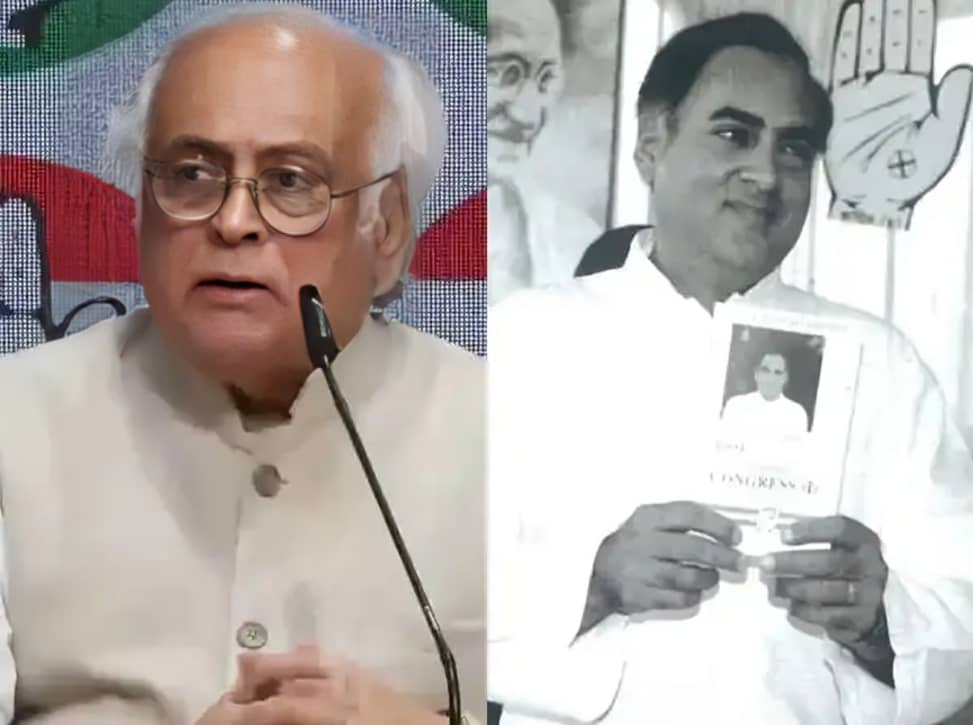
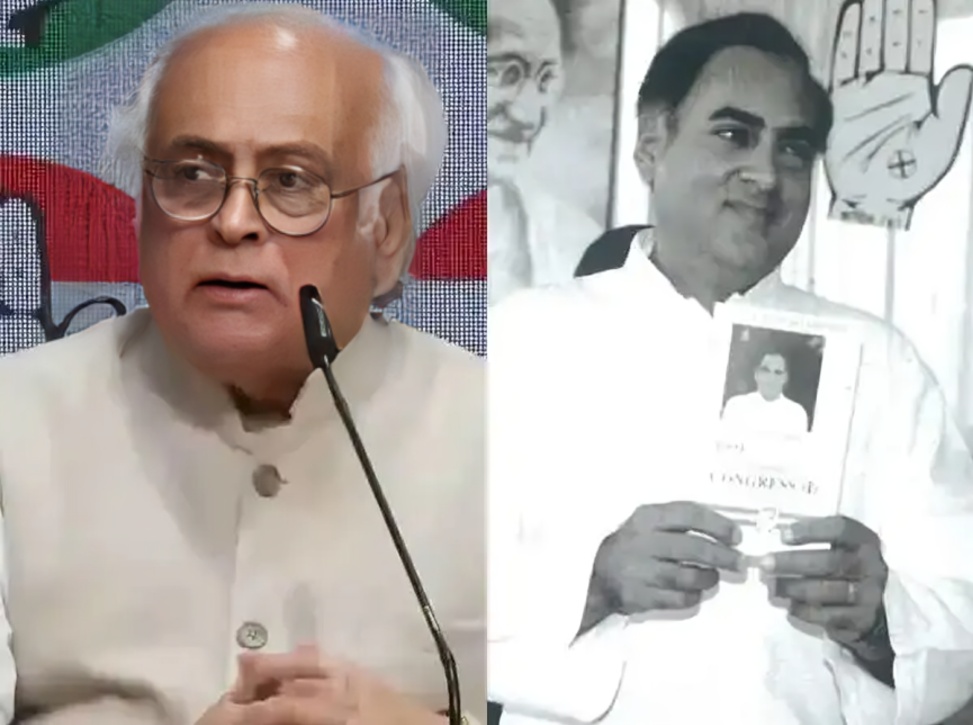
Congress General Secretary Jairam Ramesh on Thursday paid tribute to former Prime Minister Rajiv Gandhi on his 82nd birth anniversary and highlighted several initiatives associated with his tenure. Ramesh said Rajiv Gandhi's policies had a significant impact on India's youth, education, technology and employment landscape.
In a statement shared on social media, Ramesh recalled Rajiv Gandhi's role in reducing the minimum voting age in India from 21 to 18. The change was made through the 61st Constitutional Amendment Act, 1988. It expanded the number of young citizens eligible to participate in elections and was presented by the Congress leader as an important step towards greater youth participation in Indian democracy.
Ramesh also highlighted Rajiv Gandhi's association with National Youth Day. January 12, the birth anniversary of Swami Vivekananda, is observed as National Youth Day in India. According to Ramesh, the decision to designate the day for celebrating India's youth was another important aspect of Rajiv Gandhi's focus on young people.
Education was another area highlighted by Ramesh. He referred to the National Policy on Education of 1986, commonly associated with the Rajiv Gandhi government, and its subsequent implementation measures. The policy sought to modernise India's education system and expand educational opportunities.
Ramesh particularly mentioned the Navodaya Vidyalaya system. Jawahar Navodaya Vidyalayas were developed as residential schools intended to provide quality education, particularly to talented students from rural areas. The system subsequently expanded across different parts of the country and became an important component of India's school education network.
Ramesh also recalled the establishment of the Nehru Yuva Kendra Sangathan and its expansion across districts. The organisation was designed to connect with young people and encourage their participation in community development and nation-building activities.
One of the major themes in Ramesh's tribute was Rajiv Gandhi's role in India's technological transformation. He credited the former prime minister with leading the country into the information technology era and said this process contributed to the creation of large numbers of employment opportunities.
Rajiv Gandhi's tenure in the 1980s coincided with growing government attention to computers, telecommunications, science and technology. His government introduced measures aimed at expanding the use of technology and improving communications infrastructure. These initiatives are often discussed as part of the developments that contributed to India's later growth as a major information technology and services hub.
Rajiv Gandhi served as Prime Minister from 1984 to 1989. He became prime minister after the assassination of his mother, Indira Gandhi, in 1984 and was the youngest person to hold the office in India at that time.
Congress leaders and supporters marked his birth anniversary with tributes at Veer Bhumi in New Delhi. Congress President Mallikarjun Kharge, Leader of Opposition in the Lok Sabha Rahul Gandhi and Congress General Secretary Priyanka Gandhi Vadra were among those who paid their respects.
The birth anniversary has also prompted Congress leaders to revisit Rajiv Gandhi's political and policy legacy. Punjab Congress chief Amarinder Singh Raja Warring separately credited him with playing a major role in India's information technology development.
While Congress leaders have highlighted Rajiv Gandhi's contributions to technology, education and youth empowerment, assessments of his tenure remain part of India's broader political and historical debate. His period as prime minister also included major political and economic developments that continue to be discussed by historians and political parties.
Jairam Ramesh's latest remarks focus particularly on the reforms and institutions that Congress associates with Rajiv Gandhi's vision for a younger, more technologically advanced India. His comments were made as the country observed the former prime minister's 82nd birth anniversary on August 20.
The tribute has once again brought attention to Rajiv Gandhi's legacy in youth participation, education, technology and institutional development, areas that continue to influence public policy and political discussions in India.