A brief but notable interaction between Congress parliamentary party chairperson Sonia Gandhi and Trinamool Congress chief Mamata Banerjee became one of the talking points surrounding the INDIA bloc meeting in New Delhi on Wednesday.
The meeting brought together leaders of several opposition parties to discuss their response to issues involving the Election Commission of India, the Special Intensive Revision of electoral rolls and demands concerning Chief Election Commissioner Gyanesh Kumar. The meeting was followed by a joint media interaction in which several opposition leaders outlined their concerns and announced plans for further political action.
During the press conference, Mamata Banerjee delivered a strong political message and appealed to different sections of society, including civil society groups, students, young people, women and journalists, to support the opposition's campaign. She said the opposition would continue its efforts and referred to the need to protect democratic institutions and the Constitution.
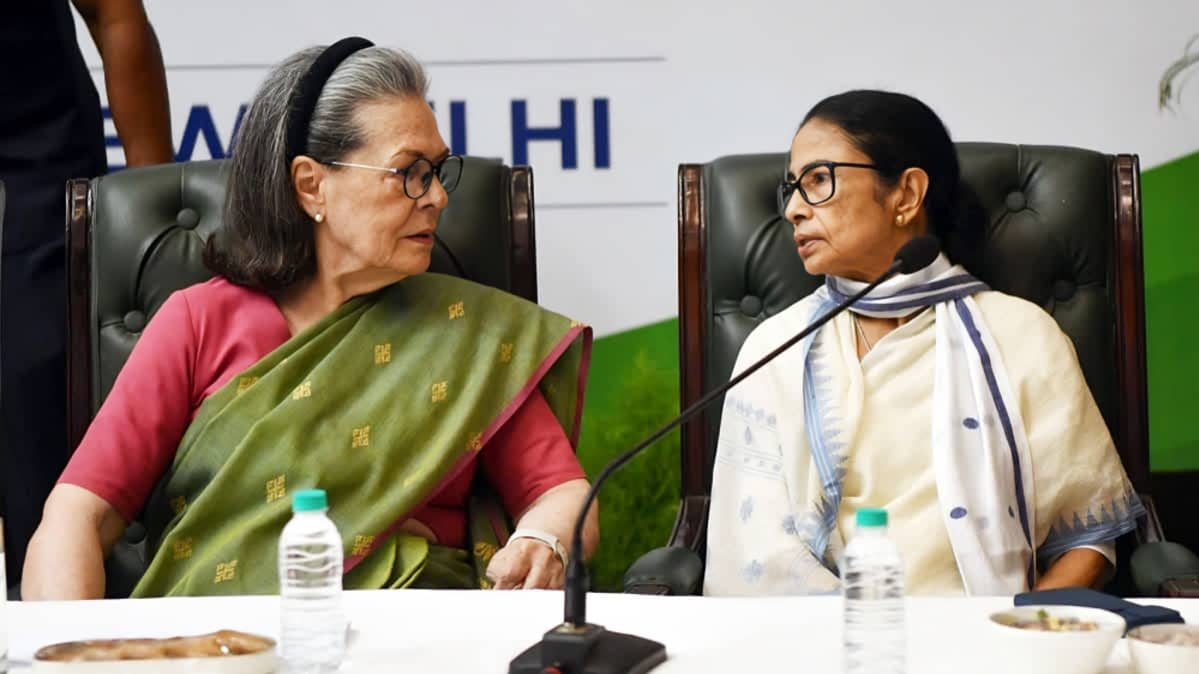
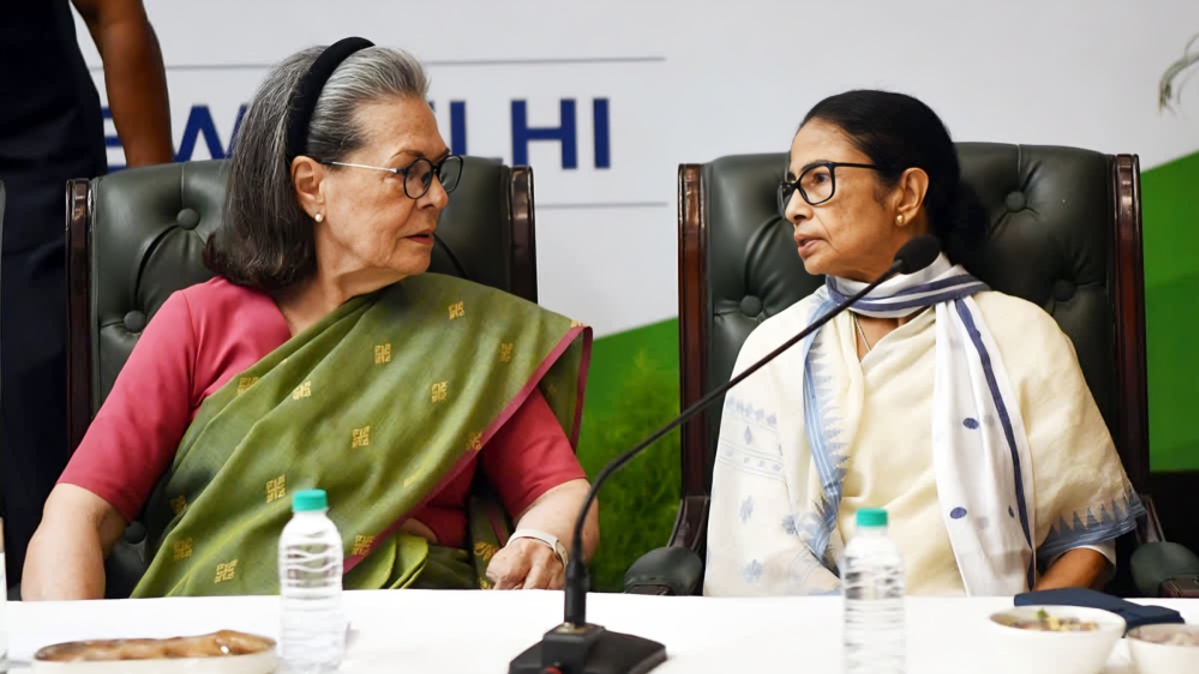
Sonia Gandhi, who was seated beside Banerjee, was seen responding to her remarks with gestures of support. According to reports from the meeting, Gandhi nodded while Banerjee was speaking and tapped the table as the Trinamool Congress leader called for continued political action.
At the conclusion of Banerjee's remarks, Gandhi leaned towards her and patted her on the back. The two leaders then exchanged a handshake. The interaction was subsequently highlighted by Congress on its social media account, drawing attention to the visible camaraderie between the two senior opposition leaders.
The interaction took place against the backdrop of a politically significant INDIA bloc meeting. Opposition leaders were discussing a coordinated response to their concerns over the Election Commission and the ongoing Special Intensive Revision of electoral rolls.
The opposition parties have alleged irregularities in the electoral roll revision process and have questioned the functioning of the Election Commission under Chief Election Commissioner Gyanesh Kumar. These are political allegations made by opposition parties and have been disputed by the Election Commission.
The Election Commission has maintained that its decisions and orders follow the applicable legal and procedural framework. It has also said that differences of opinion among election officials can occur as part of institutional deliberations and should not automatically be interpreted as evidence of dysfunction.
The INDIA bloc meeting resulted in plans for a series of political programmes. Opposition parties announced plans for protests and public campaigns over their concerns relating to electoral processes. They also announced a proposed march by opposition MPs to the Election Commission in October and further programmes at the state and district levels.
Mamata Banerjee used the press conference to reiterate her party's opposition to the functioning of the Election Commission and called for action against Chief Election Commissioner Gyanesh Kumar. Her remarks formed part of the broader opposition campaign on the electoral roll revision issue.
Sonia Gandhi's response during Banerjee's address attracted attention because the interaction was more informal than the rest of the political proceedings. Rather than being part of the formal resolutions or announcements of the meeting, the table tap, nods of agreement, pat on the back and handshake were observed during the press conference.
Congress later shared the interaction on social media, framing it as an example of support between leaders involved in the opposition campaign. The post focused on the two leaders' visible interaction during the event.
The meeting also highlighted the different roles played by senior INDIA bloc leaders. Congress president Mallikarjun Kharge, Rahul Gandhi, Sonia Gandhi, Mamata Banerjee and leaders of other opposition parties participated in discussions on the Election Commission and electoral issues. Reports said the leaders discussed a coordinated campaign and possible parliamentary and public actions.
The political significance of the meeting extends beyond the interaction between Sonia Gandhi and Mamata Banerjee. The opposition parties are attempting to coordinate their response to the Election Commission at a time when voter list revisions and electoral procedures have become major political issues.
The Election Commission, meanwhile, has defended its procedures and rejected suggestions that internal differences automatically demonstrate institutional problems. The commission has said its orders have legal backing and that its processes are governed by established rules.
The Sonia Gandhi and Mamata Banerjee interaction therefore stood out from the otherwise serious proceedings because of its informal nature. Their exchange was captured on video and subsequently circulated by Congress, making it one of the most visible moments associated with the meeting.
The incident itself does not establish any new formal political agreement between the Congress and Trinamool Congress. It was a public interaction between two senior leaders during a joint opposition event. The broader political positions and future coordination between the parties will depend on decisions taken by their respective leaderships.
The INDIA bloc is expected to continue its political campaign on electoral issues in the coming days. The announced programmes include public meetings, protests and an intended march to the Election Commission. The parties have also indicated that they will continue raising their concerns about electoral roll revision and the functioning of election authorities.
As political parties continue to debate the electoral process, the brief exchange between Sonia Gandhi and Mamata Banerjee has emerged as a widely discussed visual moment from the INDIA bloc meeting. It reflected the public show of support between the two leaders during the joint press conference, while the larger political questions discussed at the meeting remain subjects of continuing debate.