
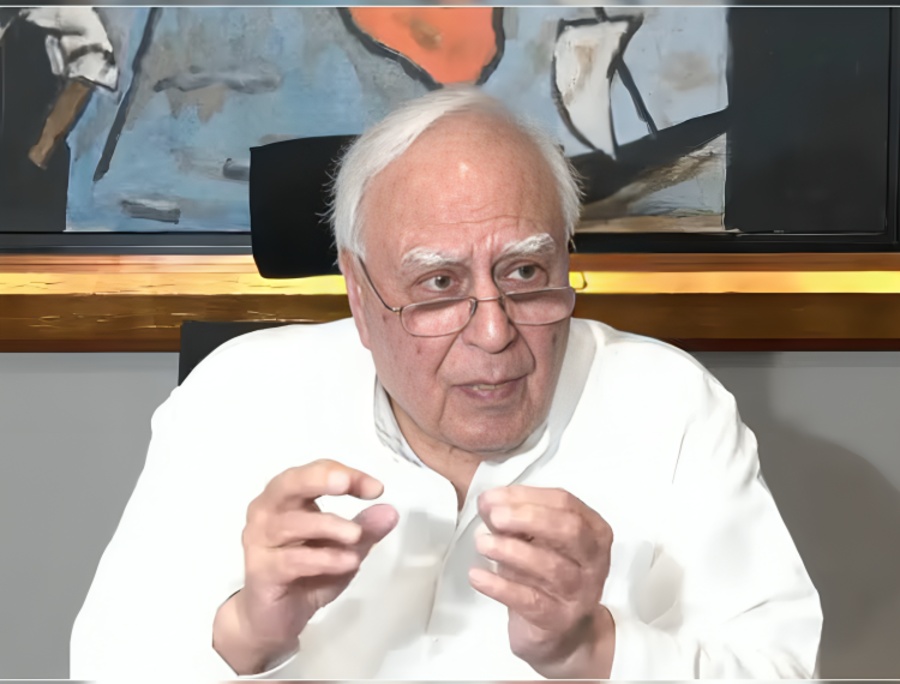
Rajya Sabha MP Kapil Sibal has raised questions over the functioning of the Election Commission of India and demanded the suspension of Chief Election Commissioner Gyanesh Kumar, along with a halt to the ongoing Special Intensive Revision of electoral rolls.
Sibal’s remarks came after a report by The Indian Express claimed that Election Commissioners Sukhbir Singh Sandhu and Vivek Joshi had formally raised objections on several occasions to decisions taken during the electoral roll revision process. According to the report published on September 23, the two commissioners had raised objections at least 14 times over a period of 10 months. The issues reportedly included voter additions and deletions, changes to Form 6 and aspects of the technology and access-control system used for electoral rolls.
The report also said that the two Election Commissioners had raised concerns about decisions that they said were taken without their knowledge. Some of the objections reportedly related to the handling of electoral roll data and the process for adding or restoring voters.
Responding to the developments, Kapil Sibal questioned whether the Chief Election Commissioner had the support of a majority within the three-member Election Commission. He said that the commission currently consists of the Chief Election Commissioner and two Election Commissioners and argued that decisions should follow the majority view when there is a difference of opinion.
Sibal also alleged that certain decisions connected with the Special Intensive Revision process were taken despite objections from the other two commissioners. He called for Gyanesh Kumar to be suspended and demanded that the SIR process be stopped. These are Sibal’s political and legal demands and should be understood as his stated position rather than as established findings.
The controversy centres on the functioning of the three-member Election Commission and the procedure for taking decisions when the commissioners disagree. According to The Indian Express report, the Chief Election Commissioner is the first among equals and does not have unilateral authority to decide matters when the commissioners differ. The report also referred to Section 18 of the Chief Election Commissioner and Other Election Commissioners Appointment, Conditions of Service and Term of Office Act, 2023. It states that the business of the commission should, as far as possible, be conducted unanimously and that matters on which the commissioners differ are to be decided according to the majority view.
One of the issues reported by The Indian Express concerns Form 6, which is used by eligible citizens to apply for inclusion in the electoral roll. The report said that a new declaration connected to the previous SIR was introduced into the form. According to the report, the two commissioners questioned the change and described it as unauthorised.
Another reported area of disagreement concerned access and control over the electoral roll technology system. The Indian Express reported that Commissioners Sandhu and Joshi had raised concerns over changes to work allocation and the centralisation of certain technology-related controls. They also reportedly communicated their concerns to the Cabinet Secretary.
However, the Election Commission has disputed the suggestion that there was a formal division in the commission over SIR decisions. Sources within the Election Commission said on September 23 that all decisions of the poll panel, including those connected with the Special Intensive Revision, had been taken unanimously with the approval of the Chief Election Commissioner and both Election Commissioners.
The Election Commission’s response is significant because it directly contests the interpretation that the reported objections represented a disagreement over the final decisions of the commission. The distinction is between individual concerns or objections reportedly recorded during the process and the commission’s position that its final decisions were unanimous.
The issue has nevertheless triggered political reactions. Several opposition leaders have criticised the Election Commission and questioned aspects of the SIR process. Kapil Sibal has called for action against the Chief Election Commissioner, while other opposition leaders have also raised concerns about the reported objections by the two Election Commissioners.
Sibal had also criticised the SIR process earlier in September after he and his wife received notices under the electoral roll revision exercise. He questioned the basis on which notices were issued and expressed concern about the effect of the process on ordinary voters.
The Special Intensive Revision has become a major political and legal issue, particularly because the exercise involves verification and revision of electoral rolls. Questions have been raised by political parties and other stakeholders about the procedures used to identify voters, issue notices and update electoral records.
At the same time, the Election Commission has maintained that its decisions are being taken according to the applicable electoral framework. The latest controversy therefore involves two separate positions: the objections and concerns reported by The Indian Express, and the Election Commission’s subsequent assertion that its decisions, including those concerning SIR, were unanimous.
Further developments are expected as political parties respond to the reported internal objections and as the Election Commission continues the electoral roll revision process. Any assessment of the controversy will depend on the official records, responses from the commissioners concerned and the outcome of any legal proceedings relating to the SIR process.