
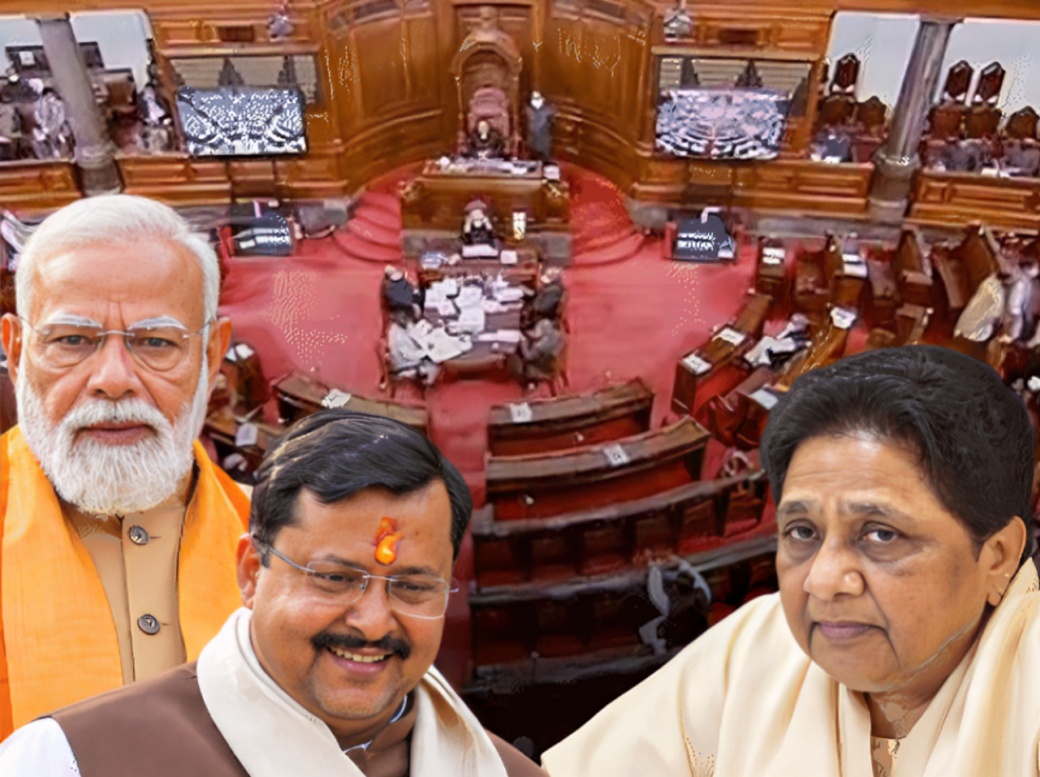
The Election Commission of India has announced the schedule for elections to 12 Rajya Sabha seats across Uttar Pradesh, Uttarakhand and West Bengal. The polling will be held on October 16, 2026, with the counting of votes scheduled for the same day.
The election process will cover 11 regular Rajya Sabha vacancies and one by-election. Of the 11 seats going through the regular biennial election process, 10 are from Uttar Pradesh and one is from Uttarakhand. The additional election in West Bengal is a by-election to fill a casual vacancy in the Upper House.
According to the schedule announced by the Election Commission, the formal notification for the elections will be issued on September 29. Candidates will be able to submit their nomination papers until October 6. The scrutiny of nominations will take place on October 7, while October 9 has been fixed as the last date for withdrawal of candidature.
Polling will be conducted on October 16 from 9 am to 4 pm, wherever a contest requires voting. Counting of votes will begin at 5 pm on the same day. The entire election process is scheduled to be completed by October 19.
Uttar Pradesh accounts for the largest share of the seats going to the polls. Ten Rajya Sabha seats from the state are part of the election process. The terms of nine sitting members are due to end on November 25, while another seat became vacant after the resignation of former Uttar Pradesh Deputy Chief Minister Dinesh Sharma.
Dinesh Sharma resigned from the Rajya Sabha after he was appointed Lieutenant Governor of the Andaman and Nicobar Islands. His resignation took effect on September 11, leaving the seat vacant before the regular election schedule.
The Uttar Pradesh members whose terms are ending include BJP leaders Arun Singh, Geeta Shakya, Neeraj Shekhar, Brij Lal, B L Verma, Seema Dwivedi and Union Minister Hardeep Singh Puri. Samajwadi Party leader Ram Gopal Yadav and Bahujan Samaj Party leader Ramji Gautam are also among the members whose terms are ending.
The current distribution of the 10 outgoing Uttar Pradesh seats is eight held by the BJP, one by the Samajwadi Party and one by the BSP. The upcoming election will determine who occupies these seats for the next Rajya Sabha term, subject to the election results and the constitutional process.
The Uttar Pradesh elections are also taking place ahead of the state's next Assembly election, which is due in 2027. However, the Rajya Sabha election is conducted through an indirect electoral process in which elected members of the state Legislative Assembly participate in voting.
In Uttarakhand, one Rajya Sabha seat will also go to the polls. The term of BJP member Naresh Bansal is ending, and the election will be conducted as part of the same October 16 schedule.
West Bengal will see a Rajya Sabha by-election rather than a regular biennial election for the vacant seat. The vacancy arose following the resignation of Trinamool Congress MP Rukmini Mallik. The successful candidate in the by-election will serve the remaining portion of the existing term, which runs until April 2, 2032.
The Election Commission has therefore scheduled three important stages of the electoral process before polling day. The first is the issuance of the notification on September 29. The second is the nomination and scrutiny process, with October 6 as the nomination deadline and October 7 as the scrutiny date. The third is the withdrawal stage, which will end on October 9.
Candidates who remain in the contest after the withdrawal deadline will face the voting process on October 16. Since Rajya Sabha elections are indirect elections, the voting process differs from elections to the Lok Sabha and state Legislative Assemblies. Members of the respective state Legislative Assemblies vote to elect representatives to the Upper House.
The Election Commission has also specified that counting will take place at 5 pm on October 16. This means the results are expected to begin emerging after the completion of polling and the commencement of counting on the same day.
The October 16 election will consequently decide representation for 12 Rajya Sabha seats across the three states, covering both regular retirements and the West Bengal casual vacancy. The final composition of the elected members will depend on the nominations filed, the candidates remaining after withdrawal and the votes cast by the respective elected legislators.
As with all elections, the schedule announced by the Election Commission sets out the statutory stages and deadlines that candidates and political parties must follow. Further details concerning candidates and contests will become clearer after the nomination process begins on September 29 and closes on October 6.