
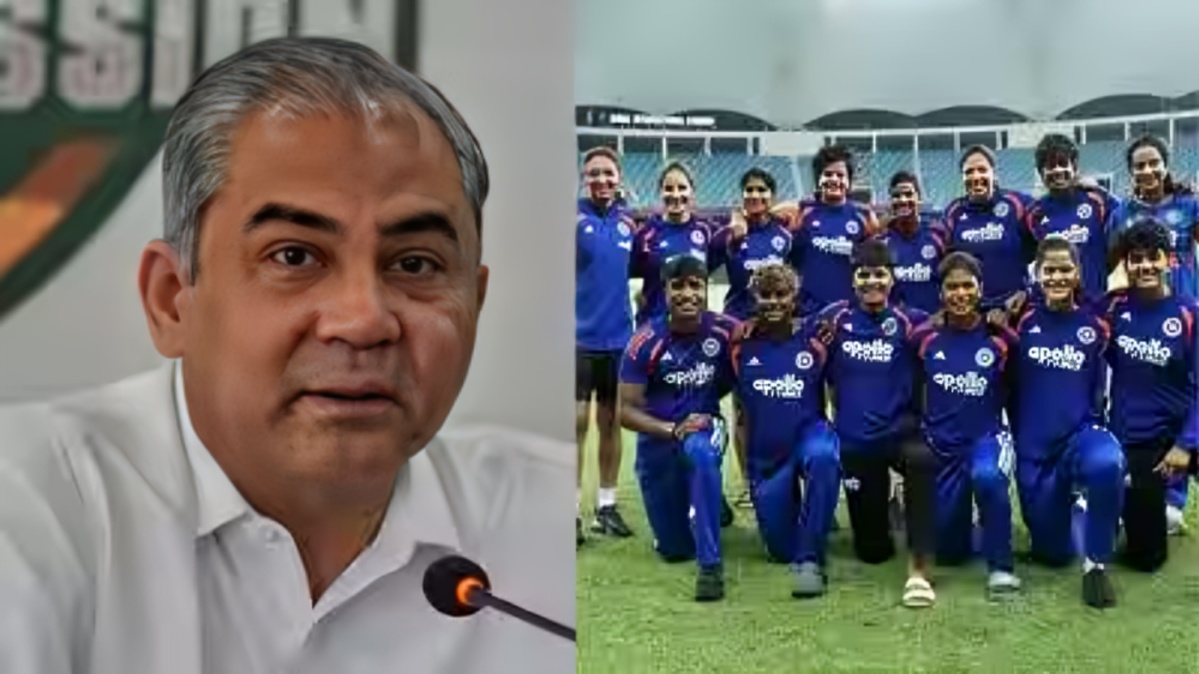
The Women's Asia Cup 2026 final has led to a fresh controversy involving the Indian cricket team, Asian Cricket Council President Mohsin Naqvi and former Pakistan cricketer Mohammad Yousuf. The dispute followed India's victory over Sri Lanka in the final at the Dubai International Cricket Stadium on September 13.
India secured a record eighth Women's Asia Cup title after defeating Sri Lanka by 72 runs. Smriti Mandhana and Shafali Verma made important contributions with the bat, while Shree Charani took four wickets as India restricted Sri Lanka to 111 after posting 183 for five.
However, the post match trophy presentation did not proceed in the usual manner. The Indian women's team did not come out to receive the trophy after Mohsin Naqvi was present at the presentation ceremony. Naqvi is the president of the Asian Cricket Council and also serves as chairman of the Pakistan Cricket Board and Pakistan's interior minister.
The presentation ceremony was delayed by around 45 minutes before proceedings eventually began. Sri Lanka captain Chamari Athapaththu received the runners up award from Naqvi, but the Indian players did not appear on the stage to receive their medals or the championship trophy. The situation resulted in considerable attention because the Indian team had won the tournament but did not receive the trophy during the official ceremony.
India's decision was subsequently explained by BCCI Secretary Devajit Saikia. According to Saikia, the BCCI had communicated its position to the Asian Cricket Council before the final. He said the Indian team had taken a conscious decision not to participate in the trophy presentation under the circumstances prevailing at the time.
Indian women's head coach Amol Muzumdar also said after the final that the position had been taken by the BCCI and that the team supported it. The comments indicated that the absence from the presentation was a planned decision rather than an on the spot reaction following the match.
The incident has similarities to the men's Asia Cup final in 2025, when the Indian men's team also did not accept the trophy from Naqvi. That earlier incident occurred against the backdrop of strained India Pakistan relations and generated discussion about the interaction between sporting events and diplomatic tensions.
Mohammad Yousuf subsequently entered the debate by publicly supporting Naqvi. In a social media post reported by Hindustan Times, Yousuf criticized India's position and used the term arrogance while commenting on the dispute. His remarks were directed at India's decision not to accept the trophy from Naqvi.
Yousuf's comments represent his personal view of the incident. They should not be treated as an official position of the Pakistan Cricket Board or the Asian Cricket Council. The controversy has involved statements and positions from several individuals and organizations, including the BCCI, ACC and former Pakistan players.
The central issue is not the result of the tournament. India officially won the Women's Asia Cup for the eighth time after defeating Sri Lanka in the final. The dispute concerns the presentation of the championship trophy and the Indian team's decision not to participate in that portion of the ceremony.
The presence of Naqvi was significant because of his multiple official roles. In addition to being the ACC president, he is the chairman of the Pakistan Cricket Board and Pakistan's interior minister. The BCCI's position, as reported by The Indian Express, was communicated before the final and was connected to the circumstances surrounding his participation in the presentation.
Reports also indicated that the trophy itself remained with the tournament authorities after the presentation. BCCI officials have said that arrangements would be made to bring the trophy back to India. The issue therefore extends beyond the ceremony and involves the subsequent process for transferring the championship silverware to the winners.
The controversy comes at a time when sporting interactions between India and Pakistan continue to receive significant attention. Cricket matches between the two countries have frequently been viewed in the context of their wider bilateral relationship, particularly following recent political and security tensions.
At the same time, the Women's Asia Cup final itself remained a major sporting achievement for India. The team completed its campaign with the championship after beating Sri Lanka convincingly in the final. The victory extended India's record in the tournament and marked another title for the women's side.
The trophy presentation dispute has now added a separate discussion around sports administration, protocol and the participation of officials at international sporting ceremonies. Yousuf's comments have brought further attention to the issue, while the BCCI has maintained that its decision was communicated before the final.
The episode demonstrates how sporting events involving India and Pakistan can attract attention beyond the competition itself. In this case, India's title victory, the decision regarding the presentation ceremony and Yousuf's subsequent criticism have all become part of the wider discussion surrounding the 2026 Women's Asia Cup.
For the record, India remain the champions of the 2026 Women's Asia Cup after defeating Sri Lanka by 72 runs in the final. The disagreement involving Naqvi and the trophy presentation is a separate issue from the result of the tournament.