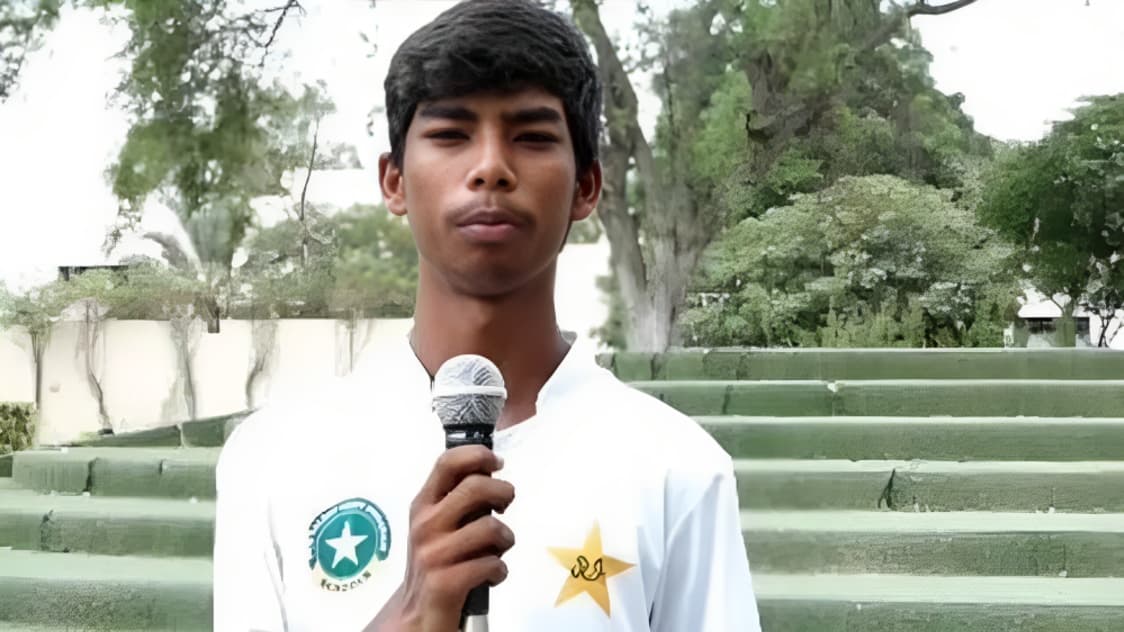

Former Canada international cricketer Danielle McGahey has expressed support for Anaya Bangar amid the ongoing debate surrounding transgender participation in women’s cricket.
Bangar, the daughter of former India cricketer and India batting coach Sanjay Bangar, has received clearance from Cricket Australia to return to competitive cricket in Australia. According to reports, she will be eligible to participate in elite women’s cricket from March 2027, provided she continues to satisfy the applicable eligibility requirements.
The decision has attracted significant attention because transgender participation in women’s sport remains a subject of debate across international sporting organisations. Cricket bodies in different countries have adopted different approaches, resulting in contrasting rules for athletes.
McGahey's support for Bangar has added another perspective to the discussion. McGahey made history in 2023 when she became the first transgender player to appear in official international women's cricket for Canada. She played six Women's T20 International matches before the International Cricket Council changed its eligibility policy later that year.
Bangar's situation is different because her latest clearance relates to cricket in Australia. Cricket Australia has confirmed a pathway for her participation under its transgender and gender diverse player policy. However, being cleared to compete does not automatically guarantee selection for a team or a place in the Women's Big Bash League. Bangar will still have to demonstrate her cricketing ability and earn opportunities through competitive performances.
The development represents an important moment in Bangar's cricket journey. She previously played age-group cricket in Mumbai and shared the field with players including Sarfaraz Khan and Musheer Khan. Her cricket career was interrupted during her gender transition, and she has since worked towards returning to competitive sport.
Bangar underwent gender-affirming surgery in March 2026 and subsequently began training again. She has spoken about the emotional difficulties associated with being away from the sport and has described her return as an important personal milestone.
Cricket Australia's decision means Bangar can pursue opportunities in Australian domestic women's cricket. Reports indicate that her eligibility could extend to Premier Cricket and potentially the Women's Big Bash League from March 2027, although selection would depend on the relevant competition requirements and team decisions.
The development has also generated criticism from some players. South African international cricketer Marizanne Kapp publicly questioned the decision, describing it negatively on social media. Bangar responded by defending her position and arguing that the discussion should be based on an understanding of the relevant policies and circumstances.
McGahey's support comes against this backdrop of differing views. Her own experience has given her a unique perspective on the challenges faced by transgender athletes attempting to participate in competitive sport.
The broader debate involves two competing considerations. Supporters of transgender inclusion argue that athletes should have meaningful opportunities to participate in sport and that exclusion can create significant barriers for transgender people. Critics, meanwhile, raise questions about competitive fairness and the physical differences that can affect performance in women's categories.
Sports organisations around the world have therefore been reviewing their eligibility policies. Some governing bodies have introduced restrictions, while others continue to maintain inclusion-based frameworks with specific conditions.
Cricket is particularly affected by these differing approaches because international and domestic competitions can operate under separate policies. The ICC's current rules do not permit transgender women who have experienced male puberty to compete in international women's cricket. However, domestic governing bodies can establish their own rules for competitions under their jurisdiction.
This distinction is important in understanding Bangar's current situation. Her clearance from Cricket Australia does not mean that she has been cleared for international women's cricket under ICC rules.
Bangar has also previously approached the Board of Control for Cricket in India regarding opportunities to play in women's cricket, but there has not been a comparable clearance from the BCCI. As a result, her current pathway is through Australian cricket rather than Indian domestic cricket.
For Bangar, the immediate objective is to return to competitive cricket and prove herself on the field. She has indicated that Australia has provided her with a pathway rather than guaranteeing her a place in a team. Her performances, fitness and ability will determine whether she can progress towards higher levels of competition.
The potential opportunity to play in the Women's Big Bash League has also generated considerable interest. However, Bangar would still need to earn a place through the relevant selection and recruitment process. The clearance only establishes her eligibility under the applicable policy.
McGahey's comments have consequently become part of a much larger international discussion about the future of transgender participation in sport. Her own international career demonstrated that transgender athletes could compete under the eligibility rules that existed at the time. The subsequent ICC policy change significantly altered the international landscape.
The debate is not limited to cricket. Similar discussions have taken place across athletics, swimming, cycling, tennis and other sports. Sporting authorities continue to examine how eligibility rules can balance inclusion, athlete welfare and competitive fairness.
Recent developments have shown that there is no single global approach. Policies differ between sports and countries, and some organisations have introduced stricter eligibility requirements. This has resulted in different opportunities for athletes depending on the competition in which they seek to participate.
Bangar's return therefore has significance beyond her individual cricket career. It has brought renewed attention to the policies governing women's sport and the challenges faced by transgender athletes seeking opportunities in competitive environments.
At the same time, the debate remains highly sensitive. Any discussion about eligibility needs to consider the specific rules of the governing body involved rather than treating all sporting competitions as having identical standards.
For Bangar, the focus now is on rebuilding her cricket career after several years away from competitive play. She has returned to training and is preparing for the possibility of playing women's cricket in Australia.
McGahey's support provides encouragement from another transgender cricketer who has experienced the challenges of competing at an international level. Her position adds an athlete's perspective to an increasingly prominent discussion.
Ultimately, Bangar's eligibility in Australia will be determined by Cricket Australia's policies and the conditions attached to her clearance. Her participation in elite competitions will also depend on selection and performance.
The development has already generated strong reactions from players, fans and sporting observers. As Bangar works towards her return, the debate over inclusion, eligibility and fairness in women's cricket is likely to continue.
For now, Cricket Australia's decision has opened a pathway for Anaya Bangar to resume competitive cricket in Australia. Danielle McGahey's support has added another voice to the discussion, while the wider cricket community continues to debate how transgender participation should be regulated across domestic and international competitions.