
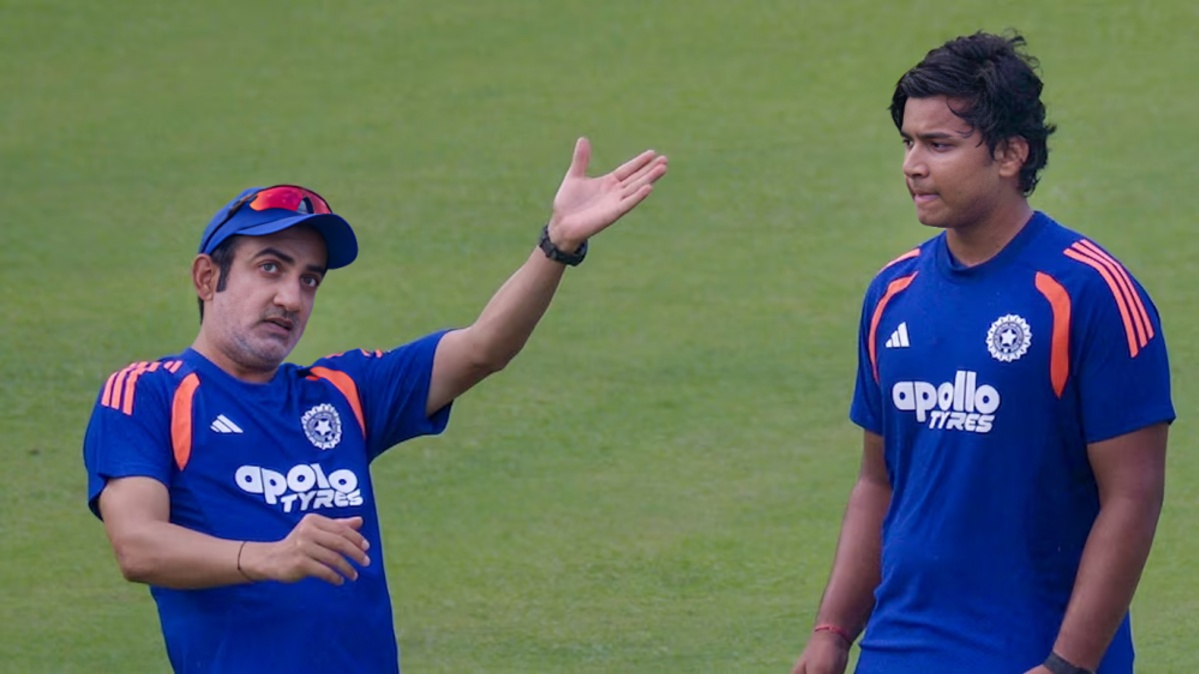
India head coach Gautam Gambhir has explained the decision to continue with Sanju Samson at the top of the batting order while 15-year-old Vaibhav Sooryavanshi remained on the sidelines during India's three-match T20I series against Afghanistan.
India completed a 3-0 series sweep against Afghanistan after winning the third T20I by 127 runs in New Delhi on September 17. Abhishek Sharma and Sanju Samson opened the innings throughout the series, while Sooryavanshi did not feature in any of the three matches.
Speaking after the third T20I, Gambhir said there had been a clear conversation with Sooryavanshi about the need to wait for his opportunity. The India coach also acknowledged the teenager's ability but explained that established performers with a longer record would be considered ahead of a player who has only recently entered the senior setup.
Gambhir said the selection process applies regardless of a player's age. He indicated that being 15 does not automatically change the order of opportunities and that Sooryavanshi would receive a longer run once his chance arrives.
The comments came after Sooryavanshi missed the entire Afghanistan T20I series despite entering the assignment with strong recent performances. He had impressed during India's tour of Zimbabwe, where he scored 151 runs in the three-match T20I series and was named Player of the Series, according to India Today. His performances had increased interest in his potential role at the top of India's T20I batting order.
Sooryavanshi had earlier made his senior international debut during India's T20I series against England. According to The Indian Express, he scored 42 runs across three matches during that series. He subsequently produced a strong performance against Zimbabwe, scoring 151 runs at an average of 50.33 and a strike rate of 196.10.
His absence against Afghanistan meant that Samson and Abhishek retained the opening positions. The pair delivered a productive series, with both finishing among the leading run scorers across the three matches. The International Cricket Council reported that Samson and Abhishek were Gambhir's preferred opening combination throughout the series.
Samson finished the Afghanistan series with 117 runs, including scores of 10, 57 and 50. His two half-centuries came in the second and third T20Is. His performances followed his return to the team after being left out of the England series.
Gambhir also discussed Samson's earlier omission from the England series. He described that decision as one of the toughest calls of his coaching tenure and said the team management had wanted to return to the combination that had been successful during India's T20 World Cup campaign.
Gambhir's comments therefore placed the Sooryavanshi-Samson situation in the broader context of selection competition rather than presenting the teenager's omission as a permanent decision. The coach said Sooryavanshi's talent was known to the team and indicated that the youngster would get an extended opportunity when selected.
The situation also highlights the competition for places at the top of India's T20I batting order. Abhishek Sharma has established himself as an attacking opener, while Samson brings experience and a substantial record in the format. Sooryavanshi, meanwhile, is one of the younger players to have entered India's senior setup and has already produced notable performances at domestic and international levels.
Abhishek was another major contributor in the Afghanistan series. In the third T20I, he scored 108 runs from 38 balls, helping India post 221 for four. The innings was reported as the third-fastest century in men's T20I cricket. India subsequently restricted Afghanistan to 94, completing a 127-run victory and a 3-0 series result.
For Sooryavanshi, the next phase of his international career will involve waiting for another opportunity while continuing to compete with established players. Gambhir's message was that once the opportunity arrives, the youngster will be given sufficient time to demonstrate his abilities rather than being judged on a single appearance.
The selection discussion has also attracted considerable attention because of Sooryavanshi's age and rapid rise. His international debut came at 14, making him India's youngest men's international cricketer, according to reports surrounding his England debut. His subsequent performances in Zimbabwe strengthened his reputation as a promising young batter.
However, Gambhir's explanation indicates that the team's current selection approach is based on a combination of recent form, established performances and the balance of the playing XI. The coach specifically pointed to players who have performed consistently over a longer period as having an advantage over newcomers.
The Afghanistan series also provided Samson with an opportunity to strengthen his position. After an initial score of 10 in the opening match, he responded with half-centuries in the next two games. His 50 in the final T20I came as India produced a dominant batting performance, while Abhishek's century became the headline performance of the match.
India's upcoming international commitments will provide further opportunities for selection changes. Reports indicate that the team is scheduled to face Japan in a one-off T20 match before the Asian Games campaign begins later in September. Sooryavanshi's availability and role in the squad will therefore remain a point of interest, although his selection for a particular match should not be assumed until the playing XI is officially announced.
For now, the position is clear from Gambhir's comments: Sooryavanshi remains part of the wider competition for places, but Samson and Abhishek have retained the opening combination after a successful Afghanistan series. The 15-year-old will have to wait for his next opportunity, while India's team management continues to assess performance, experience and team balance when selecting the playing XI.