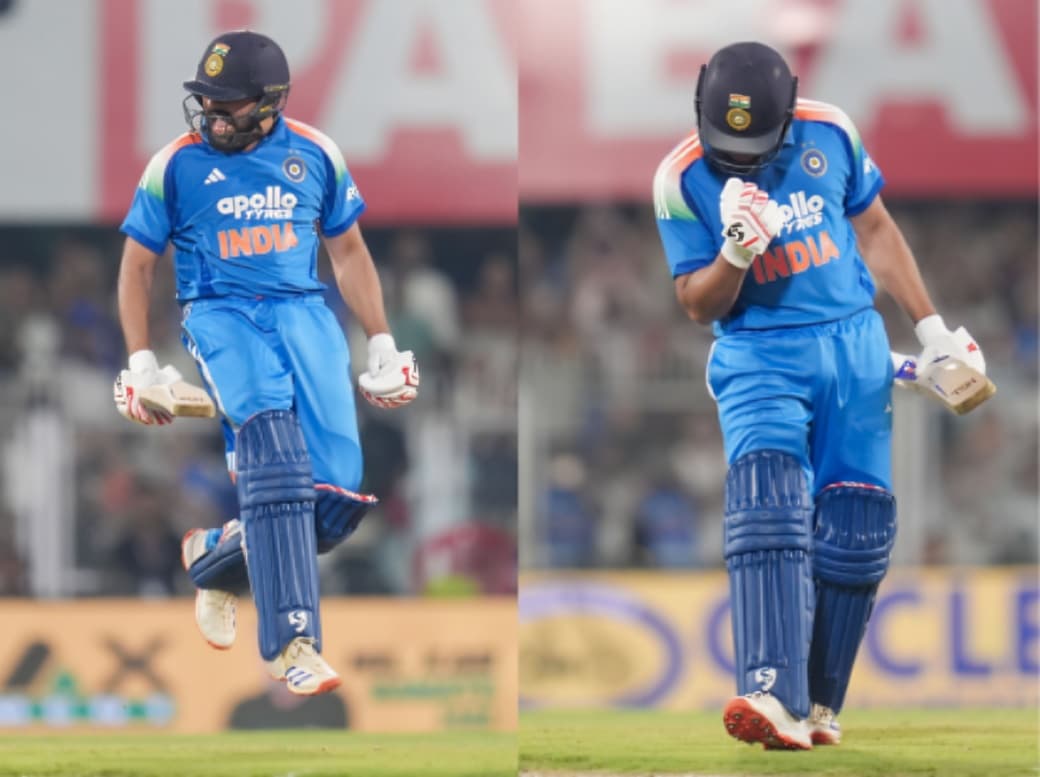

Rishabh Pant has created another significant record in Test cricket by becoming the fastest batter to complete 100 sixes in the longest format of the game.
The Indian wicketkeeper batter reached the milestone during the fourth day of the first Test between India and Sri Lanka in Galle. The achievement adds another chapter to Pant's growing list of records and highlights his unique approach to Test batting.
Pant has established himself as one of the most aggressive wicketkeeper batters in modern Test cricket. Unlike conventional red ball batters, he regularly uses attacking strokes to put pressure on opposition bowlers. His ability to clear the boundary has been one of the defining features of his career.
The latest record reflects that approach.
Pant reached 100 Test sixes faster than former Australia wicketkeeper Adam Gilchrist. Gilchrist was previously regarded as the fastest batter to reach the landmark, having combined attacking intent with consistency during his highly successful international career.
The record is particularly notable because six hitting in Test cricket requires a different level of risk management compared with limited overs cricket.
Test matches can last for up to five days, and batters are generally expected to build long innings while managing different bowling conditions. Pant, however, has repeatedly demonstrated that aggressive batting can also be highly effective in the longest format.
His attacking style has made him one of India's most dangerous middle order batters.
The milestone came during India's second innings in the Galle Test.
India entered the fourth day in a commanding position after taking a substantial first innings lead over Sri Lanka. The visitors had scored 462 in their first innings, while Sri Lanka were dismissed for 284.
That gave India a significant advantage before the second innings began.
Pant's contribution was another example of India's aggressive batting approach.
His ability to score quickly is particularly valuable when India are trying to build a large lead within limited playing time.
In Test cricket, the timing of an innings declaration can be crucial. A captain must balance the need to set a challenging target with the amount of time available to take 10 wickets.
Pant's aggressive strokeplay can help India increase their total quickly.
This is one reason his presence in the middle order is so important.
The wicketkeeper batter has developed a reputation for producing counterattacking innings even when India are under pressure. His performances overseas have particularly contributed to his status as one of the world's leading Test wicketkeepers.
Pant's Test career has already included several memorable performances.
He has scored important centuries in Australia, England and India, while also producing match-changing innings against some of the strongest bowling attacks in international cricket.
His aggressive approach has often disrupted opposition plans.
Bowlers who expect a defensive batter can suddenly find themselves under pressure when Pant begins attacking.
That unpredictability has become one of his biggest strengths.
The 100 sixes milestone therefore represents more than just a statistical achievement.
It demonstrates how Pant has changed the traditional perception of wicketkeeper batting in Test cricket.
Earlier generations of wicketkeepers generally focused primarily on their responsibilities behind the stumps before contributing with the bat.
Modern wicketkeepers are increasingly expected to be genuine match-winning batters.
Pant has taken that role to another level.
His ability to combine wicketkeeping responsibilities with aggressive batting has made him an important part of India's Test setup.
The record against Sri Lanka also adds to a growing collection of milestones achieved by Pant.
He has already become one of India's fastest scoring wicketkeepers in Test cricket and has produced several rapid centuries.
His batting strike rate has frequently been higher than that of conventional Test middle order players.
That approach has helped India change the momentum of matches.
When the team is in trouble, Pant can counterattack and put pressure back on the opposition.
When India are in a strong position, he can accelerate the scoring rate and help the team build a declaration target.
Both situations make his role valuable.
The Galle Test provides another example.
India's first innings was built around a series of important contributions. Devdutt Padikkal produced a major century, while other batters added valuable runs.
Sri Lanka's bowlers managed to take wickets, but India's batting depth allowed the visitors to establish a strong total.
Sri Lanka then struggled during their first innings.
India's spinners created significant pressure, and Sri Lanka were reduced to a difficult position before recovering through lower and middle order resistance.
Eventually, Sri Lanka were bowled out for 284.
India therefore began their second innings with a substantial advantage.
Pant's aggressive approach was useful as India looked to extend that advantage.
The record also carries historical significance because Adam Gilchrist was one of the most influential wicketkeeper batters in Test cricket.
Gilchrist changed expectations around the role during his Australia career.
He was capable of scoring quickly, hitting sixes and putting opposition teams under immediate pressure.
His success helped establish the idea that a wicketkeeper could be a major attacking weapon in Test cricket.
Pant is now following that legacy while developing his own style.
The comparison between Pant and Gilchrist has been common since Pant entered international cricket.
Both players combine wicketkeeping with attacking batting, although their techniques and playing conditions are different.
Gilchrist played during an era when Australia dominated Test cricket, while Pant has built his career in a period when international cricket has become increasingly competitive.
The fact that Pant has now overtaken Gilchrist's record for reaching 100 Test sixes highlights the scale of his attacking ability.
It also demonstrates how quickly he has achieved the milestone.
However, Pant's value to India cannot be measured only through sixes.
His ability to construct innings has also improved considerably.
Although his attacking strokes attract most attention, he has developed greater awareness of match situations and bowling conditions.
That development has made him a more complete Test batter.
His comeback from a serious injury also adds significance to the latest achievement.
Pant spent a considerable period away from international cricket after suffering major injuries in a road accident. His return required extensive rehabilitation and a gradual rebuilding of match fitness.
Since returning, he has once again become an important part of India's Test plans.
The 100 sixes milestone is another indication that he has regained the confidence and attacking instincts that made him successful before his injury.
His return has also been important for India's wicketkeeping options.
Pant provides India with a left handed batter in the middle order, which adds variety to the batting lineup.
His ability to attack spin is particularly valuable on turning pitches.
In venues such as Galle, where spin can become increasingly important as a Test progresses, Pant's ability to use his feet and clear the boundary can put pressure on spinners.
This can prevent opposition captains from maintaining attacking fields for long periods.
The Sri Lankan bowlers therefore have to constantly adjust their plans when Pant is at the crease.
His record also illustrates the changing nature of Test cricket.
Although the format remains based on patience and endurance, modern teams increasingly value aggressive batting.
The emergence of players such as Pant has demonstrated that attacking cricket can succeed even in five day matches.
Teams can use aggressive batting to change the tempo of a game and create opportunities for victory.
India have increasingly adopted this approach in recent years.
Pant fits naturally into that philosophy.
His ability to score quickly can allow India to put pressure on opponents while still having enough time to take wickets.
That tactical value is one reason his presence is so important.
The latest milestone also gives Pant another personal achievement to celebrate.
Reaching 100 Test sixes is difficult because international Test careers involve long periods of changing conditions, different bowling attacks and varying fitness demands.
Only a limited number of players have reached the landmark.
Pant's achievement places him among the game's most aggressive six hitters in Test history.
The fact that he has done it faster than Gilchrist makes the record even more notable.
For Indian cricket, the milestone is another positive development in a Test campaign where the team is looking to build momentum.
The Sri Lanka series carries importance for India's World Test Championship ambitions.
Every victory and every strong individual performance can contribute to the team's broader campaign.
Pant's contribution could therefore become important beyond the record itself.
India will want him to continue producing impactful innings as the series progresses.
His form could influence the balance of the batting order and India's ability to set challenging targets.
The Galle conditions may provide further opportunities for Pant.
As the pitch wears, batting can become increasingly difficult, particularly against quality spin.
An attacking batter capable of scoring boundaries can change the situation quickly.
Pant's ability to take calculated risks could therefore be a major asset.
At the same time, he will need to balance aggression with match awareness.
The milestone has been achieved, but India's immediate priority remains winning the Test.
The team needs to convert its first innings advantage into a victory.
Pant's role will be part of that larger objective.
If India set a substantial target, their bowlers will then have to dismiss Sri Lanka again.
Pant's rapid scoring can help ensure that India have enough time to attack.
The record therefore has both statistical and tactical importance.
It reflects Pant's individual achievement while also demonstrating how his style can contribute to India's overall Test strategy.
The comparison with Gilchrist is likely to continue as Pant's career develops.
Gilchrist remains one of the greatest wicketkeeper batters in cricket history, but Pant is building an impressive record of his own.
The Indian star is still relatively young compared with many players who have established long Test careers.
That means he could potentially add significantly to his six tally if he remains fit and continues playing Test cricket.
The next milestones will inevitably attract attention.
For now, however, reaching 100 Test sixes is a significant achievement.
Pant has shown that aggressive batting can thrive in Test cricket and has once again demonstrated why he is such an important player for India.
His record-breaking achievement in Galle provides another memorable moment in a career already filled with major performances.
The challenge now is to convert that individual success into a team victory.
India remain in a strong position in the first Test, and Pant's ability to accelerate the scoring has strengthened their position further.
The record against Sri Lanka is therefore both a personal landmark and an important moment in India's ongoing Test campaign.