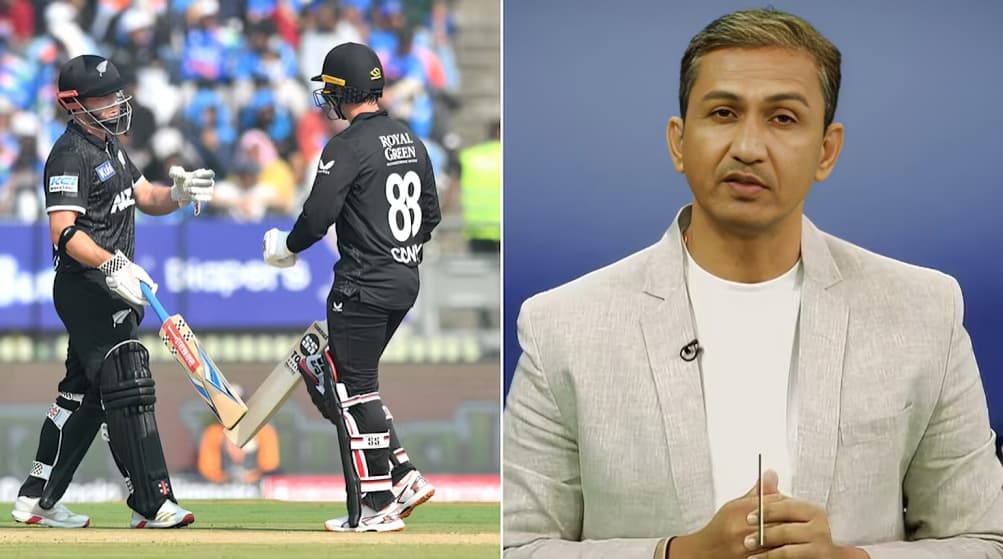
Former Indian cricketer and current commentator Sanjay Bangar found himself at the centre of a controversy after making a remark during live commentary in the first One Day International between India and New Zealand. During the broadcast, Bangar referred to Hindi as India’s “national language,” a statement that immediately drew criticism from viewers and social media users.
Several fans and language experts pointed out that India does not have an officially designated national language. According to the Constitution of India, Hindi and English are recognised as official languages of the Union, while the country acknowledges 22 scheduled languages, reflecting its linguistic diversity. As a result, Bangar’s comment was widely seen as factually incorrect, leading to online backlash.
The issue gained momentum on platforms such as X, Instagram, and Facebook, where users shared clips of the commentary and debated the importance of accurate language representation, especially on national broadcasts. Many users stressed that commentators hold influential positions and must be careful while making statements that could misrepresent constitutional facts or sensitive cultural issues.
While some criticised Bangar for the remark, others defended him, suggesting it may have been an unintentional slip of the tongue during live commentary. Supporters argued that such mistakes can happen under the pressure of live television and called for a measured response rather than harsh criticism. However, the debate continued, highlighting the sensitivity surrounding language-related discussions in India.
This incident once again brought attention to the broader conversation about India’s linguistic identity. India’s diversity is one of its defining characteristics, with languages varying across regions and communities. Any suggestion of a single “national language” often sparks debate, as it may be perceived as overlooking this diversity.
As of now, Sanjay Bangar has not issued an official statement or clarification regarding the remark. Broadcasters have also not commented publicly on the issue. Nevertheless, the episode serves as a reminder of the responsibility carried by public figures, especially those speaking on widely viewed platforms such as live sports broadcasts.
Cricket commentary in India reaches millions of viewers, cutting across linguistic and regional boundaries. As such, accuracy in statements related to national identity, culture, and constitutional matters is crucial. The controversy surrounding Bangar’s comment underlines how quickly public discourse can shift from sports to broader social and cultural issues.
In conclusion, while the remark may not have been intentional, the reaction to it reflects the importance of language sensitivity in a diverse country like India. The incident has reignited discussions about linguistic inclusivity and the need for factual accuracy in public communication, especially during live broadcasts watched by a nationwide audience.